
The Everest Base Camp Trek with Helicopter Return is an iconic Himalayan journey that combines the full classic trekking experience with a spectacular aerial return from the Everest region. The adventure begins with a scenic flight to Lukla before following the legendary trail through Phakding, Namche Bazaar, Tengboche, Dingboche, Lobuche, and Gorak Shep toward Everest Base Camp.
Along the way, you gradually ascend through changing landscapes—from lush forests and traditional Sherpa villages to the stark glacial terrain of the upper Khumbu. Carefully planned acclimatization days in Namche Bazaar and Dingboche provide time to adjust to the increasing altitude before the demanding approach to Base Camp. This gradual ascent pattern is consistent with the established Everest trekking route described by the Nepal Tourism Board.
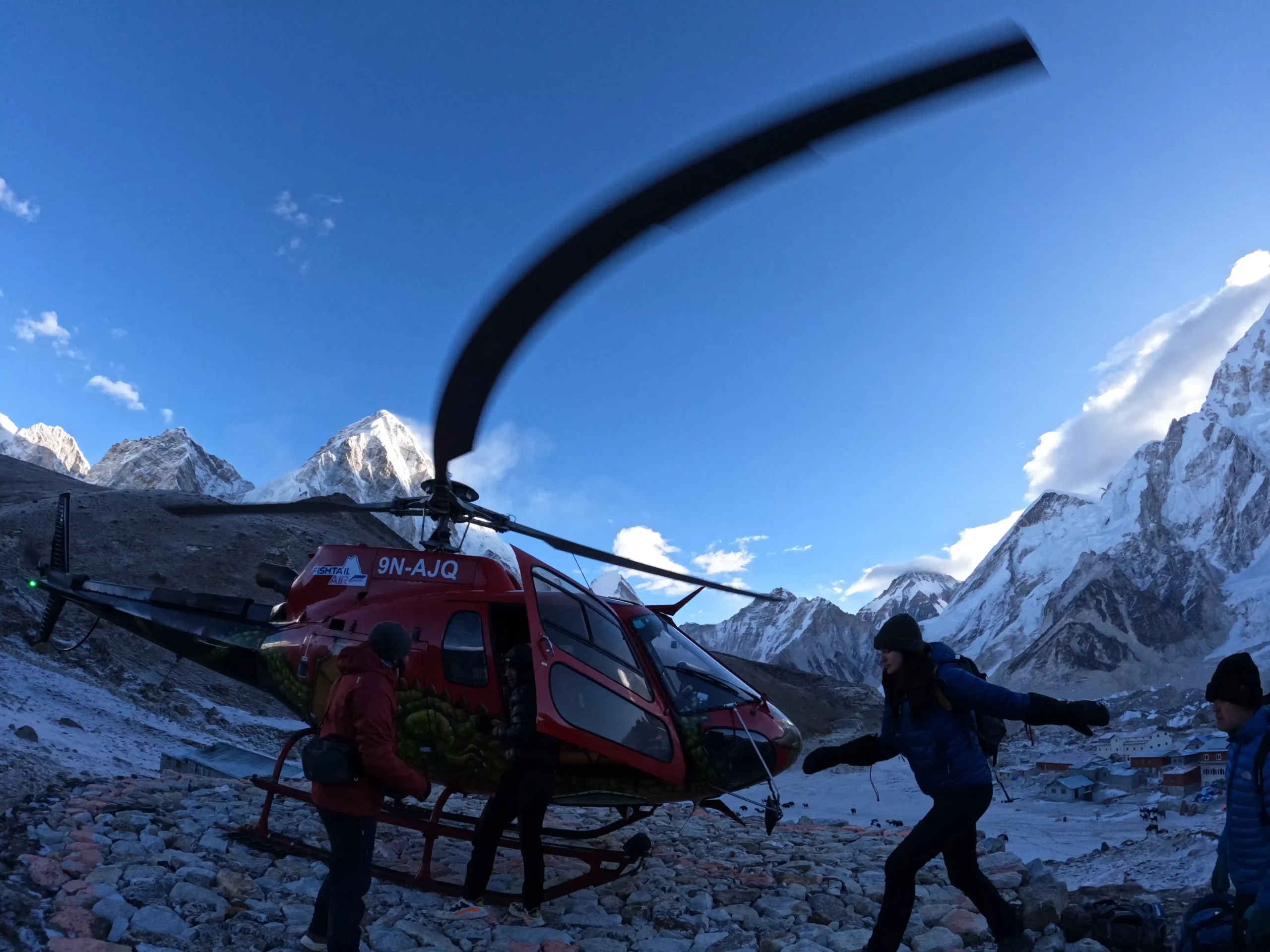
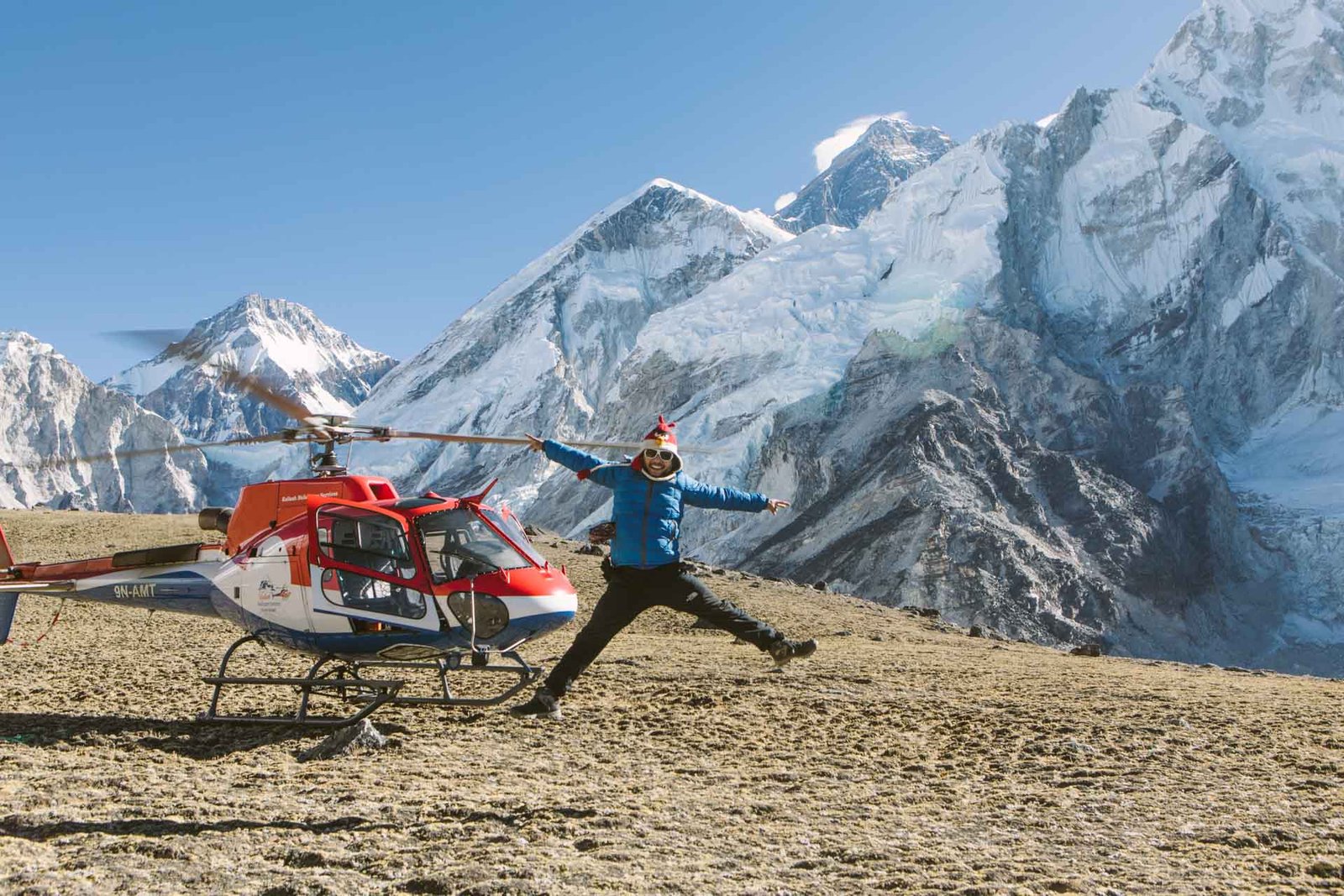
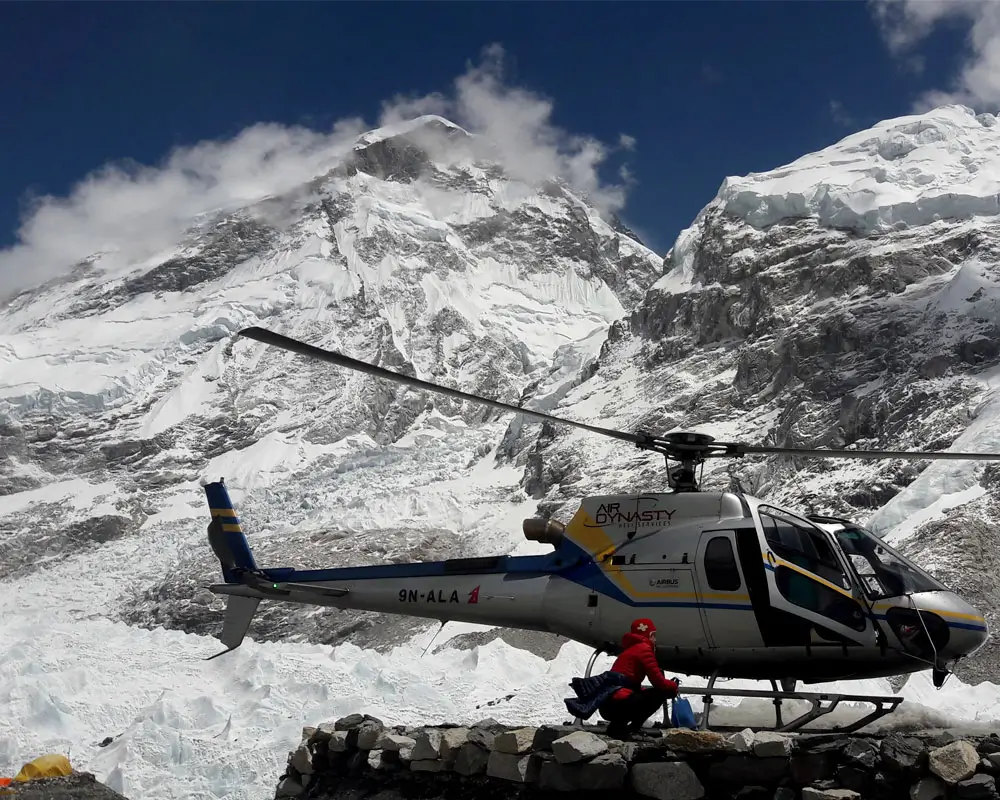
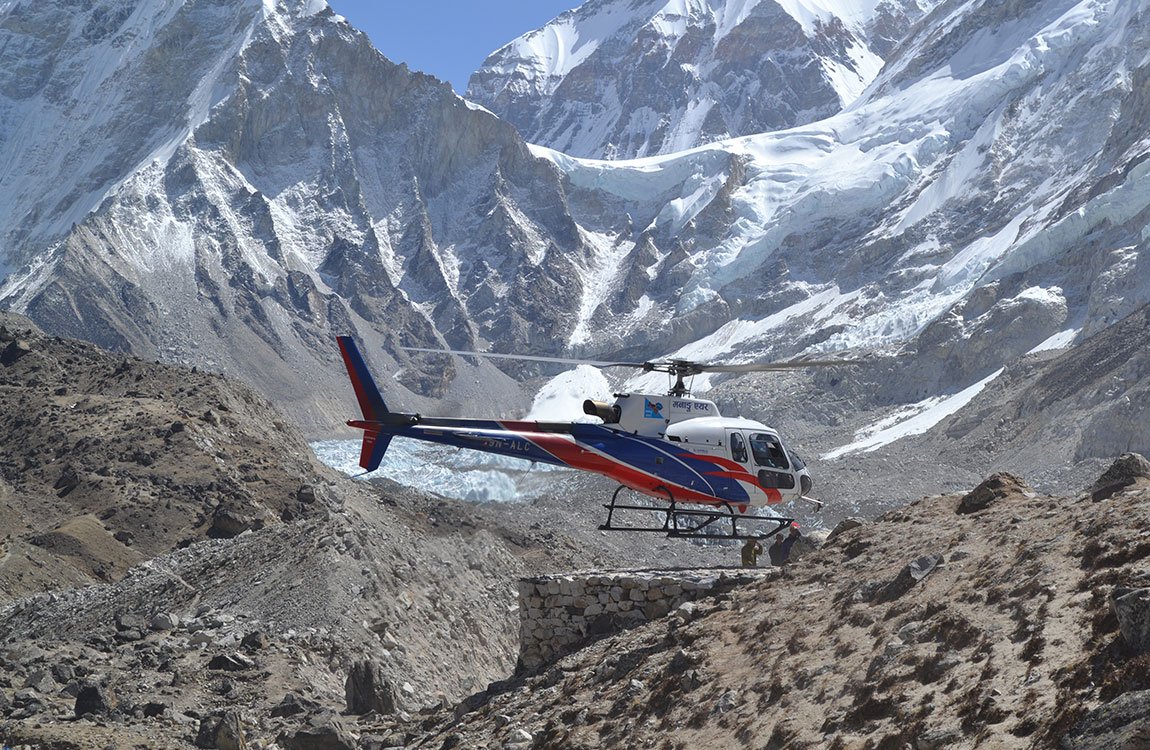
The journey reaches its defining moments at Everest Base Camp (5,364 m) and Kala Patthar (approximately 5,545 m). After experiencing the sunrise over Everest from Kala Patthar, instead of retracing several days of trail, you descend to Gorak Shep and take a helicopter flight toward Lukla or Kathmandu, depending on the selected flight arrangement and operational conditions. Current operators offer both Gorak Shep–Lukla and Gorak Shep–Kathmandu arrangements.
This makes the trek particularly appealing to travelers who want to walk the legendary Everest trail on the ascent while replacing the long return trek with a memorable Himalayan flight.
Overview
Experience the Everest region at its most spectacular on this Everest Base Camp Trek with Helicopter Return, combining authentic Himalayan trekking, Sherpa culture, breathtaking mountain scenery, and an unforgettable aerial journey. Walk through the heart of the Khumbu to Everest Base Camp, watch the sunrise from Kala Patthar, and return by helicopter over the dramatic glaciers, valleys, and mountains you have just crossed on foot.
Highlights
- Scenic flight to Lukla, the gateway to the Everest region.
- Trek the classic route through the heart of the Khumbu Valley.
- Reach Everest Base Camp at 5,364 m.
- Experience sunrise from Kala Patthar at approximately 5,545 m.
- Explore Namche Bazaar, the vibrant Sherpa hub of the Everest region.
- Visit historic Tengboche Monastery beneath the dramatic Ama Dablam.
- Enjoy views of Everest, Lhotse, Nuptse, Ama Dablam, Pumori, Thamserku and other Himalayan peaks.
- Acclimatize properly at Namche Bazaar and Dingboche.
- Walk beside the Khumbu Glacier on the approach to Base Camp.
- Experience the high-altitude landscape of Lobuche and Gorak Shep.
- Replace the long descent with a scenic helicopter return.
- Experience the dramatic contrast between Himalayan villages, forests, glaciers, and high alpine terrain.
- Save several trekking days by flying out rather than retracing the entire trail
Everest base Camp Trek with Heli Return Overview
The Everest Base Camp Trek with Helicopter Return combines the authentic experience of trekking through the Khumbu with the excitement of a scenic Himalayan flight. Beginning with the legendary Lukla trail, the journey passes through traditional Sherpa villages, colorful prayer flags, ancient Buddhist monasteries, and dramatic mountain valleys as you gradually move from the green lower hills into the rugged high-altitude landscape.
The trail takes you through iconic stops such as Namche Bazaar, Tengboche, Dingboche, Lobuche, and Gorak Shep, with dedicated acclimatization days to help you adjust to the increasing elevation. The ultimate trekking goals are Everest Base Camp at 5,364 meters and Kala Patthar at approximately 5,545 meters, where the early morning light reveals breathtaking views of Everest, Lhotse, Nuptse, Ama Dablam, Pumori, and the surrounding Himalayan range.
After completing the demanding high-altitude section, the return journey takes a different form. Instead of retracing the entire trail on foot, a helicopter flight from the Everest region carries you above the landscapes you have just explored, offering sweeping views of glaciers, deep valleys, mountain settlements, and some of the world’s highest peaks. This combination of trekking and aerial adventure creates a rewarding way to experience the Everest region from both the trail and the sky.
What can you expect from the Everest Base Camp Trek Package?
Scenic flight to Lukla and an exciting start to your Himalayan adventure.
Classic Everest trekking experience through the heart of the Khumbu region.
Beautiful Sherpa villages including Phakding, Namche Bazaar, Tengboche, Dingboche, and Lobuche.
Breathtaking Himalayan views of Everest, Lhotse, Nuptse, Ama Dablam, Pumori, and Thamserku.
Acclimatization days in Namche Bazaar and Dingboche for a safer and more comfortable ascent.
Visit to Tengboche Monastery, surrounded by spectacular mountain scenery.
Walk alongside the Khumbu Glacier on the approach to Everest Base Camp.
Reach Everest Base Camp at approximately 5,364 m, the iconic destination of the trek.
Sunrise hike to Kala Patthar at around 5,545 m for exceptional views of Mount Everest.
Authentic Sherpa culture and Himalayan hospitality throughout the journey.
Comfortable teahouse accommodation along the trekking route.
Helicopter return from the Everest region, offering an unforgettable aerial view of the Khumbu landscape.
Experienced trekking guide and porter support throughout the mountain journey.
A carefully paced itinerary combining trekking, acclimatization, and high-altitude adventure.
Benefits of Booking Everest base Camp with Heli Return Trek
- Experienced Everest Trekking Team – Trek with local guides who have extensive knowledge of the Everest region, its trails, villages, weather, and high-altitude conditions.
- Well-Planned Acclimatization – Carefully scheduled acclimatization stops in places such as Namche Bazaar and Dingboche help you adapt gradually to increasing altitude.
- Safety-Focused Trekking – Your trek is supported by trained guides, first-aid equipment, altitude monitoring, and assistance with emergency arrangements when required.
- Complete Permit Assistance – We handle the essential trekking permits and documentation, including the Sagarmatha National Park and Khumbu Pasang Lhamu Rural Municipality permits.
- Authentic Sherpa Experience – Travel through iconic Khumbu communities such as Namche Bazaar, Tengboche, Dingboche, and surrounding Sherpa villages while experiencing the region’s unique mountain culture.
- Expert Route Planning – From Lukla to Everest Base Camp, the itinerary is structured around realistic walking distances, altitude gain, rest periods, and the key landmarks of the Everest trail.
- Comfortable Teahouse Stays – Stay in carefully selected local teahouses and lodges along the route, giving you a comfortable place to rest while experiencing traditional Himalayan hospitality.
- Professional Guide Support – Your guide helps with trail navigation, daily pacing, local communication, accommodation arrangements, and practical support throughout the trek.
- Porter & Gear Support – Porter services and essential trekking support can be arranged so you can focus more comfortably on the trail and the Himalayan scenery.
- Emergency Support on the Trail – Green Valley states that its Everest packages include first-aid resources, altitude-monitoring equipment, and assistance with rescue arrangements in emergencies.
- Local Knowledge Beyond the Trail – Get more than route guidance; local staff can provide insight into Sherpa traditions, monasteries, villages, mountain viewpoints, and the character of the Khumbu region.
- Flexible Everest Trek Options – Choose from different ways to experience Everest, including classic EBC routes, road-based itineraries, luxury options, and helicopter-return packages.
- Clear Trekking Arrangements – Permits, accommodation, guides, meals, transportation, and other package services are organized in advance, helping make the journey easier to manage.
- Support Before & During Your Trek – Receive pre-trek briefing and ongoing assistance from the team throughout your Everest journey. Green Valley lists a trip briefing before departure as part of its EBC package arrangements.
- Experience Everest with a Local Agency – Booking directly with a Nepal-based trekking company gives you access to a team working within the destination and familiar with the practical realities of trekking in the Khumbu.
Itinerary
One of Nepal’s most popular Himalayan adventures, the Everest Base Camp Trek with Helicopter Return takes you through legendary Sherpa villages, dramatic mountain landscapes, and the iconic Everest Base Camp.
Welcome to Kathmandu, the starting point of your Everest adventure. Upon arrival at Tribhuvan International Airport, you will be welcomed by our representative and transferred to your hotel.
Once settled in, you can relax or explore the nearby streets of Kathmandu. Later, meet your trekking guide for a detailed briefing covering the route, altitude, trekking conditions, accommodation, meals, safety procedures, and equipment. This is also the time to make any final preparations before heading toward the mountains.
Overnight: Kathmandu
Maximum Altitude: Approx. 1,400 m / 4,593 ft
Your Himalayan adventure begins with an early flight toward Lukla, offering an exciting introduction to the Everest region. Depending on the season and current flight operations, flights may operate from Kathmandu or from Ramechhap/Manthali, with a road transfer to the latter sometimes required during busy trekking periods. Current operators publish different arrangements according to season and airline operations.
After landing at Lukla, meet the trekking support team and begin walking through the lower Khumbu. The trail descends gradually toward the Dudh Koshi Valley, passing small settlements, stone walls, prayer flags, and traditional mountain homes.
Continue through the peaceful valley toward Phakding, where you spend your first night in the Everest region. This relatively short opening trek allows you to ease into the walking routine before the larger altitude gain ahead.
Overnight: Phakding
Maximum Altitude: Approx. 2,610 m / 8,563 ft
Flight: Approx. 20–35 minutes, depending on departure point
Trek: Approx. 3–4 hours
After breakfast, follow the Dudh Koshi River toward the heart of Sagarmatha National Park. The trail crosses several suspension bridges and winds through pine and rhododendron forests before reaching Monjo, the gateway area for the national park.
Beyond Jorsale, the route follows the river and eventually begins the long climb toward Namche Bazaar. The ascent becomes more demanding as you gain altitude, but the changing scenery and first glimpses of the high Himalayan peaks make the effort worthwhile.
After completing the final uphill section, arrive at Namche Bazaar, a horseshoe-shaped settlement surrounded by mountains and one of the most important trading and cultural centres in the Khumbu.
Overnight: Namche Bazaar
Maximum Altitude: 3,440 m / 11,286 ft
Trek: Approx. 5–7 hours
Today is dedicated to acclimatization. Rather than simply spending the day resting, take a gradual hike to a higher elevation around Namche before returning to sleep at the same altitude.
A popular route leads toward Syangboche and the Everest View Hotel, providing expansive views of Everest, Lhotse, Ama Dablam, Thamserku, and other surrounding peaks when weather conditions are clear. The Nepal Tourism Board also identifies the area around Syangboche, Khumjung, Khunde, and Thame as suitable acclimatization excursions from Namche.
Return to Namche in the afternoon and use the remaining time to explore the town, visit local shops, or simply rest and prepare for the higher elevations ahead.
Overnight: Namche Bazaar
Maximum Altitude: Approx. 3,440 m / 11,286 ft
Activity: Acclimatization hike
Leave Namche and follow a spectacular high-level trail carved into the mountainside. The route provides remarkable views across the Khumbu Valley, with Everest, Lhotse, Nuptse, Ama Dablam, and Thamserku forming an extraordinary Himalayan backdrop.
The trail eventually descends toward the Dudh Koshi before climbing again through pine and rhododendron forests toward Tengboche. The change from the busy Namche environment to the peaceful mountain setting of Tengboche is particularly striking.
At the end of the day, visit or explore the surroundings of Tengboche Monastery, one of the most significant Buddhist centres in the Khumbu. The monastery is renowned for its spectacular setting beneath Ama Dablam and views toward Everest and Lhotse.
Overnight: Tengboche
Maximum Altitude: Approx. 3,860 m / 12,664 ft
Trek: Approx. 5–6 hours
Begin the morning by descending through forests toward Deboche before crossing the Imja Khola. From there, the trail continues through traditional mountain settlements including Pangboche and gradually climbs into the upper Imja Valley.
The scenery becomes increasingly alpine as you gain elevation. Trees become more sparse, the valleys widen, and the enormous Himalayan peaks begin to dominate the landscape.
Continue toward Dingboche, a broad mountain settlement surrounded by impressive peaks. Its location makes it an important stopping point before the trail enters the highest section of the Everest Base Camp route.
Overnight: Dingboche
Maximum Altitude: Approx. 4,410 m / 14,469 ft
Trek: Approx. 5–6 hours
Another important acclimatization day allows your body to adjust before the trek moves above 4,500 meters. A gradual morning hike toward the surrounding ridges provides an opportunity to gain additional altitude without changing your sleeping elevation.
For trekkers feeling comfortable, the route toward Nangkartshang viewpoint offers impressive views across the Imja Valley and toward Ama Dablam, Makalu, Island Peak, and other Himalayan peaks. The exact hiking objective can be adjusted according to weather, health, and group conditions.
Return to Dingboche for lunch and spend the afternoon resting, hydrating, and preparing for the high-altitude journey toward Lobuche and Gorak Shep.
Overnight: Dingboche
Maximum Altitude: Dingboche 4,410 m / 14,469 ft
Optional hike: Up to approximately 5,000 m+
The trail climbs steadily out of Dingboche toward the rugged upper Khumbu. The landscape becomes noticeably more barren as you leave the last substantial areas of vegetation behind.
Continue toward Duglha and then tackle the uphill section toward the terminal moraine area. Along this stretch, you encounter memorials honouring climbers who lost their lives in the Everest region—a quiet and reflective part of the trek.
From there, continue through increasingly dramatic glacial surroundings toward Lobuche, where the mountains seem to rise directly from the valley.
Overnight: Lobuche
Maximum Altitude: Approx. 4,940 m / 16,207 ft
Trek: Approx. 5–6 hours
Today is the major objective of your trek. Leave Lobuche and follow the rugged trail toward Gorak Shep, passing through the increasingly stark landscape surrounding the Khumbu Glacier.
After reaching Gorak Shep, take a short break before continuing toward Everest Base Camp. The trail crosses rocky glacial terrain and follows the changing contours of the Khumbu Glacier, with views toward the surrounding ice formations and towering peaks.
After several hours of trekking, arrive at Everest Base Camp, standing at approximately 5,364 meters. Take time to appreciate the extraordinary setting beneath Everest and the surrounding Himalayan giants. Depending on the season, the Base Camp area may also be active with mountaineering teams preparing for expeditions.
After exploring Base Camp and taking photographs, retrace the route back to Gorak Shep, where you spend the night before the final high-altitude sunrise and helicopter journey.
Overnight: Gorak Shep
Maximum Altitude: 5,364 m / 17,598 ft
Trek: Approx. 7–9 hours
Wake before dawn for the final major climb of the trek. Under the cold early-morning sky, begin ascending toward Kala Patthar, one of the most celebrated viewpoints in the Everest region.
As daylight reaches the mountains, the panorama gradually opens to reveal Everest, Nuptse, Lhotse, Pumori, Ama Dablam, and the surrounding Himalayan range. At approximately 5,545 m, Kala Patthar provides a remarkable perspective of Everest and the Khumbu landscape.
After enjoying the sunrise, descend carefully to Gorak Shep for breakfast and prepare for your helicopter flight.
The helicopter journey provides an entirely different perspective of the region you have spent days crossing on foot. From above, the glaciers, valleys, mountain villages, and Himalayan peaks form a vast landscape that is difficult to appreciate fully from the trail.
Depending on the package and flight operations, the helicopter may operate from Gorak Shep to Lukla, followed by a flight onward to Kathmandu, or a direct Gorak Shep–Kathmandu service may be arranged. High-altitude helicopter operations can involve passenger limits, intermediate landing points, refuelling, and weather-related adjustments, so the exact routing should remain subject to operational conditions.
Overnight: Kathmandu if direct helicopter return is operated
Maximum Altitude: Approx. 5,545 m / 18,192 ft
Activity: Kala Patthar sunrise + helicopter flight
After completing the trek and returning from the Everest region, enjoy a relaxed day in Kathmandu. This gives you time to recover after the demanding high-altitude journey and explore the city at your own pace.
You may visit historic neighbourhoods, explore local markets, purchase Himalayan souvenirs, or simply enjoy a comfortable final day in Nepal. If the helicopter return operates through Lukla with an overnight transfer rather than directly to Kathmandu, this day may instead involve the onward flight and transfer arrangements.
Overnight: Kathmandu
Maximum Altitude: Approx. 1,400 m / 4,593 ft
Your Everest adventure comes to an end today. Depending on your flight schedule, enjoy your final morning in Kathmandu before our representative transfers you to Tribhuvan International Airport for your onward journey.
You leave Nepal with more than photographs: the memory of walking through the Khumbu, standing at Everest Base Camp, watching the first light strike the Himalayan peaks from Kala Patthar, and seeing the Everest landscape from the air on your return.
Trip Ends: Kathmandu
Includes/Excludes
Cost Includes
- Airport arrival and departure transfers by private vehicle in Kathmandu.
- Kathmandu hotel accommodation as specified in the itinerary, including breakfast.
- Kathmandu/Ramechhap–Lukla domestic flight at the beginning of the trek, subject to the operating airport and seasonal flight schedule.
- Shared helicopter return from the Everest region to Kathmandu or the designated connecting point, according to the selected package and flight conditions.
- Teahouse/lodge accommodation throughout the trekking portion of the journey on a twin-sharing basis.
- Breakfast, lunch, and dinner during the trek, providing meals throughout the main trekking days.
- Experienced, licensed English-speaking trekking guide throughout the trek.
- Porter service for your main trekking luggage, generally arranged on a shared porter basis for two trekkers.
- Guide and porter expenses, including their accommodation, meals, transportation, salary, and applicable staff insurance.
- Sagarmatha National Park entry permit.
- Khumbu Pasang Lhamu Rural Municipality entry fee.
- Basic first-aid and emergency medical equipment carried by the trekking team.
- Company duffel bag for use during the trek, where applicable.
- Trekking map and trip completion certificate.
- Pre-trek briefing and route assistance before departure.
- Government taxes and applicable service charges related to the included services.
Cost Excludes
- International airfare to and from Nepal.
- Nepal entry visa fee and associated visa expenses.
- Travel and medical insurance, including emergency helicopter evacuation coverage.
- Lunch and dinner in Kathmandu, unless specifically mentioned in the itinerary.
- Personal trekking equipment and clothing, such as trekking boots, down jacket, gloves, sleeping bag, backpack, sunglasses, and trekking poles.
- Personal expenses including snacks, chocolates, bottled/mineral water, soft drinks, tea, coffee, and alcoholic beverages.
- Wi-Fi, phone calls, device charging, and internet services along the trekking route.
- Hot showers and laundry services at mountain lodges.
- Additional accommodation or meals caused by flight delays, weather disruptions, illness, early return, or changes to the itinerary.
- Additional helicopter or charter costs if a private helicopter is requested instead of the included shared service.
- Emergency rescue or evacuation expenses not covered by your insurance.
- Tips and gratuities for guides, porters, drivers, and other supporting staff.
- Personal medical expenses and prescribed medications.
- Any services or expenses not specifically mentioned under “Cost Includes.”
Add-ons & Options
Discover a new level of adventure with Green Valley Nepal Treks. With extensive experience organizing treks in the Everest region, we offer a selection of practical add-ons and upgrade options designed to make your Everest Base Camp Trek with Helicopter Return more comfortable, flexible, and personalized.
- Porter Service for USD 220: Trek with less weight on your shoulders by adding a dedicated porter service. One porter can carry up to 25 kg and is generally shared between two travelers, allowing you to enjoy the Everest trail more comfortably.
- Private Jeep Airport Transfer – Kathmandu: Add a private vehicle for convenient airport pickup or drop-off in Kathmandu. This is a useful option for travelers who prefer a more comfortable and private transfer before or after their trek.
- Private Kathmandu Hotel Transfer: Enjoy hassle-free transportation between your hotel and the airport with a private vehicle arranged by our team.
- Private Helicopter Return: Upgrade from the standard shared helicopter return to a private helicopter charter for a more exclusive experience. This option is suitable for travelers who prefer greater privacy and flexibility, subject to weather, flight regulations, and helicopter availability.
- Extra Night in Kathmandu: Extend your stay in Kathmandu before or after your Everest trek. This gives you additional time to explore the city’s cultural attractions, recover after the trek, or accommodate international flight schedules.
- Single Room Upgrade: Prefer more privacy? Request a single-room upgrade at available hotels and teahouses during the trek. Single rooms are subject to availability, particularly at higher elevations.
- Extra Porter Support: Travelers carrying additional personal equipment or requiring extra luggage assistance can request additional porter support, subject to availability and applicable charges.
How to Personalize Your Langtang Valley Trek with Our Add-Ons?
Step 1: Select your preferred departure date. - Step 2: Specify the number of travelers.
- Step 3: Click “Book Now” or “Add to Cart.”
- Step 4: Choose the add-ons and upgrades that best suit your Everest adventure.
- Step 5: Complete your payment and prepare for your journey to Everest Base Camp.
Best time to do Everest Base Camp Trek with Heli Return:
October to November
October to November is the best time for the Everest Base Camp Trek with Helicopter Return. During these autumn months, the Everest region generally experiences clear skies, stable weather, and excellent mountain visibility. The trails are usually dry and comfortable for trekking, while the clear conditions provide spectacular views of Everest, Lhotse, Nuptse, Ama Dablam, Pumori, and the surrounding Himalayan landscape. These months are also particularly suitable for the helicopter return, as good visibility can make the flight over the Khumbu Glacier, valleys, villages, and mountain peaks even more scenic.
March to May
March to May is another favorable period for the Everest Base Camp Trek with Helicopter Return. Spring brings pleasant trekking conditions, gradually warmer temperatures, and beautiful scenery, with rhododendrons and other alpine vegetation adding color to the lower sections of the trail. As you reach the higher elevations, the landscape becomes increasingly rugged and snow-covered, creating dramatic Himalayan views. The generally favorable spring weather can also provide good conditions for the helicopter return, although flights always depend on actual weather and visibility on the day.
What Our Travelers Say
Read reviews from travelers who have joined our Himalayan trips. See what they enjoyed and what they thought about their experience.
Frequently Asked Questions
Faq's
It is the classic Everest Base Camp trekking route with a helicopter flight replacing the long return trek. You trek through the Khumbu Valley to Everest Base Camp and Kala Patthar, then fly out from the upper Everest region instead of walking back to Lukla
Most helicopter-return itineraries take around 10–12 days, depending on the itinerary and whether the helicopter flies directly to Kathmandu or connects through Lukla.
It is a challenging high-altitude trek. The helicopter only replaces the descent; you still need to complete the demanding ascent to Everest Base Camp and Kala Patthar, reaching approximately 5,364 m and 5,545 m respectively.
No. Everest Base Camp is not normally the standard tourist helicopter pickup point. Trekkers generally walk back to Gorak Shep, where the helicopter pickup is arranged, subject to current operating conditions.
The usual pickup point is Gorak Shep, although the exact operating point can change because of weather, aircraft limitations, landing conditions, and flight operations.
It can, depending on the package and current flight operation. Some services operate Gorak Shep–Kathmandu, while other itineraries use a helicopter to Lukla followed by a fixed-wing flight to Kathmandu.
This depends on the package you book. A private trek does not automatically mean a private helicopter. Many trekking packages use shared helicopter seats, while a dedicated helicopter charter is a separate service and costs more.
Helicopter operations in the Everest region remain weather-dependent. If conditions prevent the flight, the trekking itinerary may be adjusted and you may need to descend by trail until a suitable flight opportunity becomes available. For this reason, it is wise to keep some flexibility in your schedule.
Absolutely. The helicopter return does not reduce the altitude you experience while trekking to Base Camp. Proper acclimatization is essential, with planned acclimatization stops normally included at Namche Bazaar and Dingboche.
The highest point is Kala Patthar at approximately 5,545 m (18,192 ft). Everest Base Camp is approximately 5,364 m (17,598 ft).
Yes. The standard itinerary includes an early-morning hike to Kala Patthar for sunrise and panoramic views of Everest and the surrounding Himalayan peaks before returning toward Gorak Shep for the helicopter departure.
The route generally passes through Lukla, Phakding, Namche Bazaar, Tengboche, Dingboche, Lobuche, Gorak Shep, Everest Base Camp, and Kala Patthar. This follows the established Everest Base Camp trekking corridor.
The main trekking seasons are spring (March–May) and autumn (September–November), when trekking conditions and mountain visibility are generally favorable. Weather can still affect flights and helicopter operations at any time.
High-altitude helicopter flights have strict weight limitations because aircraft performance is reduced at elevation. The exact allowance depends on the operator, aircraft, passenger weights, and flight conditions, so your trekking company should confirm the baggage limit before departure.
Yes. Comprehensive travel insurance covering high-altitude trekking, medical treatment, and emergency evacuation is strongly recommended. Altitude-related illness can become serious, and evacuation costs can be substantial.
Your guide should monitor your condition throughout the trek. Symptoms such as headache, nausea, dizziness, unusual fatigue, or difficulty breathing should be taken seriously. If symptoms worsen, the appropriate response may include stopping the ascent and descending to a lower elevation.
Yes, physically prepared first-time trekkers can undertake the route, but previous high-altitude trekking experience is not a substitute for proper preparation. The helicopter return makes the descent shorter, but it does not make the ascent to Base Camp easy.