
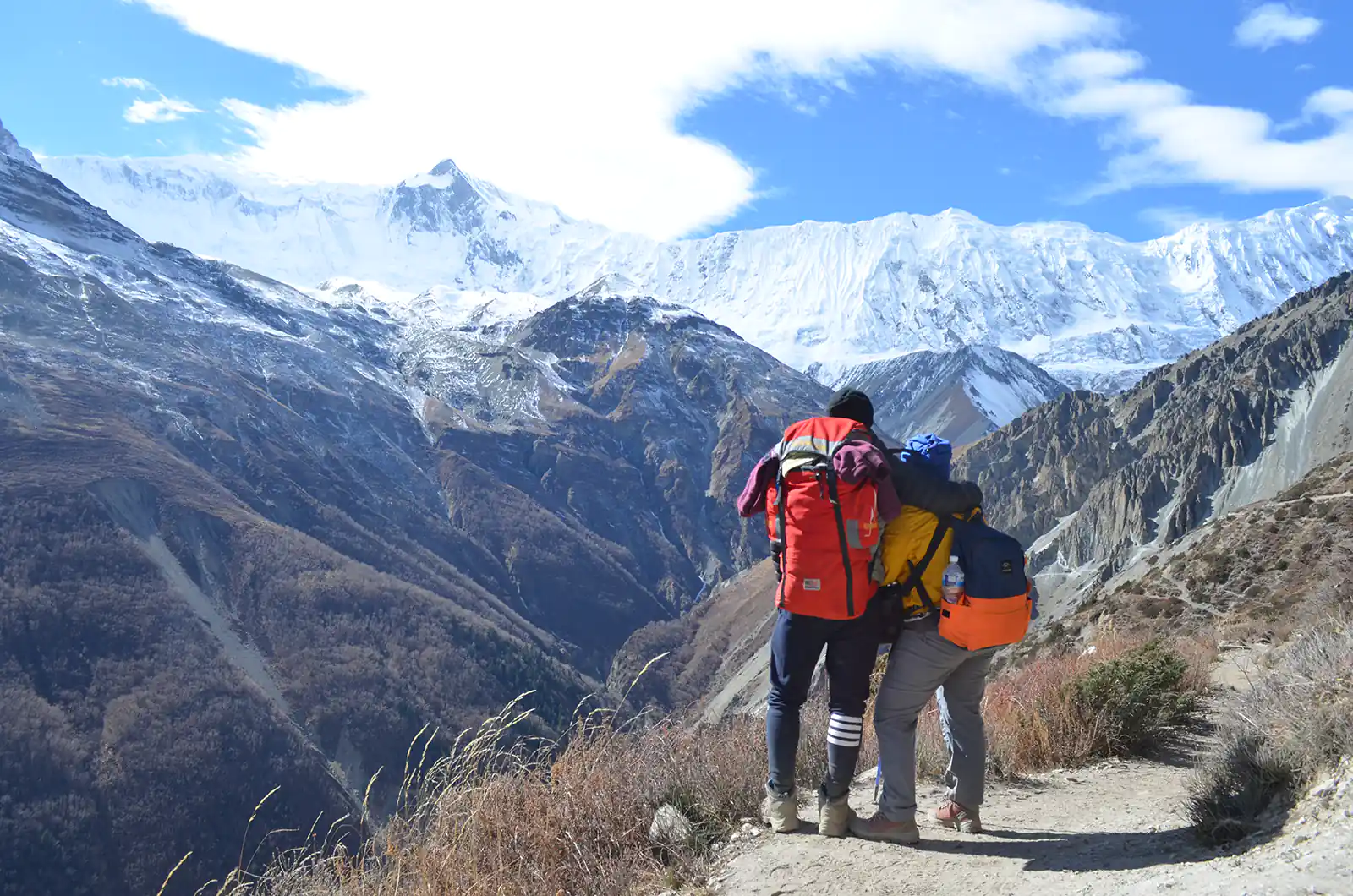
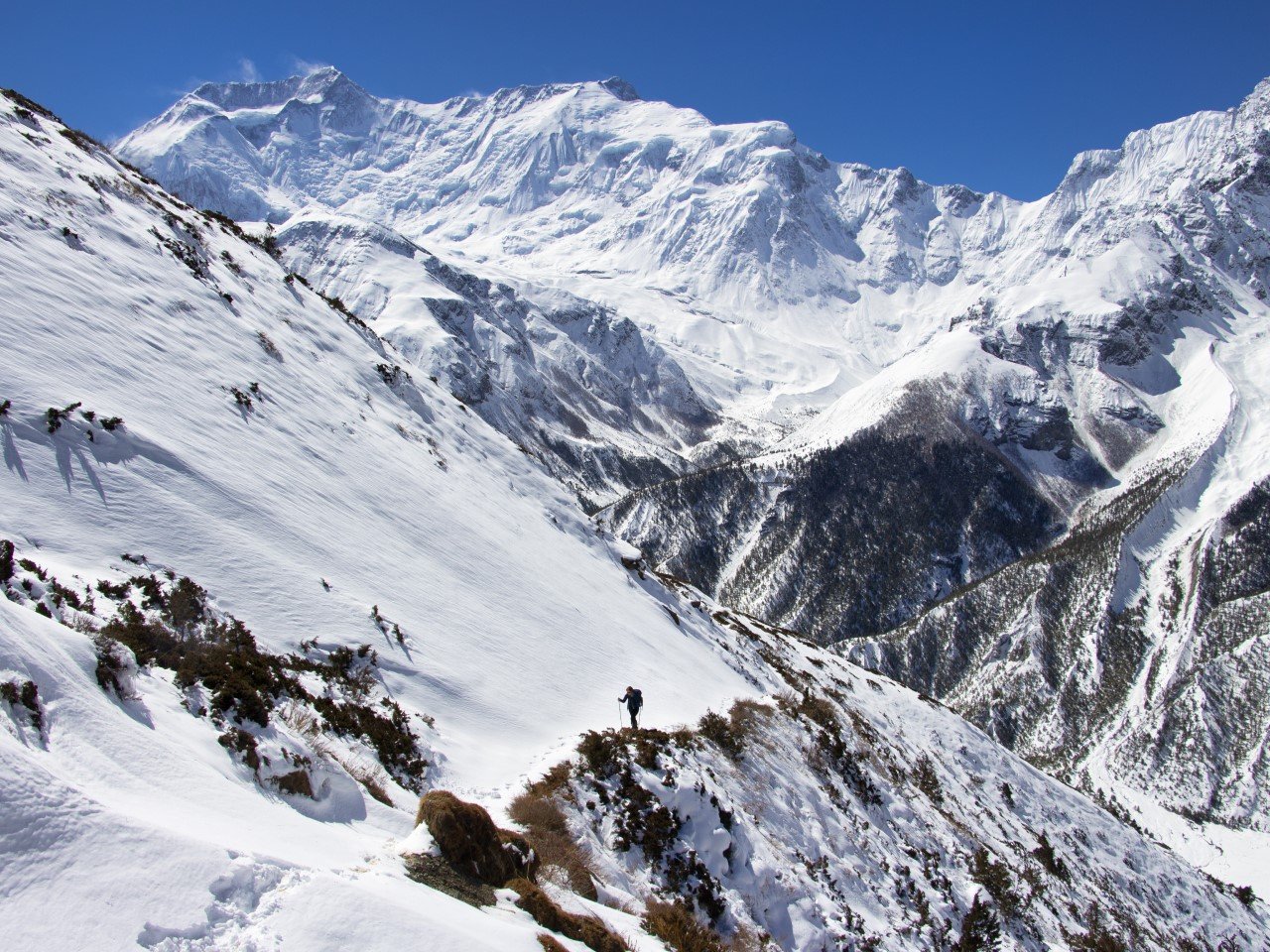
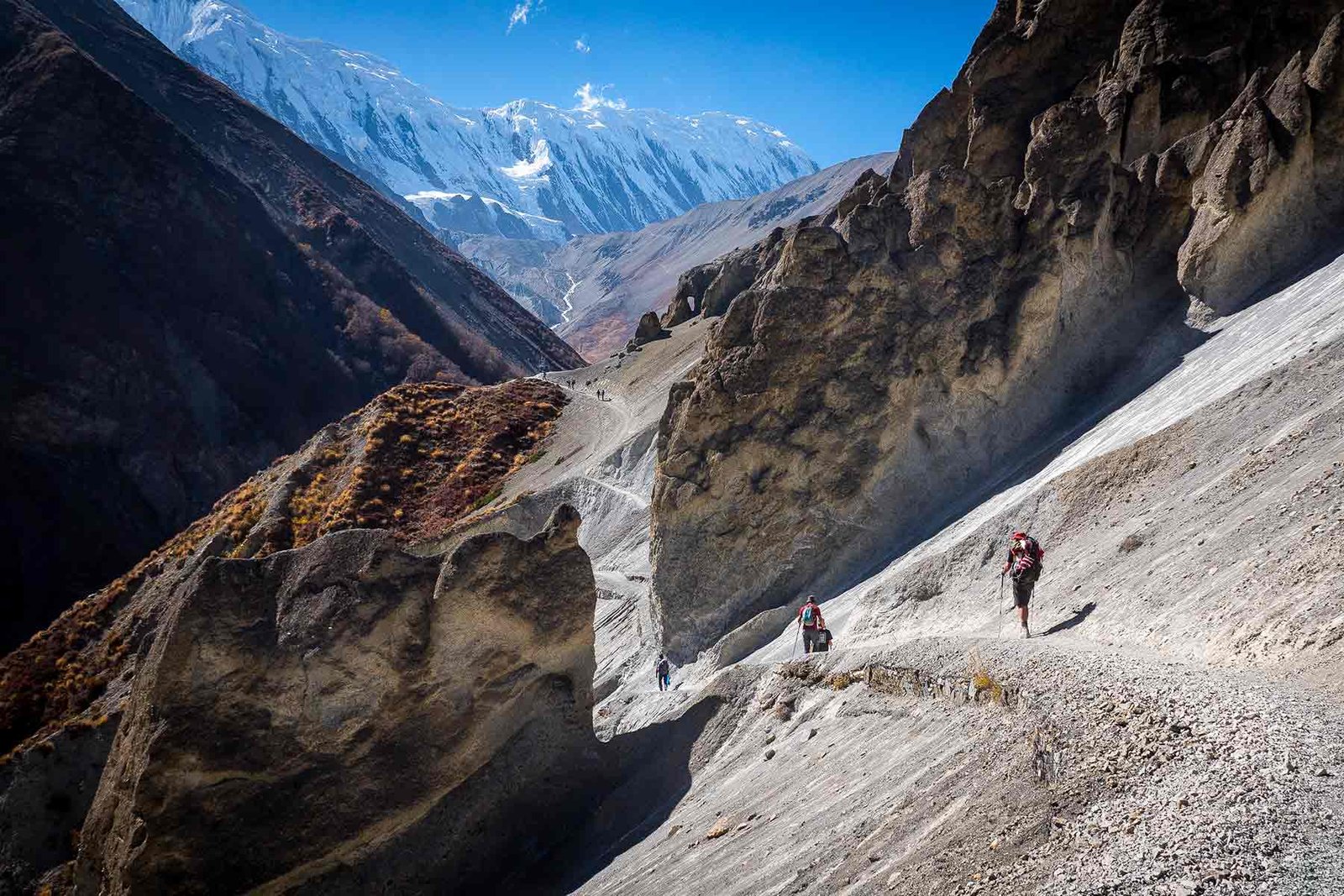
The Annapurna Circuit Trek is a remarkable journey around the Annapurna mountain range in central Nepal, connecting lush river valleys, traditional Himalayan settlements, high mountain landscapes and the arid region of Lower Mustang. The trail gradually changes in scenery and culture as it moves from the green hills of the Marsyangdi Valley toward the Tibetan-influenced villages of Manang and the high-altitude crossing of Thorong La Pass.
Starting from Kathmandu, the journey continues by road toward the trekking region before following the trail through Dharapani, Chame, Pisang and Manang. Along the way, trekkers encounter pine forests, waterfalls, traditional stone houses, Buddhist monasteries and impressive views of Annapurna II, Annapurna III, Gangapurna and other Himalayan peaks. A dedicated acclimatization day in Manang allows time to explore the surrounding area and prepare for the higher elevations ahead.
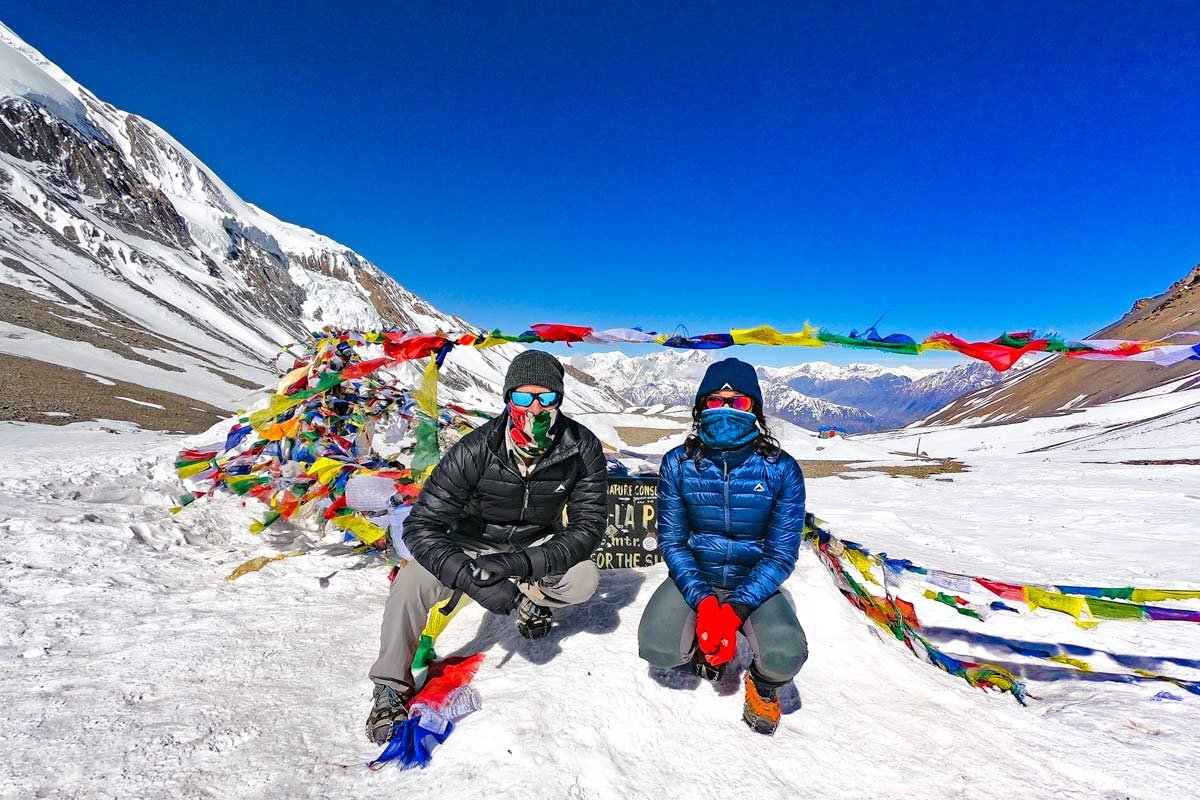
The most demanding stage is the crossing of Thorong La Pass at 5,416 meters. This high mountain route connects the Manang region with Muktinath in Mustang, where the landscape becomes drier and more open. The journey continues through the Kali Gandaki Valley, passing settlements such as Jomsom and Marpha before descending toward the warmer lowlands. Depending on the final route and road conditions, the trek can also include Tatopani, Ghorepani and the sunrise viewpoint at Poon Hill before returning to Pokhara.
The Annapurna Circuit is more than a mountain trek. It offers a gradual introduction to the region’s changing environments, local traditions and high-altitude terrain. TrekUp Nepal organizes the journey with planned overnight stops, acclimatization time and local trekking support to help travelers experience this diverse route with a well-structured itinerary.
Overview
The 14-Day Annapurna Circuit Trek takes you through the diverse landscapes of Nepal, from the green Marsyangdi Valley to the high-altitude Thorong La Pass at 5,416 meters. Explore traditional Himalayan villages, experience the culture of Manang and Mustang, visit Muktinath and enjoy spectacular mountain views before completing the journey toward Pokhara.
Highlights
- Cross Thorong La Pass at 5,416 meters.
- Explore the traditional villages of Dharapani, Chame, Pisang and Manang.
- Spend an acclimatization day in Manang before ascending to higher elevations.
- Enjoy views of Annapurna II, Annapurna III, Gangapurna, Dhaulagiri and other Himalayan peaks.
- Discover the Tibetan-influenced culture and architecture of the upper Manang and Mustang regions.
- Visit Muktinath, an important pilgrimage destination for Hindus and Buddhists.
- Walk through the dry mountain landscapes of the Kali Gandaki Valley.
- Explore the apple-growing village of Marpha, subject to the selected route.
- Experience the changing scenery from forested valleys to alpine terrain and Mustang's rain-shadow landscape.
- Add a Poon Hill sunrise hike for wide views of the Annapurna and Dhaulagiri ranges.
- Trek with an experienced local guide and support arranged by TrekUp Nepal.
Annapurna Circuit Trek Overview
The Annapurna Circuit Trek offers a varied journey around one of Nepal’s most celebrated mountain regions. Rather than following a single valley from beginning to end, the route links different landscapes and cultural areas as it circles the Annapurna massif. The lower Marsyangdi Valley is greener and more sheltered, while the upper Manang region becomes increasingly dry and open as the trail climbs toward the high mountains.
The journey through Chame, Pisang and Manang introduces trekkers to mountain villages shaped by local agriculture, Buddhist traditions and trade routes. Manang provides an important place to rest and acclimatize before the route continues to Yak Kharka and Thorong Phedi. From there, the crossing of Thorong La Pass at 5,416 meters forms the trek’s defining challenge.
Beyond the pass, the landscape changes again. Muktinath and the Kali Gandaki Valley sit in the drier Mustang region, where the terrain has a different character from the forested eastern slopes. The descent toward lower elevations offers a contrasting end to the high mountain section before the journey returns toward Pokhara and Kathmandu.
TrekUp Nepal plans the trek around the essential high-altitude stages, with accommodation, transport and local guide support arranged according to the confirmed package. The route can be customized for travelers who prefer more walking, want to add Tilicho Lake or would like to extend the journey through Ghorepani and Poon Hill.
What can you expect from the Annapurna Circuit Trek Package?
- A varied Himalayan journey: Experience river valleys, pine forests, alpine terrain and the dry landscapes of Mustang during one trip.
- Traditional mountain settlements: Walk through villages such as Chame, Pisang, Manang and Muktinath, each with its own local character.
- A planned acclimatization stop: Spend an additional night in Manang before progressing to higher elevations.
- A high mountain pass crossing: Reach Thorong La Pass at 5,416 meters when conditions and your group’s health allow.
- Changing cultural influences: Notice differences in architecture, religious traditions and daily life between the lower valleys and upper Mustang region.
- Simple mountain accommodation: Stay in teahouses and lodges along the route, with facilities varying by location.
- Local trekking support: Receive guidance on the trail, daily walking plans, altitude awareness and route decisions.
- Road transfers where needed: Use vehicle transfers on selected sections to fit the agreed itinerary duration.
- Flexible itinerary choices: Ask about adding Tilicho Lake, extending the lower valley walking route or including Poon Hill.
- Practical trip coordination: Have the services listed in your booking coordinated by TrekUp Nepal, with clear information about inclusions and additional costs.
Benefits of Booking Annapurna Circuit Trek with us
- Trek with a local team familiar with the Annapurna region, its villages, trails and changing mountain conditions.
- Receive assistance with the required permits and trekking documentation included in your confirmed package.
- Follow an itinerary that includes an acclimatization day in Manang before the Thorong La Pass crossing.
- Get guidance on pacing, hydration, altitude symptoms and when the route should be changed for safety.
- Have trekking accommodation and included meals arranged in advance, subject to local availability.
- Receive transport coordination for the journey to the trailhead and from the end of the trek.
- Request private departures and group-specific quotations for solo travelers, couples, families and larger groups.
- Get clear information about what is included, what costs extra and how transport arrangements may affect the itinerary.
- Receive help planning optional extensions such as Tilicho Lake or Poon Hill.
- Benefit from local coordination when weather, road conditions or trail circumstances require changes to the schedule.
Itinerary
Travel from Kathmandu into the Annapurna region and trek through Chame, Pisang and Manang before crossing Thorong La Pass at 5,416 meters. Explore Muktinath and the Mustang region, then continue toward Pokhara and return to Kathmandu by road or flight.
Arrive in Kathmandu, where a representative from TrekUp Nepal can welcome you and assist with the transfer to your hotel if airport pickup is included in your package. After checking in, take time to rest following your journey. Depending on your arrival time, you may explore nearby streets or prepare your trekking equipment. Your guide will review the itinerary, permits, essential gear and the high-altitude conditions you will encounter on the Annapurna Circuit.
Transport: Airport transfer, if included.
Altitude: Kathmandu, approximately 1,400 m.
Meals: Not included unless specified.
Accommodation: Hotel in Kathmandu.
Begin the journey toward the Annapurna region by road, traveling through river valleys, terraced farmland, hillside settlements and mountain foothills. The drive generally passes through the Besisahar area before continuing along the road toward Dharapani, depending on vehicle access and road conditions. This is a long travel day, with changing road surfaces and possible delays. On arrival, settle into a local lodge and prepare for the trekking stages ahead.
Transport: Approximately 8–10 hours by road, depending on traffic, route and road conditions.
Altitude: Dharapani, approximately 1,860 m.
Meals: Breakfast, lunch and dinner, according to the confirmed package.
Accommodation: Teahouse or lodge in Dharapani.
Start trekking along the Marsyangdi Valley, passing through forested hillsides and traditional settlements. The trail gradually climbs through the Manang region, crossing streams and following sections of the mountain road before reaching Chame, the administrative center of Manang District. Pine forests, rocky slopes and views of the surrounding mountains begin to define the landscape as you gain elevation.
Walking: Approximately 5–6 hours.
Altitude: Chame, approximately 2,670 m.
Meals: Breakfast, lunch and dinner.
Accommodation: Teahouse in Chame.
Continue through the narrowing valley, passing pine forests, small settlements and striking rock formations. The route crosses the Marsyangdi River and climbs toward the more open terrain around Pisang. As the trail approaches Upper Pisang, views of Annapurna II and surrounding peaks become increasingly impressive. Upper Pisang is a good place to experience the architecture and Buddhist traditions of the upper Manang region.
Walking: Approximately 5–6 hours.
Altitude: Upper Pisang, approximately 3,300 m.
Meals: Breakfast, lunch and dinner.
Accommodation: Teahouse in Upper Pisang.
Take the upper trail toward Ghyaru and Ngawal, a more demanding route that climbs above the valley but offers expansive mountain views. The trail passes traditional stone villages, prayer flags, chortens and fields set against the high Himalayan landscape. Continue toward Manang, where the environment becomes drier and more open. This route is longer and steeper than the lower valley alternative, so the guide may adjust the route according to weather, fitness and trail conditions.
Walking: Approximately 6–7 hours.
Altitude: Manang, approximately 3,540 m.
Meals: Breakfast, lunch and dinner.
Accommodation: Teahouse in Manang.
Spend an additional night in Manang to help your body adjust before moving to higher elevations. Rather than remaining inactive all day, take a manageable acclimatization walk with your guide. Options may include exploring the village, visiting the area around Gangapurna Lake or hiking to a suitable nearby viewpoint before returning to Manang. Keep the pace comfortable, drink water regularly and avoid strenuous activity if you feel unwell.
Walking: Approximately 2–4 hours for an optional acclimatization walk.
Altitude: Manang, approximately 3,540 m; the optional hike reaches a higher elevation.
Meals: Breakfast, lunch and dinner.
Accommodation: Teahouse in Manang.
Leave Manang and continue along the high-altitude trail toward Yak Kharka. The path gradually climbs through open terrain with fewer trees, passing grazing areas and small settlements used by local residents and trekkers. The views extend across the surrounding mountain slopes and valleys. Walking slowly is important because the thinner air can make even moderate uphill sections feel strenuous.
Walking: Approximately 3–5 hours.
Altitude: Yak Kharka, approximately 4,050 m.
Meals: Breakfast, lunch and dinner.
Accommodation: Teahouse in Yak Kharka.
Continue toward Thorong Phedi, the main staging point below Thorong La Pass. The trail crosses exposed mountain terrain and follows sections above the river valley, with a gradual but sustained climb. Depending on conditions and the group's pace, the guide may assess whether the group should stay at Thorong Phedi or proceed to Thorong High Camp. Spending the night here prepares you for an early start on the pass-crossing day.
Walking: Approximately 3–5 hours.
Altitude: Thorong Phedi, approximately 4,450 m; Thorong High Camp, approximately 4,880 m if used.
Meals: Breakfast, lunch and dinner.
Accommodation: Teahouse at Thorong Phedi or High Camp, according to the final itinerary.
Start before dawn with your guide for the crossing of Thorong La Pass, the highest point of the Annapurna Circuit at 5,416 meters. The ascent is gradual but physically demanding because of the altitude, cold and early start. At the pass, enjoy the mountain panorama when visibility allows before beginning the long descent toward Muktinath. The descent can be hard on the knees, so take regular breaks and follow your guide's instructions. This is the most demanding day of the trek, and crossing should only proceed when conditions are safe.
Walking: Approximately 7–10 hours, sometimes longer depending on weather, trail conditions and pace.
Altitude: Thorong La Pass, 5,416 m; Muktinath, approximately 3,760–3,800 m.
Meals: Breakfast, lunch and dinner; the lunch arrangement depends on the route and lodge facilities.
Accommodation: Teahouse or lodge in Muktinath.
Spend the morning exploring Muktinath, a sacred site revered by Hindu and Buddhist pilgrims. Visitors can see the temple complex and its distinctive religious features while respecting local customs. Continue toward Jomsom by road or on foot, depending on the package and current conditions. The journey enters the Kali Gandaki Valley, where the landscape is drier, windier and noticeably different from the forested eastern side of the circuit.
Transport and walking: Travel to Jomsom by local vehicle or trek, as confirmed in the itinerary.
Altitude: Muktinath, approximately 3,760–3,800 m; Jomsom, approximately 2,720 m.
Meals: Breakfast, lunch and dinner.
Accommodation: Teahouse or lodge in Jomsom.
Continue south through the Kali Gandaki Valley toward Tatopani. Depending on the chosen route and road conditions, this section is commonly covered by jeep or other local transport. The journey passes through Mustang settlements and increasingly lower terrain, with views of dry hills, river valleys and mountain slopes. Tatopani is known for its natural hot springs, which may be visited if time and conditions allow.
Transport: Usually by road; duration depends on road conditions and stops.
Altitude: Tatopani, approximately 1,190 m.
Meals: Breakfast, lunch and dinner.
Accommodation: Teahouse or lodge in Tatopani.
This day requires a route decision. A full trekking extension through Ghorepani and Poon Hill needs additional walking time and usually extra days. To retain the 14-day schedule, the group may travel by road from Tatopani toward Pokhara, subject to the selected route and current road access. If visiting Poon Hill is a priority, TrekUp Nepal should arrange a longer itinerary rather than promising the full detour within this day.
Transport: Road transfer toward Pokhara, depending on the confirmed route.
Altitude: Pokhara, approximately 820 m.
Meals: Breakfast, lunch and dinner according to the package.
Accommodation: Hotel in Pokhara.
Return to Kathmandu by tourist bus, private vehicle or domestic flight, depending on your package choice. Road travel offers views of river valleys, farmland and hillside settlements, while flying is faster when flights operate as scheduled. After arrival, transfer to your hotel and enjoy a free evening.
Transport: Approximately 6–8 hours by road, or around 25–30 minutes by flight, excluding airport procedures and possible delays.
Altitude: Kathmandu, approximately 1,400 m.
Meals: Breakfast; other meals according to the package.
Accommodation: Hotel in Kathmandu.
Your Annapurna Circuit Trek concludes after breakfast or at the time of your onward flight. If airport transfer is included, a TrekUp Nepal representative will arrange transport according to your departure schedule. Travelers extending their stay can request additional accommodation, sightseeing or another trekking adventure in Nepal.
Transport: Airport transfer, if included.
Altitude: Kathmandu, approximately 1,400 m.
Meals: Breakfast if included in the package.
Accommodation: Not included after departure unless arranged.
Includes/Exclude
Cost Includes
- Airport pickup and drop-off in Kathmandu if specified in the booking.
- Ground transportation from Kathmandu to the trekking starting point and from the finishing point, according to the confirmed itinerary.
- Return transportation between Pokhara and Kathmandu by the selected option, if included.
- Licensed English-speaking trekking guide.
- Teahouse accommodation during the trek.
- Hotel accommodation in Kathmandu and Pokhara only for the nights specified in the final package.
- Meals during the trek if the selected package includes them.
- Annapurna Conservation Area entry permit.
- Required trekking documentation and administrative arrangements.
- Guide wages, insurance, meals and accommodation.
- Porter service only if explicitly included in the selected package.
- Basic first-aid supplies carried by the guide.
- Pre-trek briefing and trip coordination.
- Applicable company service charges and government taxes.
Cost Excludes
- International flights to and from Nepal.
- Nepal entry visa fees.
- Travel insurance, including high-altitude medical treatment and emergency evacuation.
- Kathmandu and Pokhara accommodation not listed in the confirmed package.
- Meals in cities and any meals not specifically included.
- Personal trekking equipment, clothing and sleeping gear.
- Drinks, snacks, bottled water and personal purchases.
- Hot showers, device charging, Wi-Fi and laundry fees at teahouses.
- Tips for the guide, porter and driver.
- Optional side trips and activities not included in the itinerary.
- Additional accommodation, meals or transport caused by delays or itinerary changes.
- Porter service if it is not included in the selected package.
- Any service not explicitly listed under Cost Includes.
Add-ons & Options
You can personalize your Annapurna Circuit Trek with the following services, subject to availability and confirmation at booking.
- Private jeep transfers: Arrange private road transportation between Kathmandu, the trekking trailhead, Pokhara or other route points instead of shared or public transport.
- Porter service: Add a porter to carry your main trekking bag, subject to the operator’s weight limits and porter-sharing arrangements.
- Extra hotel nights: Add accommodation in Kathmandu or Pokhara before or after the trek for a more flexible schedule.
- Tilicho Lake extension: Extend the itinerary to visit Tilicho Lake at approximately 4,919 meters, subject to trail conditions and an appropriate schedule.
- Poon Hill extension: Add trekking days through Ghorepani and Poon Hill for a sunrise view over the Annapurna and Dhaulagiri ranges.
- Additional lower-valley trekking days: Walk more of the traditional Annapurna Circuit route instead of using vehicles on accessible road sections.
- Accommodation upgrades: Request a preferred hotel category in Kathmandu or Pokhara, subject to availability.
- Domestic flight option: Choose a domestic flight for the Pokhara–Kathmandu journey if available and included in the revised quotation.
- Private guide or customized departure: Request a private guide arrangement or travel dates suited to your group.
All add-ons should be confirmed and priced before payment. Extra days may be necessary for side trips, route changes or weather-related delays.
Best time to do Annapurna Circuit Trek:
Spring: March to May
Spring is one of the most popular periods for the Annapurna Circuit. Temperatures generally become milder, and lower sections of the trail may feature flowering rhododendrons and fresh vegetation. Higher elevations remain cold, and snow may affect Thorong La Pass early in the season, so current conditions should be checked before departure.
Autumn: September to November
Autumn is another preferred season, particularly after the monsoon rains have cleared the atmosphere. Mountain views are often excellent, and conditions are generally favorable for trekking. October is especially popular, so accommodation and transport should be booked ahead during busy periods.
What Our Travelers Say
Read reviews from travelers who have joined our Himalayan trips. See what they enjoyed and what they thought about their experience.
Frequently Asked Questions
Faq's
A classic Annapurna Circuit itinerary usually takes around 12–16 days, depending on the route, road transfers and optional side trips. Longer versions are available for travelers who want to walk more of the lower valley or add Tilicho Lake.
The highest point is Thorong La Pass at approximately 5,416 meters above sea level.
It is a moderately challenging to strenuous high-altitude trek. The main difficulties are long walking days, changing weather, steep ascents and descents, and reduced oxygen at higher elevations. The crossing of Thorong La Pass is usually the most demanding day.
Yes. The itinerary includes an acclimatization day in Manang before continuing toward Yak Kharka and Thorong Phedi. Trekkers should still monitor symptoms and follow their guide's advice.
Previous trekking experience is helpful but not always essential. Good fitness, preparation and a realistic understanding of high-altitude conditions are important. Travelers who are uncertain about their fitness should discuss the itinerary with TrekUp Nepal before booking.
The Annapurna Conservation Area entry permit is required. TrekUp Nepal can help arrange the applicable permit and confirm current requirements before departure.
Most nights are spent in local teahouses or lodges. Facilities are generally simple and vary by village. Private rooms may not always be available during busy periods, especially at high-altitude stops.
Teahouses commonly serve dal bhat, rice, noodles, soups, potatoes, eggs and other basic meals. Food choices may be more limited at higher elevations, and special dietary needs should be communicated in advance.
Spring, from March to May, and autumn, from September to November, are generally preferred. Weather, snowfall and trail conditions can change, especially near Thorong La Pass.
Yes. Tilicho Lake, at approximately 4,919 meters, can be added as a side trip. It generally requires extra days and depends on current trail conditions, so it should be planned as a longer itinerary.
Yes. Poon Hill is a popular sunrise viewpoint, but including it after the circuit's Mustang section usually requires additional trekking days. The itinerary should be extended rather than compressing the route into an unrealistic schedule.
Not always. Road construction has made some lower sections accessible by jeep or other vehicles. The amount walked depends on the selected itinerary and current road conditions. Travelers who want to walk more of the traditional route should request a longer version.
The guide will assess weather, snow, visibility and the group's condition. If crossing is unsafe, the group may need to wait or change the itinerary. Safety should take priority over a fixed departure or arrival date.
Yes. Choose insurance that specifically covers trekking at the planned altitude and emergency evacuation, including helicopter evacuation where applicable. Check the policy exclusions before departure.
Yes. TrekUp Nepal can arrange private departures for solo travelers, couples, families and larger groups. Pricing depends on group size, transport, accommodation and the services requested.