
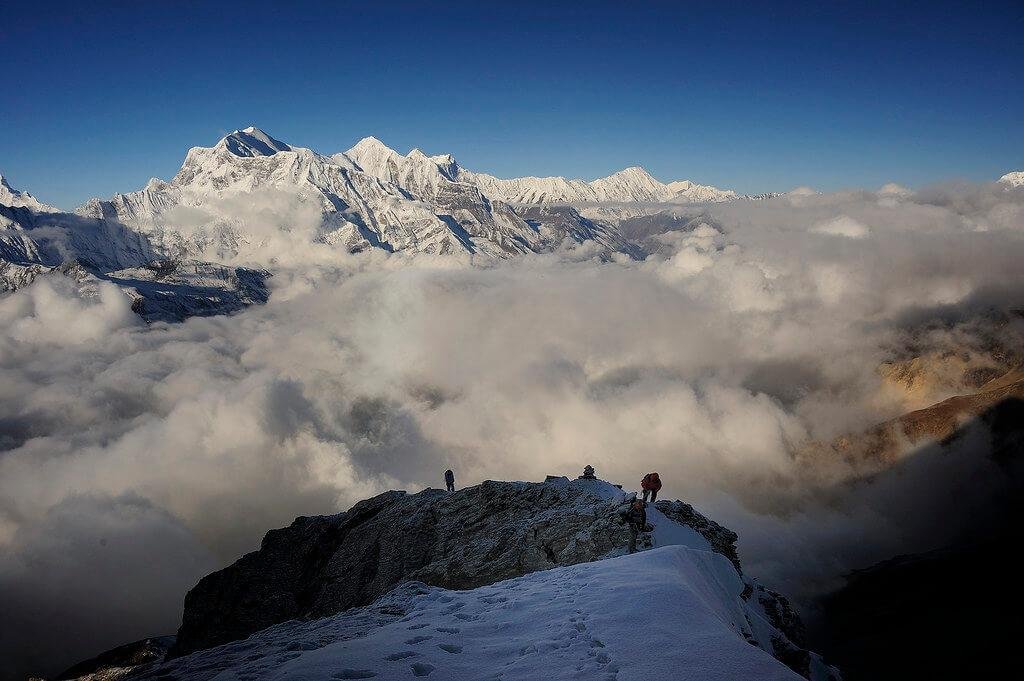
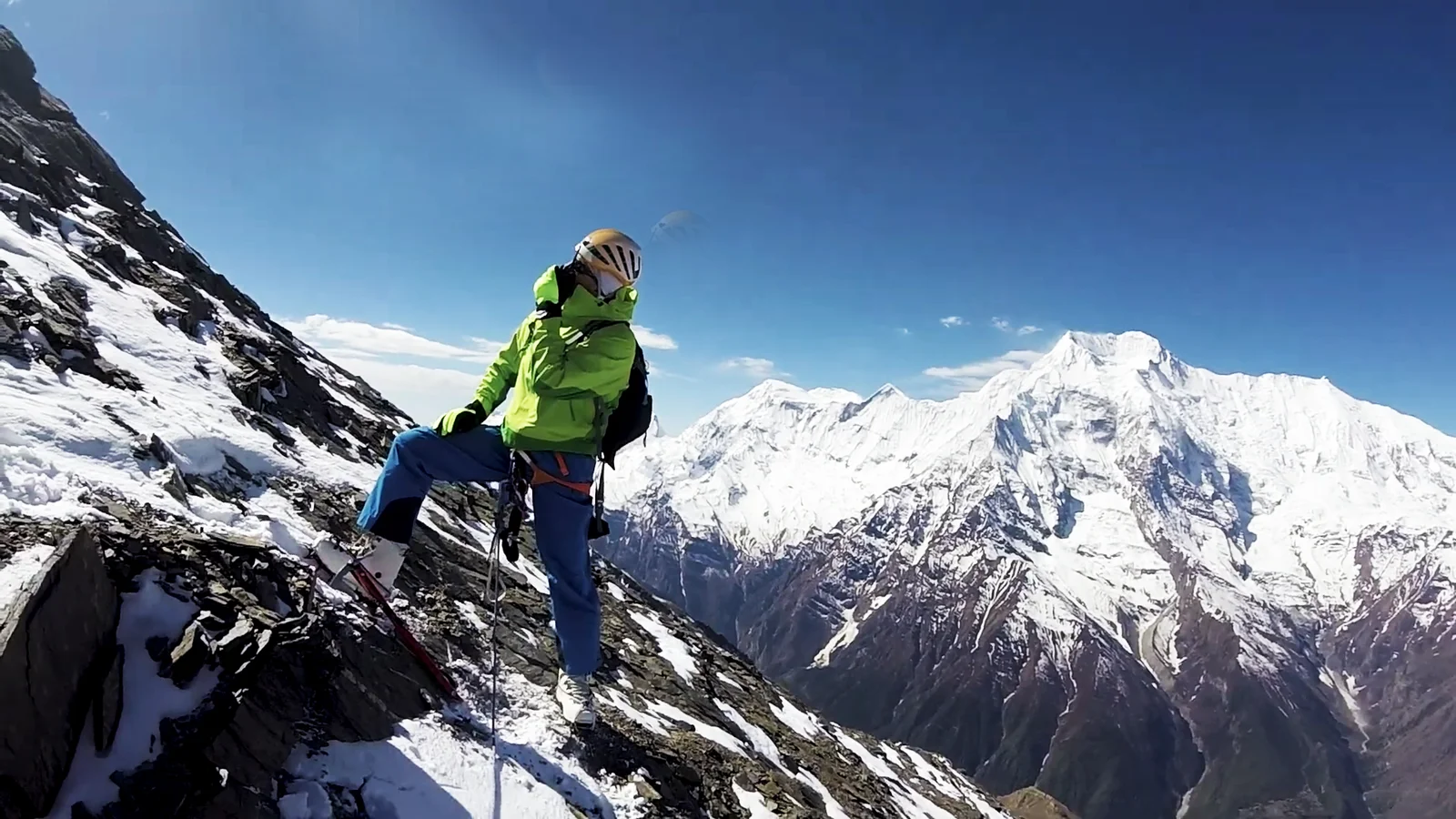
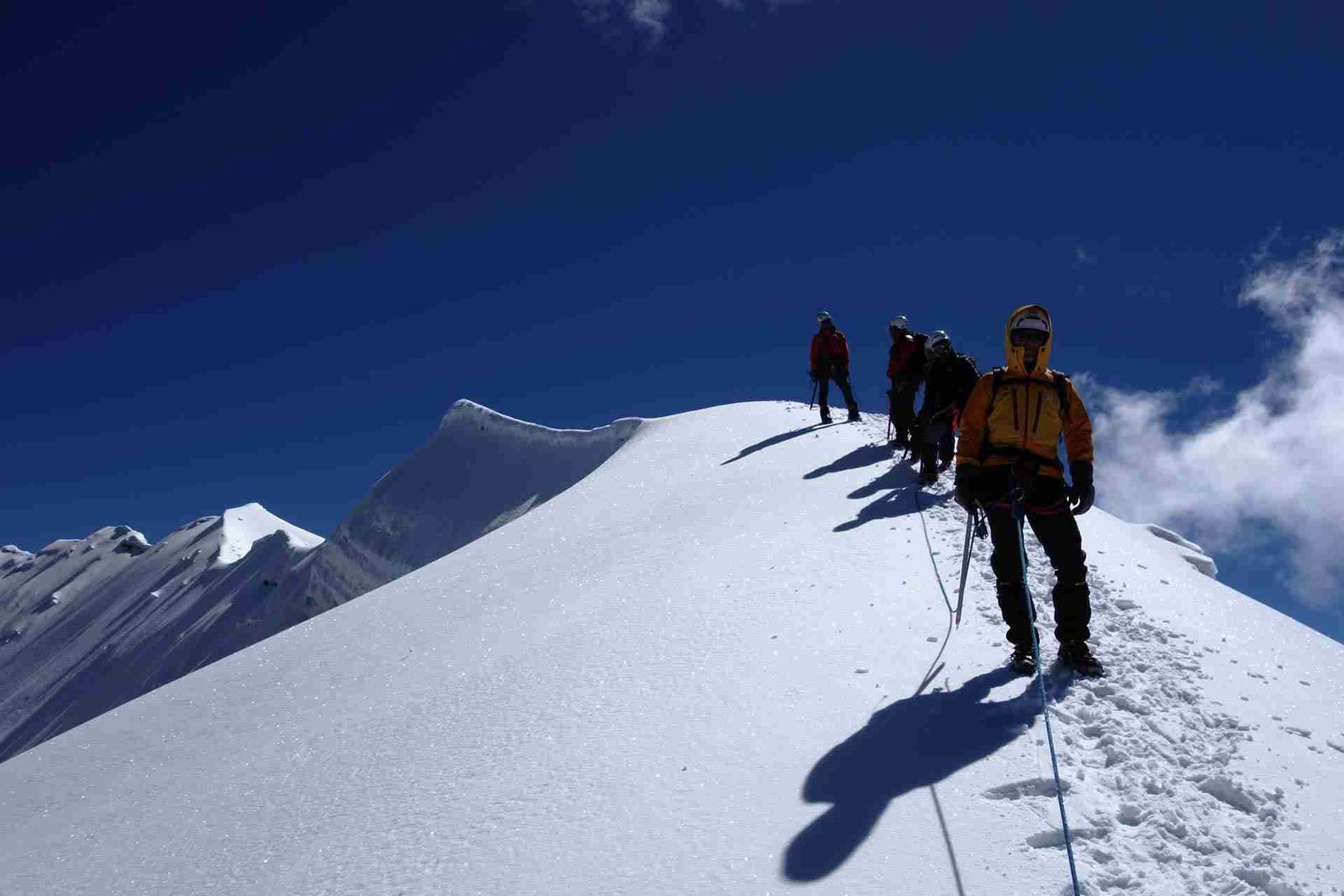
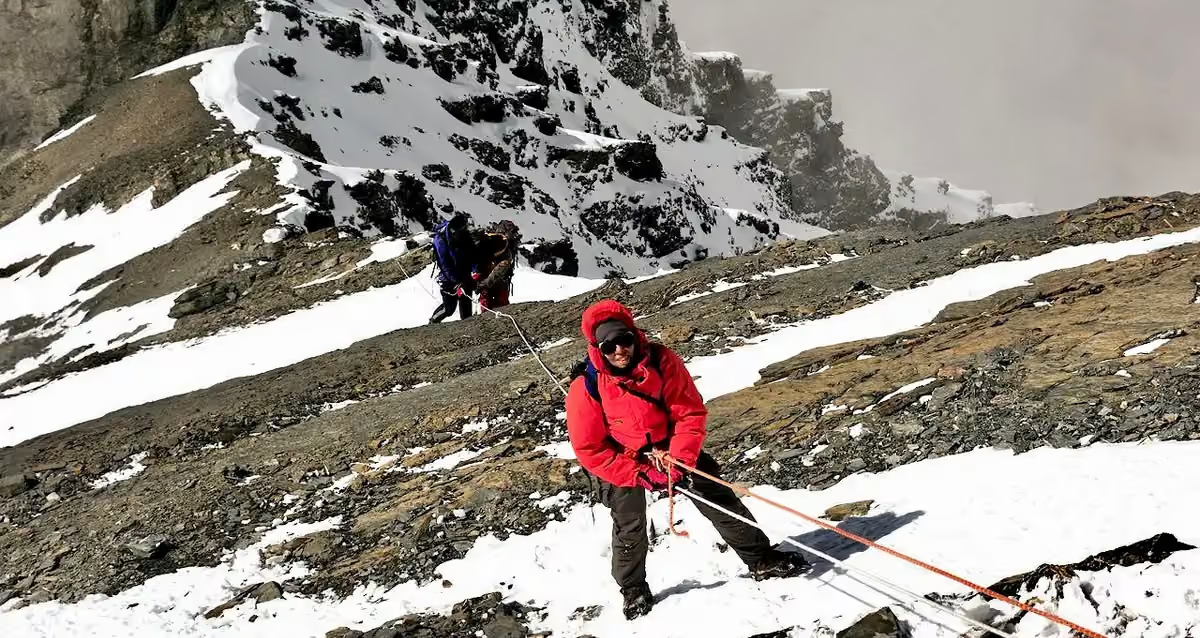
Pisang Peak Climbing is an exciting Himalayan mountaineering journey that combines the traditional trails of the Annapurna region with the challenge of reaching a 6,000-meter summit. Rising to 6,091 meters above sea level, Pisang Peak stands above the village of Pisang, offering a striking mountain landscape of rocky ridges, high-altitude pastures, snow-covered slopes, and expansive views across the Annapurna range. The expedition is designed for trekkers who want to progress beyond ordinary trekking and experience a guided Himalayan peak climb.
The journey begins in Kathmandu before heading toward the Marsyangdi Valley, where the route follows part of the renowned Annapurna Circuit. Along the way, you pass through mountain settlements, pine forests, cultivated slopes, and dramatic river valleys before reaching Chame and Upper Pisang. The changing landscape provides a gradual introduction to the region’s high-altitude environment, while traditional villages and Buddhist cultural landmarks offer insight into the lives of communities living in the Annapurna foothills.
Upper Pisang is an important stage of the expedition because it provides an opportunity to rest and acclimatize before leaving the main trekking route for the mountain. From here, the trail ascends through alpine terrain toward Pisang Peak Base Camp at approximately 4,380 meters. The climbing section continues to High Camp at around 5,400 meters, where the team prepares for the summit attempt. Depending on snow conditions and the route selected by the climbing guide, the upper mountain may involve steep snow slopes, fixed ropes, crampons, an ice axe, and other mountaineering equipment.
The summit day is the central challenge of the expedition. Starting before dawn, climbers move across exposed high-altitude terrain under the supervision of an experienced climbing guide. Reaching the summit at 6,091 meters can reward you with sweeping views of the Annapurna massif, including Annapurna II and IV, Gangapurna, Tilicho Peak, and surrounding Himalayan peaks when visibility is clear. The descent requires careful movement and energy management, making the summit a demanding achievement rather than simply a high viewpoint.
After the climb, the itinerary reconnects with the Annapurna Circuit and continues through Manang, Yak Kharka, and Thorong Phedi. Crossing Thorong La Pass at approximately 5,416 meters adds another memorable high-mountain experience before the descent to Muktinath and Jomsom. This extended route allows climbers to experience more of the Annapurna region rather than returning directly from Pisang.
Pisang Peak is often chosen by fit trekkers seeking their first Himalayan climbing objective, but it should not be mistaken for a simple hiking peak. Its altitude, exposed terrain, variable snow conditions, and technical summit slopes require physical preparation, suitable equipment, and guidance from qualified climbing professionals. Previous mountaineering experience is beneficial, and the final decision to attempt the summit must depend on weather, snow conditions, acclimatization, and the guide’s assessment.
With TrekUp Nepal, the Pisang Peak Climbing package brings together the approach trek, climbing logistics, high-altitude support, and the wider Annapurna journey in one organized expedition. It is an opportunity to develop mountaineering skills, explore traditional Himalayan settlements, and challenge yourself on one of Nepal’s memorable trekking peaks.
Overview
The 18-day Pisang Peak Climbing expedition combines the Annapurna Circuit with a guided ascent of Pisang Peak at 6,091 meters. Trek through traditional mountain villages to base camp and high camp, prepare for the summit with experienced climbing support, and continue across the spectacular Thorong La Pass before finishing in the Mustang region.
Highlights
- Climb Pisang Peak at 6,091 meters in Nepal’s Annapurna region.
- Follow the scenic Annapurna Circuit through Chame, Pisang, and Manang.
- Acclimatize before ascending to Pisang Peak Base Camp and High Camp.
- Learn and practice essential mountaineering techniques with your climbing guide.
- Experience a pre-dawn summit attempt on a high Himalayan peak.
- Enjoy panoramic views of the Annapurna massif and surrounding mountains in clear weather.
- Camp at high altitude beneath the slopes of Pisang Peak.
- Explore traditional villages and Buddhist cultural landmarks in the Manang Valley.
- Cross Thorong La Pass at approximately 5,416 meters.
- Visit Muktinath and continue toward Jomsom in the Mustang region.
- Combine trekking, cultural exploration, and mountaineering in one expedition.
- Benefit from a planned acclimatization schedule and a contingency day for changing conditions.
Pisang Peak Climbing Overview
Pisang Peak Climbing is a Himalayan adventure for travelers who want to combine the cultural and scenic appeal of the Annapurna Circuit with the challenge of a guided mountain ascent. At 6,091 meters, Pisang Peak offers a demanding summit objective above the Manang Valley, with an approach that passes through mountain villages, alpine terrain, and high camps beneath the peak.
The expedition follows the Marsyangdi Valley through Dharapani and Chame before reaching Upper Pisang. An acclimatization day helps prepare for the transition from trekking to climbing, followed by the ascent to base camp and high camp. The summit attempt requires an early start, careful movement, suitable equipment, and close coordination with the climbing guide. Conditions on the upper mountain can change quickly, so the schedule remains subject to safety assessments and weather.
After the climbing section, the route descends to Manang and continues toward Yak Kharka and Thorong Phedi. Crossing Thorong La Pass adds a classic Annapurna Circuit experience before the journey moves toward Muktinath and Jomsom. The itinerary therefore combines the challenge of a high Himalayan summit with the changing landscapes and cultural diversity of the wider Annapurna region.
Pisang Peak is not a technical expedition on the scale of Nepal’s highest mountains, but its altitude and upper slopes demand serious preparation. Climbers need strong endurance, appropriate equipment, and a willingness to follow the guide’s decisions if conditions become unsafe. Previous mountaineering experience is an advantage, particularly for those unfamiliar with crampons, ice axes, or fixed-rope systems.
With TrekUp Nepal, the expedition can be organized around the approach trek, climbing support, camp arrangements, required permits, and onward travel. For suitably prepared adventurers, Pisang Peak offers an opportunity to build mountaineering experience while exploring one of Nepal’s most rewarding mountain regions.
What Can You Expect from the Pisang Peak Climbing Package?
- An 18-day expedition combining trekking in the Annapurna region with a guided climb to 6,091 meters.
- A route through Dharapani, Chame, Upper Pisang, and Manang.
- An acclimatization day before the ascent to base camp.
- Overnight camping at Pisang Peak Base Camp and High Camp, according to the confirmed plan.
- Practical instruction in essential climbing techniques before the summit attempt.
- A pre-dawn summit day that may involve snow, ice, fixed ropes, and exposed terrain.
- A contingency day to accommodate changing weather or climbing conditions.
- Panoramic views of the Annapurna massif and neighboring Himalayan peaks when visibility permits.
- Continued trekking through Yak Kharka and Thorong Phedi.
- A crossing of Thorong La Pass at approximately 5,416 meters.
- A visit to Muktinath and onward travel toward Jomsom.
- Trekking and climbing support arranged according to the selected package.
- Guidance on permits, equipment, preparation, and high-altitude safety.
- An opportunity to experience Himalayan culture alongside a demanding mountaineering objective.
Benefits of Booking Pisang Peak Climbing with TrekUp Nepal
- Local trip coordination: Support with the trekking route, transport, accommodation, and expedition logistics.
- Experienced guiding support: Guidance from appropriately qualified trekking and climbing professionals.
- Organized climbing preparation: Equipment checks and practical instruction before the summit attempt, according to the confirmed package.
- Planned acclimatization: A structured ascent with time to adjust to increasing altitude.
- Permit coordination: Assistance with the required climbing and trekking documentation.
- Camping arrangements: Coordination of base-camp and high-camp logistics where included.
- Flexible group arrangements: Options for private departures and group bookings, subject to staffing and availability.
- Clear package details: An opportunity to confirm inclusions, exclusions, equipment provision, and additional costs before booking.
- Itinerary support: Assistance with travel arrangements and practical adjustments when conditions change.
- Safety-focused decisions: A commitment to prioritizing weather, health, and guide assessments over reaching the summit.
Itinerary
This 18-day expedition begins in Kathmandu and follows the Annapurna Circuit through Dharapani, Chame, Upper Pisang, and Manang before ascending to Pisang Peak Base Camp and High Camp. After the summit attempt at 6,091 meters, the route continues over Thorong La Pass at approximately 5,416 meters before descending to Muktinath and Jomsom and returning to Kathmandu.
Arrive at Tribhuvan International Airport in Kathmandu, where a TrekUp Nepal representative will meet you and transfer you to your hotel. After checking in, take time to rest or explore the nearby streets if your arrival schedule allows. In the evening, meet your trip coordinator or guide to review the expedition plan, discuss the trekking route, and confirm the equipment required for the climb. This is also a good opportunity to check your personal gear and identify anything that needs to be rented or purchased before leaving the city.
Maximum Altitude: Approximately 1,400 m
Walking Duration: Optional short walk around Kathmandu
Driving Duration: Approximately 20–45 minutes from the airport, depending on traffic
Meals: Welcome dinner if included in the confirmed package
Accommodation: Hotel in Kathmandu
Activity: Airport transfer, arrival briefing, and initial preparation
Spend the day completing preparations for the Pisang Peak expedition. Your team will review the itinerary, check personal climbing equipment, and organize the required permits and documentation. Depending on your arrival time and preparation needs, there may be an opportunity to explore parts of Kathmandu Valley or visit local equipment shops for any remaining essentials. The guide will explain the expected trail conditions, the acclimatization plan, the responsibilities of each team member, and the safety procedures for the summit attempt. Use the evening to organize your trekking bag and keep essential items accessible for the early departure the following day.
Maximum Altitude: Approximately 1,400 m
Walking Duration: Optional sightseeing and equipment shopping
Driving Duration: Depends on sightseeing and local transfers
Meals: Breakfast; other meals according to the confirmed package
Accommodation: Hotel in Kathmandu
Activity: Climbing equipment check, briefing, and permit arrangements
Leave Kathmandu early and travel toward the Annapurna region by road. The journey follows Nepal’s central highways before continuing along the Marsyangdi Valley toward the mountain villages. Along the way, the landscape changes from busy urban areas to terraced hillsides, rivers, rural settlements, and increasingly dramatic mountain scenery. Road conditions can vary, and the drive may be long, particularly on the sections beyond Besisahar. After reaching Dharapani, settle into a local teahouse and prepare for the walking stages of the expedition. The actual vehicle access point can change according to road conditions and the transport arrangement confirmed for your departure.
Maximum Altitude: Approximately 1,860 m
Driving Duration: Approximately 9–12 hours, depending on road and traffic conditions
Distance: Approximately 200–230 km by road, depending on the route and vehicle access
Meals: Breakfast, lunch, and dinner
Accommodation: Teahouse or lodge in Dharapani
Activity: Overland journey into the Annapurna region
After breakfast, begin trekking along the Marsyangdi Valley toward Chame, the administrative center of Manang District. The route follows forested hillsides and mountain paths, passing small settlements and sections of the river valley. As you gain elevation, the air becomes cooler and the scenery increasingly alpine, with views of steep rock faces and snow-covered peaks appearing between the trees. Take a steady pace and drink water regularly as your body begins adjusting to the higher altitude. On arrival in Chame, settle into your lodge, rest, and prepare for the next stage toward Pisang.
Maximum Altitude: Approximately 2,670 m
Walking Duration: Approximately 5–6 hours
Distance: Approximately 14–16 km
Meals: Breakfast, lunch, and dinner
Accommodation: Teahouse or lodge in Chame
Activity: Trekking through forested valley trails and mountain settlements
Continue up the Marsyangdi Valley toward Pisang, following a trail through pine forests, rocky sections, and open mountain terrain. The route passes impressive cliffs and viewpoints, with the surrounding peaks becoming more prominent as the valley opens. Depending on the trail conditions, you may pass through or near lower Pisang before climbing toward Upper Pisang, which sits above the main valley and offers a different perspective of the surrounding mountains. Take time to explore the village and observe its traditional architecture and Buddhist cultural features. The ascent brings you above 3,000 meters, making a slow pace and proper hydration especially important.
Maximum Altitude: Approximately 3,300 m
Walking Duration: Approximately 5–6 hours
Distance: Approximately 13–16 km
Meals: Breakfast, lunch, and dinner
Accommodation: Teahouse or lodge in Upper Pisang
Activity: Trekking, village exploration, and initial high-altitude acclimatization
Spend an additional night in Upper Pisang to help your body adjust before ascending toward base camp. Rather than undertaking a demanding trek, the day can include a gentle acclimatization walk toward a nearby viewpoint or a higher village along the upper trail, followed by a return to the same accommodation. The surrounding landscape offers views across the Manang Valley and toward the Annapurna peaks when the weather is clear. Your guide will assess how the group is responding to altitude and discuss the climbing stages ahead, including the equipment and techniques needed for the summit attempt. Keep the day relaxed, eat properly, and report any headache, nausea, unusual fatigue, dizziness, or breathing difficulty to your guide.
Maximum Altitude: Approximately 3,300 m, with an optional higher acclimatization walk
Walking Duration: Approximately 2–4 hours for an optional acclimatization walk
Meals: Breakfast, lunch, and dinner
Accommodation: Teahouse or lodge in Upper Pisang
Activity: Acclimatization, gentle hiking, and climbing preparation
Leave Upper Pisang and move away from the main Annapurna Circuit trail toward Pisang Peak Base Camp. The route climbs through woodland, open pasture, and increasingly rugged terrain before reaching the high grazing area used for the camp. The trail becomes steeper and less developed as you gain altitude, so careful footing and a measured pace are important. Once the team reaches base camp, the climbing crew will organize tents, cooking facilities, and essential equipment. Your guide will introduce the next stages of the climb and check that you are managing the altitude comfortably. The rest of the afternoon should be spent hydrating, eating well, and resting rather than undertaking unnecessary exertion.
Maximum Altitude: Approximately 4,380 m
Walking Duration: Approximately 4–5 hours
Distance: Approximately 5–7 km, depending on the selected trail and camp location
Meals: Breakfast, lunch, and dinner
Accommodation: Tented camp at Pisang Peak Base Camp
Activity: Trekking to base camp, camp setup, and climbing briefing
Use this day to prepare for the technical section of Pisang Peak. Under the supervision of your climbing guide, practice the essential skills required for the planned route, which may include fitting crampons, handling an ice axe, using a climbing harness, moving on fixed ropes, operating an ascender, and descending with appropriate equipment. The exact practice depends on current snow conditions, the route, and the experience of the group. Your guide will also review rope-team procedures, safe movement on steep terrain, and the importance of following instructions during the summit push. Rest periods and altitude monitoring are important at this elevation, so the day should balance practical training with recovery. The climbing guide will assess readiness before the team moves higher.
Maximum Altitude: Approximately 4,380 m
Walking Duration: Short training walks and practical climbing exercises
Meals: Breakfast, lunch, and dinner
Accommodation: Tented camp at Pisang Peak Base Camp
Activity: Acclimatization, mountaineering instruction, and equipment practice
After an early breakfast, begin the steep ascent to Pisang Peak High Camp. The route crosses exposed alpine terrain and may involve loose rock, scree, snow, or icy sections depending on the season. As the altitude increases, progress becomes slower and more physically demanding. The climbing team will determine the safest route and manage the movement of equipment toward the high camp. Once there, the guide will review the summit plan, check personal equipment, and explain the expected departure time and turnaround rules. High Camp is an exposed environment, and temperatures can fall sharply after sunset. Eat an early meal, organize your summit clothing and headlamp, and rest as much as possible before the pre-dawn start.
Maximum Altitude: Approximately 5,400 m
Walking Duration: Approximately 3–5 hours
Distance: Approximately 3–5 km, depending on the route and camp location
Meals: Breakfast, lunch, and dinner
Accommodation: Tented camp at Pisang Peak High Camp, subject to the confirmed climbing plan
Activity: High-altitude ascent, camp setup, and summit preparation
Begin the summit attempt before dawn, usually in the early hours of the morning, when conditions may be more suitable for climbing. With your guide, ascend the upper ridge and snow slopes using the equipment and rope techniques appropriate to the conditions. Some sections can be steep and exposed, and the exact technical difficulty depends on snow cover, ice, and the route chosen by the climbing team. Progress is deliberately controlled because altitude, cold, and exertion can make the ascent demanding. From the summit at 6,091 meters, clear weather can reveal extensive views of the Annapurna massif, Gangapurna, Tilicho Peak, and neighboring Himalayan ranges. After a brief summit stop, descend carefully along the established route to the planned camp. The guide may change the summit plan or turn the team around if weather, snow, health, or safety conditions are unsuitable.
Maximum Altitude: 6,091 m at Pisang Peak summit
Walking and Climbing Duration: Approximately 8–10 hours or longer, depending on conditions and group progress
Meals: Breakfast, lunch, and dinner, with summit-day food and drinks arranged by the climbing team
Accommodation: Tented camp at base camp or the location confirmed by the climbing guide
Activity: Guided summit attempt and high-altitude descent
Keep this day available as a weather contingency for the summit attempt. If conditions prevented a safe climb on Day 10, the guide may use the reserve day to make another attempt, provided the weather, snow conditions, and the group’s health allow it. If the summit has already been completed, use the day for recovery, equipment organization, and a controlled descent when appropriate. A reserve day improves flexibility but cannot guarantee a summit, since safety decisions depend on the actual conditions on the mountain. The climbing guide will confirm whether to remain at camp, descend toward Upper Pisang, or adjust the itinerary based on the situation.
Maximum Altitude: Approximately 4,380 m, or higher if a renewed summit attempt is made
Walking Duration: Rest day or variable climbing duration if the reserve summit attempt is used
Meals: Breakfast, lunch, and dinner
Accommodation: Tented camp or another location confirmed by the guide
Activity: Weather contingency, recovery, and itinerary adjustment
After packing the camp and checking equipment, descend toward Pisang and reconnect with the Annapurna Circuit trail. The route passes through the mountain landscape around Pisang before continuing along the valley toward Manang. As you lose altitude, walking generally becomes more comfortable after the strenuous climbing days, although the trail still includes uneven ground and sections of gradual ascent and descent. Along the way, you may pass traditional settlements, cultivated fields, and Buddhist landmarks characteristic of the Manang region. On arrival in Manang, check into a teahouse and enjoy a proper rest. This is an opportunity to recover before continuing toward the high route leading to Thorong La Pass.
Maximum Altitude: Approximately 3,540 m
Walking Duration: Approximately 5–7 hours
Distance: Approximately 12–15 km, depending on the descent route and camp location
Meals: Breakfast, lunch, and dinner
Accommodation: Teahouse or lodge in Manang
Activity: Descent from base camp, return to the Annapurna Circuit, and village exploration
Leave Manang and follow the trail eastward and upward toward Yak Kharka. The landscape becomes more open and sparse, with alpine pastures, rocky slopes, and broad views across the high valley replacing the denser vegetation lower down. The route gains altitude steadily, so walk at a comfortable pace and take regular breaks. Yak Kharka is a small collection of lodges used by trekkers preparing to cross Thorong La Pass. After reaching the village, spend the afternoon resting, hydrating, and checking your clothing and equipment for the colder conditions ahead. Your guide will discuss the next day’s route and assess whether the group is ready to continue higher.
Maximum Altitude: Approximately 4,050 m
Walking Duration: Approximately 3–5 hours
Distance: Approximately 9–11 km
Meals: Breakfast, lunch, and dinner
Accommodation: Teahouse or lodge in Yak Kharka
Activity: High-altitude trekking and preparation for Thorong La Pass
Continue through the upper valley toward Thorong Phedi, the main staging point below Thorong La Pass. The trail follows rocky slopes and high-altitude terrain, with careful walking required in exposed or narrow sections. Although the distance is relatively short, the increasing elevation can make the journey feel demanding. Depending on the group’s pace and the guide’s assessment, the team may stop at Thorong Phedi or use another suitable overnight location according to the confirmed itinerary. Once you arrive, rest, drink fluids, and prepare your warm layers, headlamp, gloves, and other essentials for the early start across the pass. The guide will review weather conditions and the crossing plan before the group settles for the night.
Maximum Altitude: Approximately 4,450 m at Thorong Phedi
Walking Duration: Approximately 3–4 hours
Distance: Approximately 7–9 km
Meals: Breakfast, lunch, and dinner
Accommodation: Teahouse or lodge at Thorong Phedi
Activity: High-altitude trekking and preparation for Thorong La crossing
Start before dawn for the demanding crossing of Thorong La Pass, one of the major high points of the Annapurna Circuit. The trail climbs gradually at first before becoming steeper as it approaches the pass. Cold temperatures, wind, snow, and altitude can make this a strenuous day, so follow the guide’s pace and instructions closely. At the pass, take time for photographs if conditions allow before beginning the long descent toward Muktinath. The landscape changes as you move toward the Mustang region, with broad mountain slopes and drier terrain becoming increasingly visible. After reaching Muktinath, check into a lodge and rest following the long crossing. The guide may adjust the schedule if weather or trail conditions make the pass unsafe.
Maximum Altitude: Approximately 5,416 m at Thorong La Pass
Walking Duration: Approximately 7–10 hours
Distance: Approximately 14–18 km, depending on the overnight location and route conditions
Meals: Breakfast, lunch, and dinner
Accommodation: Teahouse or lodge in Muktinath
Activity: Thorong La Pass crossing and descent into the Mustang region
After breakfast, continue toward Jomsom, the main town of the lower Mustang region. Depending on road conditions, the selected package, and the group’s preference, this stage may be completed on foot or by vehicle. A walking route offers additional time to experience the dry mountain landscape and settlements of the Kali Gandaki Valley, while road transport shortens the journey after the demanding pass crossing. Jomsom has a different character from the greener Marsyangdi Valley, with open terrain and views toward the surrounding arid mountains. On arrival, settle into your accommodation and prepare for the onward journey to Pokhara.
Maximum Altitude: Approximately 2,720 m
Walking Duration: Approximately 4–6 hours if trekking
Driving Duration: Approximately 1–2 hours if using road transport, depending on conditions
Distance: Approximately 15–20 km by walking route, or the relevant road distance if driving
Meals: Breakfast, lunch, and dinner
Accommodation: Teahouse or lodge in Jomsom
Activity: Travel through the Mustang region and overnight in Jomsom
After breakfast, transfer to Jomsom Airport for the scheduled flight to Pokhara, subject to weather and airline operations. The short mountain flight can offer views of the Kali Gandaki Valley and surrounding peaks when visibility is good. After reaching Pokhara, continue to Kathmandu by road or domestic flight according to the package selected and the available schedule. If traveling by road, allow additional time because traffic and road conditions can affect the journey. On arrival in Kathmandu, transfer to your hotel and enjoy a well-earned rest after the trekking and climbing expedition. If the Jomsom flight is delayed or cancelled, your team will coordinate an alternative arrangement based on safety and availability.
Maximum Altitude: Approximately 2,720 m in Jomsom before departure
Walking Duration: Short airport and hotel transfers
Flight Duration: Approximately 20–30 minutes from Jomsom to Pokhara, subject to operations
Driving Duration: Approximately 6–9 hours from Pokhara to Kathmandu if traveling by road
Meals: Breakfast; other meals according to the confirmed package
Accommodation: Hotel in Kathmandu
Activity: Domestic flight and onward travel to Kathmandu
Your Pisang Peak Climbing expedition concludes today. Depending on your international flight schedule, enjoy breakfast at the hotel and take some time to organize your luggage before the airport transfer. A TrekUp Nepal representative will assist with your transfer to Tribhuvan International Airport according to the arrangements confirmed in your package. If you wish to remain in Nepal longer, additional nights or other trips can be arranged separately. Depart with memories of the Annapurna Circuit, the high camps, the summit attempt, and the diverse mountain landscapes experienced during the expedition.
Maximum Altitude: Approximately 1,400 m
Walking Duration: Short hotel and airport transfers
Driving Duration: Approximately 20–45 minutes to the airport, depending on traffic
Meals: Breakfast if included in the confirmed package
Accommodation: Not included after departure unless additional nights are booked
Activity: Airport transfer and departure from Nepal
Includes/Exclude
Cost Includes
- Airport pickup and drop-off in Kathmandu according to the itinerary.
- Ground transportation from Kathmandu to the trekking starting point.
- Transportation required along the route, as specified in the confirmed itinerary.
- Domestic flight from Jomsom to Pokhara, if included in the confirmed package.
- Transportation from Pokhara to Kathmandu by the agreed option.
- Hotel accommodation in Kathmandu for the nights specified in the itinerary.
- Teahouse or lodge accommodation during the trekking section.
- Tented accommodation at Pisang Peak Base Camp and High Camp.
- Breakfast, lunch, and dinner during trekking and climbing days as specified in the package.
- Meals during the Kathmandu stay where explicitly included.
- An experienced trekking guide and qualified climbing guide appropriate to the expedition.
- Required climbing and trekking permits, including the Pisang Peak climbing permit and applicable conservation-area documentation.
- Climbing crew and support staff according to the confirmed group size.
- Porters or other load-carrying support as specified in the package.
- Group climbing equipment and camp equipment as specified in the confirmed package.
- Climbing instruction and equipment practice before the summit attempt.
- Kitchen and camp support during the climbing section where included.
- First-aid supplies carried by the trekking or climbing team.
- Staff wages, meals, accommodation, insurance, and applicable operational expenses.
- Government taxes and service charges applicable to the package.
- Pre-trip briefing, route guidance, and expedition coordination.
Cost Excludes
- International flights to and from Nepal.
- Nepal entry visa fees.
- Travel insurance covering high-altitude mountaineering and emergency helicopter evacuation.
- Personal climbing equipment, including mountaineering boots, crampons, ice axe, harness, helmet, ascender, descender, and suitable clothing, unless specifically included.
- Personal expenses such as laundry, Wi-Fi, phone calls, charging, and hot showers where charged separately.
- Snacks, soft drinks, bottled water, and extra beverages.
- Meals in Kathmandu that are not specified as included.
- Additional hotel nights caused by early arrival, late departure, delays, or itinerary changes.
- Tips for guides, climbing staff, porters, and drivers.
- Personal purchases and optional sightseeing.
- Extra accommodation, meals, or transport arising from itinerary changes beyond the agreed package.
- Helicopter evacuation, medical treatment, and other emergency expenses not covered by the package or insurance.
- Additional costs resulting from weather delays, flight cancellations, or route changes unless expressly included.
- Any service not specifically listed under Cost Includes.
Add-ons and Options
Customize your Pisang Peak Climbing expedition with additional acclimatization time, upgraded transport, extra accommodation, or equipment arrangements. The availability and price of each option depend on the season, group size, and confirmed itinerary. Contact TrekUp Nepal to confirm which services can be added to your booking.
Porter or Additional Load-Carrying Support
Price: Available on request
Arrange additional porter support for personal trekking luggage or equipment, subject to the route, weight limits, and staff arrangements.
Private Jeep from Kathmandu to the Trekking Starting Point
Price: Available on request
Choose a private vehicle for the journey into the Annapurna region for greater flexibility and a more direct travel arrangement.
Domestic Flight or Private Transport Upgrade
Price: Available on request
Discuss alternative transport arrangements between Jomsom, Pokhara, and Kathmandu, subject to route availability, weather, and operational conditions.
Extra Acclimatization Day
Price: Available on request
Add an extra day at a suitable location to allow more time for acclimatization before continuing to base camp or high camp.
Additional Summit Contingency Day
Price: Available on request
Add another reserve day where the schedule and logistics allow, providing more flexibility if weather or mountain conditions delay the summit attempt.
Personal Climbing Equipment Rental
Price: Depends on equipment and rental duration
Arrange rental of suitable personal climbing gear in Kathmandu where available. Confirm fit, condition, compatibility, and the exact equipment required with the climbing guide before departure.
Hotel Upgrade in Kathmandu
Price: Available on request
Upgrade your Kathmandu accommodation to a higher category, subject to availability and the selected hotel.
Extra Night in Kathmandu
Price: From US$35 per person per night
Add an extra night before or after the expedition for rest, sightseeing, equipment shopping, or additional travel flexibility.
Private Departure
Price: Available on request
Arrange a private expedition for your own group, with a departure date and itinerary considered according to climbing logistics, staffing, and seasonal conditions.
How to Personalize Your Trip
Step 1: Choose Your Departure Date
Select your preferred departure date or contact TrekUp Nepal to discuss a private departure during the recommended climbing season.
Step 2: Enter Number of Travelers
Enter the number of climbers in your group so the appropriate group price and staffing requirements can be assessed.
Step 3: Select Your Add-ons
Choose any extra acclimatization days, transport upgrades, accommodation options, or equipment rental arrangements you need.
Step 4: Review Your Booking
Review the itinerary, climbing support, accommodation, meals, equipment provision, permits, exclusions, and any additional charges before confirming.
Step 5: Complete Your Booking
Complete the booking and payment process after the trip details and package arrangements have been confirmed with TrekUp Nepal.
Spring (March to May)
Spring is one of the main seasons for Pisang Peak Climbing. Temperatures generally become more favorable for trekking, and the Annapurna region begins to emerge from winter conditions. The lower trails can feature flowering rhododendrons, while the higher mountain slopes may retain snow suitable for climbing, depending on the year and recent weather. April and May are popular months, but summit conditions still require a current assessment of snow stability, wind, and visibility. Cold temperatures remain a major factor at high camp and on summit day.
Autumn (September to November)
Autumn is another preferred season for Pisang Peak Climbing. Following the monsoon, the skies often become clearer and the mountain views can be excellent. October and early November are particularly popular for trekking in the Annapurna region. Conditions at high altitude can still be cold, and the amount and quality of snow on the summit route vary from year to year. Good visibility does not automatically mean the climbing route is safe, so the climbing guide must assess conditions before the summit attempt.
What Our Travelers Say
Read reviews from travelers who have joined our Himalayan trips. See what they enjoyed and what they thought about their experience.
Frequently Asked Questions
Faq's
Pisang Peak reaches approximately 6,091 meters above sea level. The expedition also includes nights at high altitude, with Base Camp around 4,380 meters and High Camp around 5,400 meters, depending on the final camp location and route.
A typical full expedition takes approximately 18–19 days, including arrival, preparation, the approach trek, acclimatization, the climbing section, a contingency day, the Annapurna Circuit crossing, and departure. The exact duration depends on the chosen itinerary and transport arrangements.
Pisang Peak is a challenging high-altitude climb. It combines several days of trekking with a technical summit section involving steep terrain and potentially snow or ice. The altitude, cold, exposure, and long summit day require good fitness and appropriate climbing support.
It may suit fit trekkers who are new to Himalayan peak climbing, but it is not an ordinary beginner’s hike. Previous experience with crampons, an ice axe, fixed ropes, or other mountaineering skills is beneficial. Climbers should be prepared to complete training and follow the climbing guide’s safety decisions.
Previous mountaineering experience is strongly beneficial. If you have not climbed a snow or ice route before, discuss your experience honestly with TrekUp Nepal before booking. The guide can explain the technical demands and whether the route is suitable for your current skills.
Spring, from March to May, and autumn, from September to November, are generally the preferred seasons. April and May and October are popular periods, but the best summit window depends on the weather, snow conditions, and the route assessment by the climbing team.
The expedition requires a valid Pisang Peak climbing permit and applicable trekking or conservation-area permits. Permit rules and fees can change, so TrekUp Nepal should confirm the current requirements and include the agreed permit costs in your final package details.
Yes. A qualified climbing guide is essential for route planning, assessment of mountain conditions, technical guidance, and decisions about whether it is safe to continue. The required number of climbing staff should be planned according to the group size and the nature of the route.
Personal equipment generally includes mountaineering boots compatible with crampons, crampons, an ice axe, a climbing harness, a helmet, an ascender, a suitable descender, locking carabiners, warm layered clothing, gloves, a down jacket, a sleeping bag, and glacier sunglasses. The final list should be confirmed with TrekUp Nepal before departure.
Many essential climbing items can be rented or purchased in Kathmandu, depending on availability, fit, and condition. Confirm in advance which personal items you need to bring and which equipment the package provides. Boots and other critical personal gear should be checked carefully for suitability.
Accommodation is generally in hotels in Kathmandu, local teahouses or lodges along the Annapurna Circuit, and tents at base camp and high camp. Facilities become more basic at higher elevations, and sleeping conditions are colder and more exposed during the climbing section.
Meals commonly include dal bhat, rice, noodles, soups, potatoes, eggs, vegetables, and other available local dishes. During the camping section, meals are prepared by the expedition kitchen team if that service is included. Confirm which meals are covered in Kathmandu and on travel days.
Yes. The itinerary reaches more than 6,000 meters, where altitude-related illness is a serious risk. Acclimatization, a measured pace, adequate hydration, and prompt reporting of symptoms are important. Severe or worsening symptoms require immediate assessment and may mean descending rather than continuing.
No. Reaching the summit depends on weather, snow and ice conditions, the climber’s health, acclimatization, and the guide’s assessment. The contingency day offers flexibility, but safety must take priority over the summit objective.
The itinerary includes a contingency day that may be used if the original summit attempt cannot proceed safely. If conditions remain unsuitable, the guide may cancel the climb and continue with the trekking itinerary. Any additional nights, transport changes, or other costs should be explained in the confirmed package terms.
Yes, in the 18-day itinerary presented here, the route continues through Manang, Yak Kharka, and Thorong Phedi before crossing Thorong La Pass at approximately 5,416 meters. This adds another demanding high-altitude day after the climbing section. Travelers who prefer to finish after the summit can discuss an alternative itinerary.
Flights between Jomsom and Pokhara depend on weather and operational conditions. Delays or cancellations can affect the onward journey. The itinerary should allow flexibility where possible, and travelers should carry insurance and have contingency funds for additional accommodation or transport if needed.
You should be comfortable with consecutive days of trekking, sustained uphill walking, long descents, and a demanding summit day. Preparation should include regular aerobic exercise, uphill hikes, and strength and endurance training. Physical fitness alone does not replace the technical skills or altitude readiness required for the climb.
Yes. Depending on the season and logistics, the itinerary can be adjusted for additional acclimatization, extra days, a different transport arrangement, or a modified finish. Any changes should be reviewed for their effect on safety, permits, staffing, and overall cost.
You need travel insurance that explicitly covers high-altitude mountaineering to at least 6,091 meters and emergency helicopter evacuation in Nepal. Check the policy wording carefully, because many standard travel policies exclude climbing or high-altitude activities.