
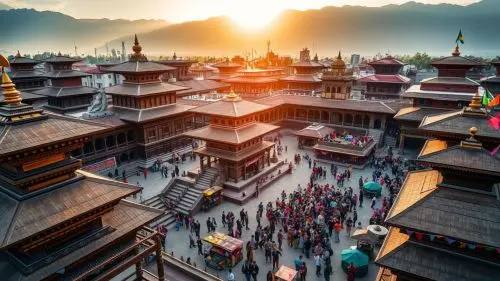
Kathmandu Durbar Square: The Living Heart of Nepal’s Royal Heritage
Kathmandu Durbar Square, also known as Basantapur Durbar Square, is a UNESCO World Heritage site in the heart of Kathmandu, the capital of Nepal. This historical monument is a cultural heart and crown jewel of Nepal’s royal heritage, with a history stretching from the 12th century to the 18th century. Built and developed under the Malla kings and the Shah dynasty, the square preserves an unbroken tradition of royal life, art, and worship. Its royal palace, Hanuman Dhoka, Hanuman statue, Kasthamandap, towers, ancient temples, shrines, courtyards, and wooden balcony reflect centuries of Newari craftsmanship. With its many monuments and nearly 50 temples historically associated with the wider palace complex and surrounding area, this living museum offers a close look at Nepal’s royal dynasties, history, and cultural identity. Despite political upheaval, natural disasters, and the devastating 2015 earthquake, the square remains an important part of local life.
The best way to explore Kathmandu Durbar Square is to look beyond its main plaza and discover its hidden corners and local secrets. At dawn, oil lamps glow near shrines as devotees gather for daily worship, while priests, children, and local residents continue the square’s spiritual rhythms. Visitors may also learn about the Living Goddess, Kumari, and experience festivals, masked dancers, chariot processions, and other rituals that keep its traditions alive. From my perspective, exploring with a knowledgeable local guide can reveal details that guidebooks often miss. Useful tips include checking entry details, respecting religious customs, looking for ongoing restoration projects, and combining your visit with nearby walks for more local insights. These attractions make the square more than a historic site; they show how Nepal’s past remains part of everyday life.
Origin of Kathmandu Durbar Square
The Kathmandu Durbar Square has a rich history that reflects Nepal’s royal past, cultural traditions, and changing dynasties. Its roots are linked to the Licchavi period, with historical development continuing through the Malla period, when kings, ruling royalty, temples, and palaces shaped the city’s identity. During the 12th century and mid-16th century, the Mallas expanded the square as a seat of power, adding impressive architecture, detailed designs, and courtyards for royal life and public ceremonies. Pratap Malla, a major ruler of the 17th century, contributed to its development, including the Hanuman statue, established in 1672, near Hanuman Dhoka. The complex later became part of the Shah dynasty following Prithvi Narayan Shah’s unification of Nepal in 1768. Historical accounts also connect the wider area with Shamshir Shah, defensive towers, and structures that reflect its ancient history and Medieval history.
The square’s development includes traditions associated with Kasthamandap, built using sal tree wood and other wood, and local stories about a sacred tree, flames, and the area’s early origins. Its layout once included 35 courtyards, while later descriptions often highlight 10 courtyards, including Sundari Chowk and Mohan Chowk, along with closed chowks and an eastern wing designed partly for defense and royal privacy. The site’s history also reflects a youthful history of changing communities and subsequent cultures, with references to the 3rd century, 4th century AD, and royal traditions evolving over time. Located in Kathmandu, about 1,400 m (4,593 ft) above sea level, the square suffered damage during the 1934 earthquake and the 2015 earthquake, leading to major restoration work. Recognized by UNESCO with World Heritage Status in 1979, it remains a living cultural heritage site and former royal residence, featuring references to 26 temples, 250 chapels, and historic structures associated with the late 19th century. Visitors exploring the 10 best places to visit in Kathmandu can experience how this historic site continues to connect Nepal’s royal legacy with everyday community life.
Overview of Basantapur Durbar Square
Kathmandu Durbar Square, also known as Basantapur Durbar Square, is a famous cultural heritage site in Kathmandu, Nepal, known for its royal past, temples, palaces, and detailed architecture. Its ancient history dates back to the Licchavi era, around the 4th century AD, while its Medieval history developed under the Malla period, especially during the 12th century and the rule of Mallas. The square served as the seat of power, a royal residence, and a place for royal ceremonies. Kings such as Pratap Malla, who ruled in the 17th century, expanded its buildings and religious landmarks. The Hanuman Dhoka palace complex, a Hanuman statue dated 1672, and the legacy of Shamshir Shah reflect its royal connections. The square also became part of the Shah dynasty after Prithvi Narayan Shah led the unification of Nepal in 1768. Today, its UNESCO World Heritage Status, awarded in 1979, makes it one of the 10 best places to visit in Kathmandu.
The square stands at about 1,400 m (4,593 ft) above sea level and features towers, four towers, 26 temples, 250 chapels, and historic courtyards, including 10 courtyards, Sundari Chowk, and Mohan Chowk. The eastern wing, closed chowks, and strong walls once supported royal defense, while buildings made from wood and sal tree wood show traditional craftsmanship. Kasthamandap, linked to a sacred tree and local wood traditions, is an important landmark. The square reflects subsequent cultures, dynasties, kings, and the community that has kept its traditions alive. Its youthful history continues through festivals and daily life, despite damage from the 1934 earthquake and the 2015 earthquake, which led to major restoration work. From its historic fort and palace flames stories to its surviving temples, Kathmandu Durbar Square remains a living reminder of Nepal’s royal and cultural identity.
Major highlights of Kathmandu Durbar Square
Kathmandu Durbar Square is one of the most famous World Heritage Sites in Kathmandu, offering a close look at Nepal’s royal history, religious traditions, and traditional architecture. During a Day Tour, I would recommend exploring Hanuman Dhoka Palace, its historic courtyards, thrones, and museums, which preserve royal mementoes and artifacts from the Malla era and Shah era. Important landmarks include Nautalle Durbar, Gaddi Baithak, Nasal Chowk, where coronation ceremonies took place, and Mul Chowk and Sundari Chowk, which feature traditional woodwork and skilled craftsmanship. The square also houses Kasthamandap, traditionally associated with the wood of one tree, the tallest pagoda-style temples, and the Maju Deval temple area. Although the great earthquake damaged several structures, restoration has helped preserve the work of local artisans. The wider historic area reflects centuries of cultural development, with the Kathmandu Valley’s heritage landscape extending across 167 hectares and the city sitting at around 1,400 meters (4,593 ft) above sea level.
Religious sites make the square especially meaningful, blending Hindu influences and Buddhist influences through temples, shrines, and traditional stupa style elements. Visitors can see Taleju Temple, dedicated to Taleju Bhawani, the Shiva-Parvati Temple, Jagannath Temple with its erotic carvings, and Vishwanath Temple, associated with Shiva. The Trailokya Mohan Narayan temple, the dancing Shiva statue, the massive stone idol of Kala Bhairav, and the Hanuman statue near the palace entrance are among the memorable sights; Garuda is often shown in a kneeling position before a deity. The square also includes Kumari Bahal, or Kumari Ghar, home of Kumari, Nepal’s revered Living Goddess, often seen in a red dress during special appearances. Other highlights include the Big Bell, historically linked to temple rituals, and spaces connected with festivals and animal sacrifice. Some structures date to the 12th century, while others reflect the 16th-century, 18th-century, and later periods, including temples built or renovated around 1564, 1672, and other dates in the square’s long history. You may also notice monkeys, handicraft shops, and the prediction area associated with local traditions, making this historic site a lively place where religious life, royal heritage, and everyday cultures meet.
Hanuman-Dhoka Durbar Square
Hanuman Dhoka Durbar Square is a historic landmark in Kathmandu Durbar Square and was once the seat of Malla and Shah dynasties, serving as a focal point of royal life and power. The old royal palace, also known as Hanuman Dhoka Palace, was the palace of the Malla kings and later the home of Shah dynasty rulers. At the entrance, you can see a stone figure of the Hindu god Hanuman, the monkey god, covered in red paste and protected by a red-draped statue covering, which gives the palace gate its name. Inside, the ten courtyards include Nasal Chowk, a historic courtyard where kings crowned themselves during royal ceremonies. The beautiful Golden Gate and Basantapur Tower are other highlights, with the tower offering a commanding view of nearby temples and the city. During a visit, I would also recommend exploring the Tribhuvan Museum, where royal artifacts provide a closer look at the lifestyle of past monarchs and the rich history of Nepal’s royal family.
Key Courtyards
The key courtyards of Kathmandu Durbar Square reveal the royal history, traditional art, and cultural heritage of Nepal. Inside the Hanuman Dhoka Palace, Mul Chowk stands as the oldest courtyard, known for its role in religious rituals, Dashain festivals, and Dashain sacrifices. Nasal Chowk served as an important place for royal coronations, where kings received crowns during coronation ceremonies, while a dancing Shiva statue adds to its cultural importance. Mohan Chowk was a private part of the historical royal area and remains closed to public access. Nearby, Sundari Chowk features an ornate carved water tank, while its carvings reflect the craftsmanship of the royal period. Visitors can also explore Nautalle Durbar, a nine-storey section of the palace, famous for its nine-story tower and panoramic views. From suitable viewing points, travelers can enjoy city panoramas across Kathmandu. The ceremonial heart of the palace complex connects these courtyards with royal traditions, while the royal bath, featuring an ornate sunken tank, offers another glimpse into the lifestyle of the former rulers. Some palace spaces were used until 2001, preserving a strong link between Nepal’s royal past and its living heritage.
Hanuman Statue
At Kathmandu Durbar Square, the Hanuman statue stands near the palace entrance as a sacred symbol of protection, bravery, and devotion. Known as the monkey god, Hanuman is believed to guards royal palace and protect the entire city from evils. Historical records link the statue’s installation to 1672, during the reign of King Pratap Malla. The stone statue is covered with red paste and vermillion paste, while cloth offerings placed by locals and devotees show their respect and faith. A golden umbrella protects the statue from rain and adds to its religious importance. When visiting this historic palace gate, you can observe its original stone features and take photos, as photos welcome in permitted public areas, provided you respect worshippers and local customs.
Hanuman Dhoka Palace Museum
The Hanuman Dhoka Palace Museum is an important part of Kathmandu Durbar Square, offering visitors a closer look at Nepal’s royal past. This historic royal palace includes several buildings, courtyards, and rooms that reflect the architectural styles of the Malla period and Shah period. Inside the palace museum, visitors can explore royal artifacts, including thrones, royal garments, weapons, ceremonial objects, personal items, and historical documents connected to Nepal’s rulers. From my perspective, exploring these exhibits with audio guides helps visitors understand the context behind each object and its role in national history. As you walk through Hanuman Dhoka, you may also notice palace guards, restoration areas, and signs marking private sections that are not open to the public. These details help visitors appreciate the palace’s historical importance while respecting its preservation and ongoing care.
Shiva-Parvati Temple
Located on the western side of Kathmandu Durbar Square, the Shiva-Parvati Temple is a modest two-storey temple built in the 18th century. Its simple architecture stands out among the square’s ornate structures, while its top-center window features life-sized wooden figures of Shiva and his consort, Parvati. These painted wooden images show the divine couple looking out from the upper window, creating a living connection between the deities and the public. From my perspective, this small but meaningful detail makes the temple especially interesting, as the statues appear to watch the daily activities taking place in the square. Their unique appearance also makes the temple a favourite photo subject for visitors exploring the cultural and religious heritage of Kathmandu.
Kal Bhairav Statue
The Kal Bhairav statue at Kathmandu Durbar Square is a famous 17th-century statue from the 1600s, known for its massive stone idol and powerful appearance. This 12-foot stone relief, also described as a massive stone image about three metres tall, shows Kala Bhairav, the fierce Bhairav form of Lord Shiva, also known simply as Shiva. The black stone carving features six arms, a severed head, a corpse, garlands of skulls, and detailed ornaments, highlighting the nature of this fierce deity. At the base of the statue, local devotees place offerings and pray for protection and justice. From a cultural and historical perspective, one of the most interesting traditions linked to this sacred figure is its role in judicial proceedings, where litigants once took oaths before the statue because people believed that false testimony would lead to instant death. This belief made the statue an important symbol of truth, justice, and religious faith in Nepal.
Sweta Bhairava Statue
The Sweta Bhairava, also known as Seto Bhairab or the white Bhairav, is a sacred figure in Kathmandu Durbar Square, representing a lighter manifestation of Kal Bhairav, a powerful form of Lord Shiva. The statue features a large gilded metal mask set into a building wall near the northeast corner of the square. During Indra Jatra, an eight-day festival celebrated in Kathmandu, the usually hidden statue becomes a major attraction as people gather to receive blessings. During this festival period, a small opening in the mask’s mouth allows the flow of blessed liquid, often rice beer, which devotees consider auspicious. From a visitor’s perspective, this ritual offers a close look at the living traditions of Kathmandu, where ancient beliefs, community celebrations, and religious practices remain an important part of daily life.
Akash Bhairav Temple
Located on the northern side of Kathmandu Durbar Square, the Akash Bhairav Temple is a three-storey temple dedicated to Akash Bhairav, also known as sky Bhairav, a powerful manifestation of Bhairav, associated with Lord Shiva. The temple is architecturally significant for its traditional Newari design, detailed ornate metalwork, and silver-plated door. Inside, the main deity concealed from public view adds to the temple’s religious mystery, while a massive mask of Akash Bhairav attracts the attention of visitors and devotees. During Indra Jatra, one of Kathmandu’s important annual festivals, the temple becomes a major centre of worship and celebration, offering visitors a closer look at the living religious traditions and cultural heritage of the Kathmandu Valley.
The historical, religious and cultural significance of Kathmandu Durbar Square
Kathmandu Durbar Square is a living museum in the heart of the old city of Kathmandu, Nepal, where history, faith, and daily life come together. Early religious sites dating from the 4th-8th century reflect the Licchavi period, with roots reaching back to the 4th century, while later Malla expansions shaped the square between the 12th to 18th centuries through grand palaces, temples, towers, and fine Newar art and architecture. The Malla kings strengthened its historic significance, and in 1672, Pratap Malla added a Hanuman statue near Hanuman Dhoka, the historic royal palace and former seat of the king. After 1768, the Shah kings made the square part of a unified Nepal, linking royal ceremonies, coronations, and political power with national political unity. The square also reflects the Shaha dynasty and the changing role of former rulers. Today, its cultural artifacts, museums, and historic buildings help visitors understand Nepal’s past. Located at approximately 1,400 m (4,593 ft) above sea level, it became a UNESCO World Heritage Site in 1979 as one of the valley’s 7 World Heritage Sites Tour in Kathmandu highlights, although natural calamities, especially the 2015 earthquake, damaged parts of its structures and led to community-led restoration efforts focused on protecting their integrity.
The square’s religious significance comes from its Hindu-Buddhist harmony, visible in its Hindu and Buddhist symbols, shared spaces, and coexistence among Hindus, Buddhists, Newari Buddhists, monks, priests, and local worshippers. The Taleju Temple, dedicated to Taleju Bawani, the royal goddess, represents devotion, bravery, and royal legitimacy, while Mul Chowk remains important for traditional ceremonies and Dashain, when animal sacrifices may take place and animals slaughtered as offerings to Durga according to established customs. At Kumari Ghar, the Living Goddess tradition honours the living goddess Kumari, traditionally selected from the Shakya clan and revered as an incarnation of Taleju; visitors may seek her blessings while respecting the customs involved in safeguarding the palace and avoiding unholiness. During daily worship, people perform morning and evening prayers, circling shrines clockwise, ringing bells, and presenting flower offerings at this spiritual centre. Annual festivals, especially Indra Jatra, bring together tradition, culture, artisans, and the wider community through music, processions, and rituals. Experiencing these practices offers a deeper understanding of how Newar artistry, intricate wood carvings, and living religious customs continue to shape Kathmandu Durbar Square.
Major Festivals
Kathmandu Durbar Square becomes a lively cultural center during Nepal’s major festivals, when ancient temples, traditional music, and local rituals bring the city’s history to life. Indra Jatra, celebrated in September, is known as the biggest festival of the valley and lasts for eight days. During these celebrations, visitors can see the Goddess Kumari riding in a golden chariot, along with masked dancers performing traditional dances based on mythology stories. The festival offers a special chance to experience the religious traditions and community spirit of the Kathmandu streets.
Other important festivals include Dashain, celebrated around October, and Tihar, which usually falls in October-November. During Dashain, people visit temples, receive blessings, and take part in traditional rituals, including animal sacrifices at certain religious sites. The festival also has historical links with the royal family, whose customs remain part of Nepal’s cultural heritage. During Tihar, families decorate their homes and courtyards with oil lamps and perform worship of Laxmi, goddess of wealth, to welcome prosperity. Knowing the festival timing helps visitors plan their trip, enjoy local traditions respectfully, and understand why some ceremonial or heritage restricted areas may have limited access during major events.
Religious Symbolism
The religious traditions of Kathmandu Durbar Square are reflected in its temples, statues, and daily rituals. Stone guardians, including lions, stand near temple entrances to protect sacred spaces from evil spirits. The square also features Shiva manifestations in both fierce and peaceful forms, showing different aspects of divine power. Garudas, known as Vishnu’s vehicle, represent protection and devotion, while Makaras symbolize the life-giving properties of water. Similarly, Nagas are linked to underground treasures and monsoon rains, reflecting the close connection between spiritual beliefs and nature. These symbols give the square a deeper spiritual meaning beyond its historic architecture.
For Nepalese children, the square can serve as an outdoor classroom where they learn through observation and everyday cultural experiences. Watching families make offerings, listening to elders share deity stories, and taking part in festivals help young people understand their heritage. Many celebrations follow calendar cycles and agricultural rhythms, connecting religious practices with seasonal changes and farming life. From observing these activities, visitors can see how faith remains part of daily life in Kathmandu, passed from one generation to the next through stories, rituals, and shared traditions.
Best Time of Day to Visit Kathmandu Durbar Square
The best time of day to visit Kathmandu Durbar Square depends on whether you enjoy quiet walks, photography, or the city’s vibrant energy. For peaceful exploration, arrive in the early morning, around 7:00 AM or 7–9 AM, when there are hardly any crowds, and the morning light creates beautiful views of the temples, red bricks, gilded pinnacles, and old buildings. At sunrise, especially between 6:30–7:30 AM, the soft east light makes the temples glowing effect perfect for scenic shots and photos. The square gradually comes alive with locals, rituals, a gentle hum, monkeys, vendors, and stalls selling local crafts. The square sits at around 1,400 meters (4,593 feet), where the crisp fresh air can make an early visit refreshing. From personal experience, these quiet hours offer a chance to notice daily life and enjoy a serene atmosphere before families with children and other visitors arrive.
For warmer light and atmospheric photos, choose late afternoon, around 4:30 PM or 4–6 PM, with 4:30–6 PM often ideal as the golden hour brings warm tones to the structures illuminated by the setting sun. This period offers comfortable temperatures, mild air, cooler temperatures, and less crowded corners for photography as daylight fades and sunsets approach. The best seasons for this experience are autumn, especially October–November, with clear skies, and spring, particularly February–April, when February–March brings mild weather. Morning and late afternoon also help you avoid the harsh midday sun, midday heat, and fatigue that can make 12–2 PM less comfortable. Although midday is a time of peak activity, with lively vendors, it can feel overcrowded under harsh light. If you enjoy color and music, visit during a festival or ceremonies, when the square feels more lively, but expect more people than during quieter hours.
By Season
The best time to explore Kathmandu Durbar Square depends on the weather and changing seasons. Spring (Feb-Mar) brings mild temperatures, fewer tourists, and colorful moments as flowers bloom, although occasional haze may affect distant views. Autumn (Oct-Nov) is popular for its clear skies, comfortable 15-25°C temperatures, and perfect visibility, but expect peak crowds around the historic temples and courtyards. During Winter (Dec-Jan), cold nights give way to sunny days, while fewer crowds, dramatic light, and occasional morning fog create a peaceful atmosphere for photography and sightseeing. In Monsoon (Jun-Aug), afternoon rains and unpredictable weather can change outdoor plans quickly, leaving the square empty during storms. From a travel planning perspective, checking the local forecast before visiting helps you choose the right time to explore the architecture, observe local life, and enjoy the square comfortably.
Festival Timing
The best time to experience festivals at Kathmandu Durbar Square is during Nepal’s major celebrations, when the historic temples and courtyards become lively with cultural events and local traditions. Indra Jatra, celebrated in September, is a major highlight, featuring masked dances and the famous Kumari procession, which offers visitors a close look at Newari culture. Dashain, usually celebrated in September or October, brings religious activities and temple sacrifices in selected areas, while Tihar, observed in October-November, brightens homes and temples with beautiful oil lamp displays. From my perspective, visiting during these festivals gives travelers a deeper understanding of Kathmandu’s living heritage, although some areas may have crowds or restricted entry. Planning ahead can help you enjoy the celebrations and arrange special access where available.
Photography Conditions
For the best photography experience at Kathmandu Durbar Square, plan your visit around the light and visitor numbers. For crowd avoidance, arrive before 7:30 AM, when the square is nearly empty and you can capture temples, courtyards, and traditional architecture without many people in your frames. Sunrise, especially between 6:30–7:30 AM, offers the best light for photographing east-facing temples. After 10 AM, tour groups arrive, making weekends among the busiest periods for photography. If you prefer warmer colors, visit during the golden hour, from 4:30–6 PM, when sunlight creates warm tones on brick walls and carved wooden details. On overcast days, the soft light provides even lighting, making it easier to photograph architectural details without harsh shadows.
The main things you do and experiences you have during your visit to Kathmandu Durbar Square
Visiting Kathmandu Durbar Square in Basantapur is an inspiring, enlightening, and relaxing way to explore Nepal’s history and culture. Start your visit around 7:00 AM for fresh air, fewer visitors, and beautiful golden hour light for street photography and temple photography. Walk across the broad platforms of Maju Deval, a historic Shiva temple, and visit Maru Ganesh, Ashok Binayak, Kasthamandap, Taleju, and Jagannath to admire their temple details, woodcarvings, red bricks, and gilded pinnacles. Explore the Hanuman Dhoka Palace, its open-air courtyards, Nasal Chowk, and the elegant Gaddi Baithak, a neoclassical building associated with the Rana regime. A guided palace tour with local guides adds meaning through stories, folklore, and information about royal artifacts in local museums and exhibitions. Visit Kumari Ghar to learn about the Living Goddess, and observe temple ceremonies, festivals, and blessings that reflect local traditions. From the square’s vantage points, enjoy city views, watch monkeys moving across the rooftops, and experience the lively atmosphere of this historic social hub. You can also explore its tranquil shrines, quiet corners, and steps, where you may meditate or simply enjoy people watching.
Make time for handicrafts, shopping, and local souvenirs, including thangkas, jewels, and traditional jewelry, while enjoying Newari specialties and Newari snacks at nearby eateries. A cup of tea or a break to watch street performers, music and dance, can make the visit even more memorable, especially during festival participation and cultural events. The square sits at approximately 1,400 m (4,593 ft), where a cold wind may sometimes pass through the courtyards. For a comfortable visit, allow 1–2 hours overall, adjusting your time to your interests: 45–60 min for history lovers and photographers, 30–60 min for shopping and gift buyers, and 20–40 min for casual visitors interested in the main sights. Organized tours and cultural enthusiasts may prefer extra time to explore the architecture and local traditions in depth. If you visit around 4:30 PM, the changing light offers another lovely opportunity for photographs before leaving with a deeper sensory experience of Kathmandu. Before departing, you may offer a prayer for a safe journey and appreciate how this historic square brings together art, faith, food, and everyday life.
Guidelines to be followed as you visit Kathmandu Durbar Square
When visiting Kathmandu Durbar Square in Nepal, follow a few simple rules to protect its heritage, historic buildings, temples, shrines, and idols. Show reverence, understand the holiness of religious sites, and follow local religious etiquette, cultural norms, and cultural decorum by wearing modest clothing that follows the dress code—cover shoulders and knees and remove your footwear where required. Show respect for deities, avoid climbing statues, loud talking, noise, and public romantic gestures, and ask for permission before photographing people, especially in worship areas. Follow guide instructions, stay on designated paths, respect one-way paths, and never enter restricted areas, restricted zones, or private courtyards, including Mohan Chowk, unless access is allowed. Check the entrance fee and keep your ticket safe, maintain cleanliness by placing waste in dustbins, and avoid feeding monkeys. For safety, keep your bags close, protect valuables from pickpockets, stay hydrated to prevent dehydration, and take time to rest while exploring the square, which lies at approximately 1,400 m (4,593 ft) above sea level. When visiting stupas, follow local customs for clockwise movement while circumambulating stupas, and avoid actions that may offend locals, disrespect tradition, or disturb the privacy and decorum of others. Remember that respectful behavior helps in sustaining heritage and supports the local economy by encouraging responsible visits to local vendors; ignoring rules may lead to fines, being asked to leave, or having entry denied to certain places.
Photography Rules
At Kathmandu Durbar Square, photos welcome signs allow photography in many public areas and outdoor areas, including near the Hanuman statue. However, flash photography is discouraged, while photography inside temples and Kumari Ghar may be restricted. Some museums have strictly forbidden photography rules and display no cameras signs, so always check before taking pictures.
Dress Code and Etiquette
At Kathmandu Durbar Square, wear modest clothing that covers shoulders and knees to show religious respect. Remember to remove shoes before entering designated temple buildings and follow local customs.
Entry tickets and fees of Kathmandu Durbar square
Entry fees at Kathmandu Durbar Square support conservation, maintenance, restoration, and heritage preservation. In 2026, reported entry prices include NPR 1,000 (~$8 USD) for foreign nationals, NPR 500 for SAARC nationals, and different rates for Chinese nationals, BIMSTEC visitors, and all nationalities. Nepalese citizens and children under 10 may receive free entry, while museum fees for the Tribhuvan Museum may be separate. Outdoor visits may be free for outside visit, but check the ticket booths at the main gates or ask the site office or main office about current rates, one-day validity, 24 hours access, multiple-entry pass, and combo passes unavailable. Carry your passport, as ID may be required during guard checks, and keep your ticket or stamp for repeat visits. Bring cash and small notes, and confirm any irregular price updates with the Nepal Tourism Board. The square sits at 1,400 m (4,593 ft); plan visits according to your visa duration, and check rules for accompanied entry. A ticket photo may help as a record but may not replace the original.
Operating Hours
Kathmandu Durbar Square is a public thoroughfare generally accessible from 7 AM–7 PM. The Hanuman Dhoka Palace Museum opens from 10:30 AM–4:00 PM and closes on Tuesdays and some public holidays. Other museums usually operate from 9 AM–5 PM, while the Kumari Bahal courtyard is open 9:00 AM–5:00 PM daily. Temples follow their worship schedule, sometimes with a midday closure, while some areas remain open 24/7. Check for festival closures before visiting.
Possible Monkeys and Precautions while Visiting Kathmandu Durbar Square
At Kathmandu Durbar Square, monkeys, especially rhesus macaques, are often seen around temples, rooftops, shrines, and steps, searching for food, offerings, and visitor food. Dozens may gather, reflecting their place in local stories, traditions, and cultural heritage at around 1,400 meters altitude. Tourists should use caution, do not feed them treats or snacks, and keep food hidden in zipped bags. Monkeys may snatch items such as phones, glasses, bags, and shiny objects, causing theft or aggression linked to dependency on food. Stay calm, ignore them, avoid eye contact that may seem like a challenge, do not touch them, walk away slowly, and do not run to avoid triggering their chase instinct. Hold belongings tightly, respect their space, maintain a safe distance, watch children, and report aggressive behavior to guards who guard the square.
Accessibility from Central Thamel to Kathmandu Durbar Square
Kathmandu Durbar Square is around 1.5-2 kilometers from Central Thamel, making walking a free, eco-friendly, and scenic option that takes 20-30 minutes. Start near the Garden of Dreams gate, follow Tridevi Marg and Durbar Marg, and continue through Basantapur Chowk to the Hanuman Dhoka entrance. The mostly flat path has no steep hills, but busy streets, traffic jams, crowded areas, and narrow alleys may make travel difficult with heavy bags. A taxi costs around NPR 200-400 and takes 10-15 minutes, while a rickshaw, cycle rickshaws, microbus, bus, public buses, and electric tempos offer alternatives with varying fares, fixed routes, and travel times. For NPR 1000-2000, a private guide tour or door-to-door service may be available, depending on the provider. Choose guided walking tours with a licensed guide for historical insights while exploring Makhan Tole, old lanes, shops, cafés, and local street life. Visit in the early morning, wear comfortable shoes, carry small cash, and use Google Maps, local maps, and street signboards for directions. The square sits at about 4,593 ft above sea level, and nearby transport fares may include NPR 20-50, NPR 150-300, or 10 minutes, depending on the route; check prices locally before travelling.
From Thamel
Kathmandu Durbar Square is about 2 kilometres south of Thamel, a popular tourist district in central Kathmandu. Walking through old neighbourhoods takes around 30 minutes, while a taxi takes 10-15 minutes, depending on traffic.
From Boudhanath
From Boudhanath
Traveling from Boudhanath to Kathmandu Durbar Square is easy by taxi or public transport. The distance between these two popular attractions is approximately 8 kilometres, and a taxi usually takes around 25-30 minutes, depending on traffic. For a budget-friendly option, you can take a local bus towards Ratna Park along the Ring Road area and continue towards the square. Depending on where you get off, you may need to walk about a 1 km walk to reach your destination. From my travel-planning experience, taking a taxi is more convenient if you want to save time, while the local bus offers a more affordable way to explore Kathmandu’s busy streets and daily life.