

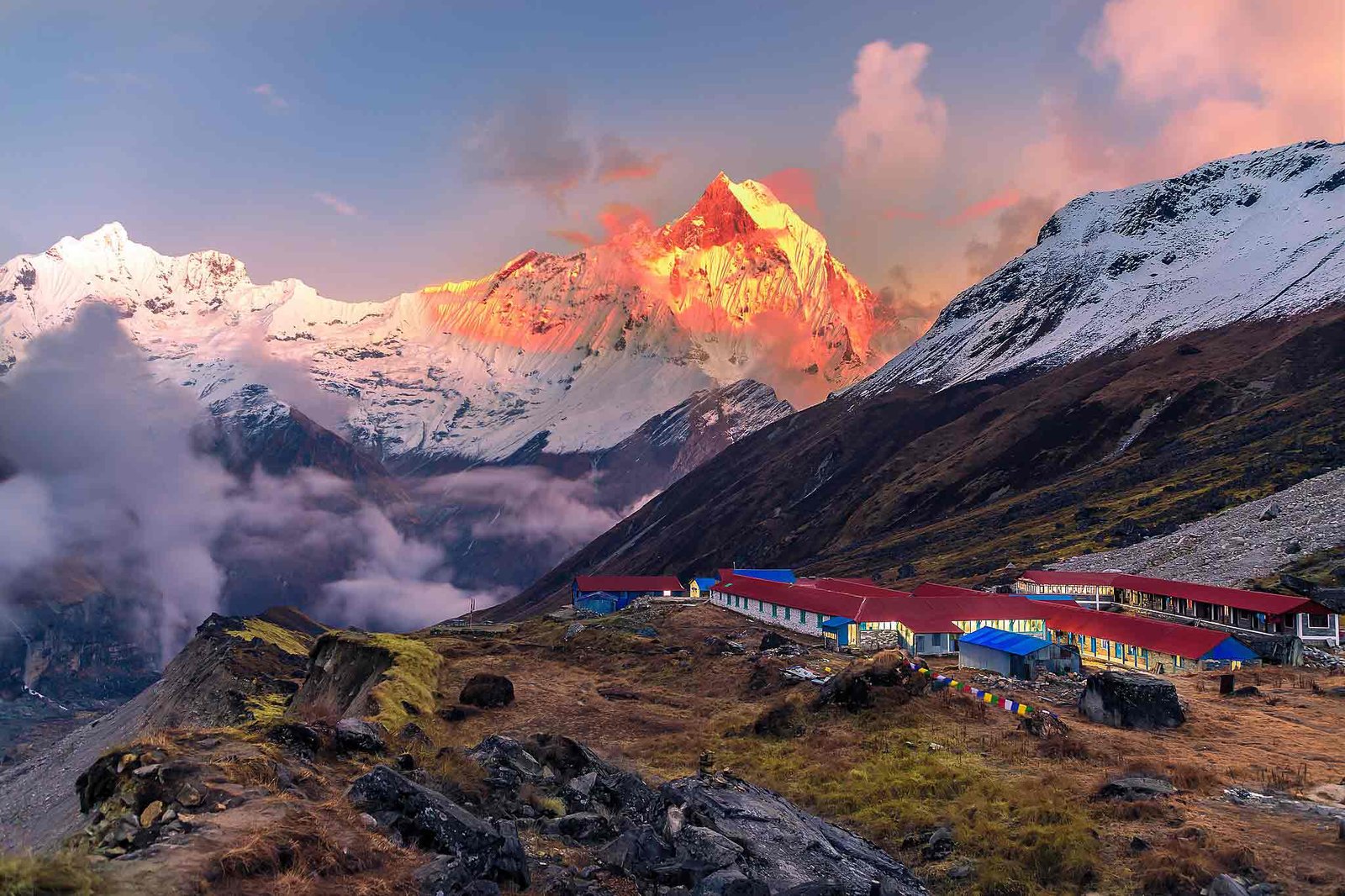
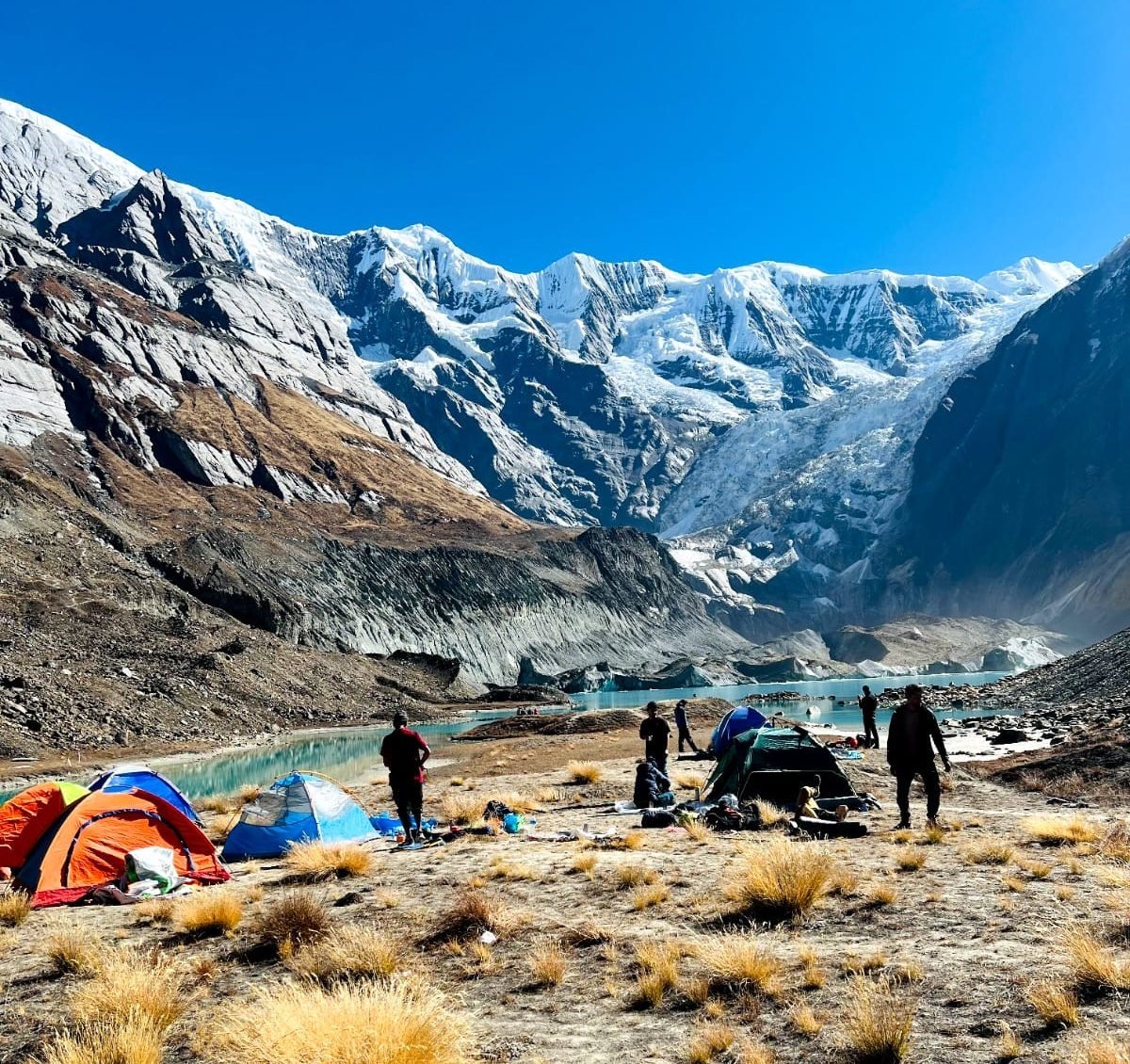
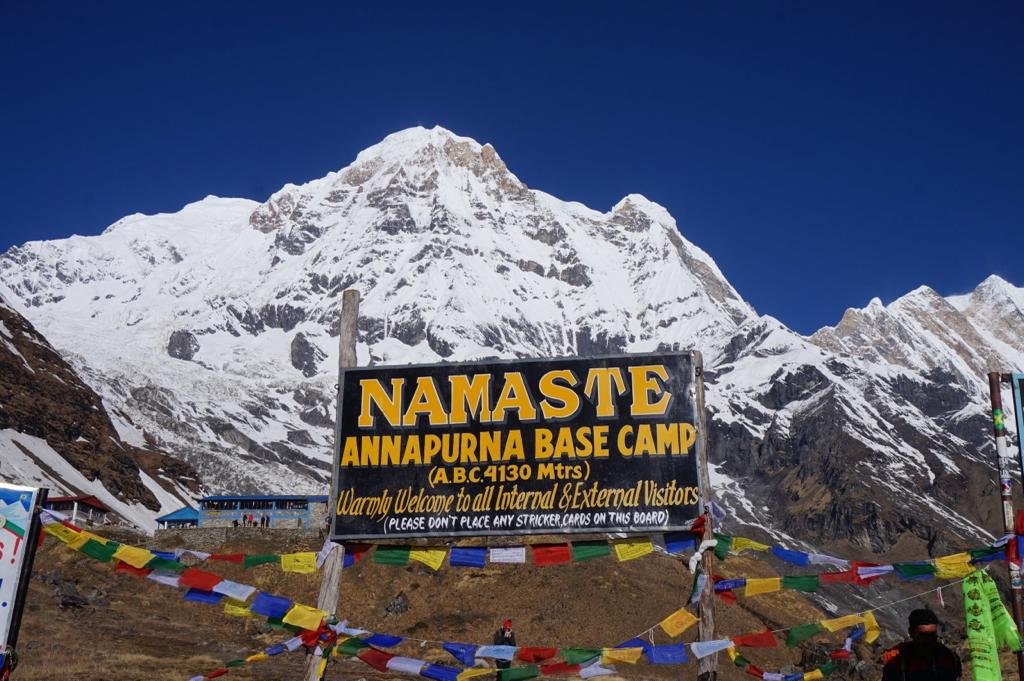
The Annapurna North Base Camp Trek is a remote Himalayan adventure leading to the northern side of Annapurna I (8,091 m), one of the world’s highest mountains. Unlike the more frequently visited Annapurna Base Camp route on the southern side, this journey follows a quieter approach through the Myagdi region, passing isolated valleys, forested slopes, river crossings and rugged mountain terrain before reaching the historic North Base Camp area.
The route is associated with the northern approach used during the 1950 French expedition to Annapurna I. Today, it offers trekkers the opportunity to experience a less-developed side of the Annapurna region, far from the busy teahouse corridors found on Nepal’s more established trekking routes. The journey begins with a drive from Kathmandu toward Pokhara and the Kali Gandaki region before entering the trail through settlements near Narchyang and the Miristi Khola valley.
As the trek progresses, cultivated hillsides and forest paths give way to remote camps, rocky terrain and alpine landscapes. The trail requires patience and physical endurance, with some days involving long walks over uneven ground and limited facilities. Unlike conventional teahouse treks, much of the remote section requires organized camping, including tents, meals and logistical support from the trekking crew.
The major goal is Annapurna North Base Camp, generally reached at approximately 4,190 m, where the landscape opens toward the imposing northern face of Annapurna I and surrounding glacial terrain. Conditions at this elevation can change quickly, and the final approach may be affected by snow, ice, river levels or trail damage. The exact route and highest point reached therefore depend on the conditions assessed by the guide.
The return journey follows a different section toward the Lete area before the drive back to Pokhara and Kathmandu. With its remote setting, camping requirements and demanding trail conditions, the Annapurna North Base Camp Trek is best suited to travelers seeking a more adventurous Himalayan experience and who are comfortable with basic facilities and a flexible itinerary. TrekUp Nepal can arrange the guide, camping crew, transport, meals and required permits according to the confirmed package.
Overview
The 14-Day Annapurna North Base Camp Trek takes you into the remote northern foothills of Annapurna I, following forest trails, river valleys and alpine terrain to a base camp at approximately 4,190 m. With organized camping, mountain scenery and a historic Himalayan route, this trek offers a demanding alternative to Nepal’s more crowded trekking trails.
Highlights
- Reach the remote northern base camp of Annapurna I at approximately 4,190 m.
- Explore a less-traveled route through the Myagdi and Miristi Khola region.
- Follow a historic northern approach associated with the 1950 Annapurna expedition.
- Experience the transition from river valleys and forests to rugged alpine terrain.
- Camp in remote locations where regular teahouse facilities are unavailable.
- Enjoy views of Annapurna I and surrounding Himalayan landscapes when visibility allows.
- Cross streams and follow mountain trails through isolated valleys.
- Spend time at a designated acclimatization camp before the higher-altitude approach.
- Experience a full-service camping trek with a guide and support crew.
- Return via the Lete area, completing a remote circuit-style journey through the region.
Annapurna North Base Camp Trek Overview
The Annapurna North Base Camp Trek is a remote camping journey toward the northern face of Annapurna I, offering a different perspective on one of Nepal’s most significant Himalayan mountains. The route passes through the Myagdi region and follows the Miristi Khola valley toward a base camp area at approximately 4,190 m.
Unlike the popular southern Annapurna Base Camp route, the northern approach has fewer established services and requires careful logistical planning. Trekkers move through forested valleys and rugged terrain, staying in organized camps where ordinary teahouses are unavailable. The camping crew provides the tents and meals needed to travel through this isolated environment.
The central objective is reaching the North Base Camp area and viewing the mountain landscape from the northern side. The upper route can be affected by snow, loose rock, river levels and weather, so the guide must decide whether the planned destination is safe to reach. A designated acclimatization period helps prepare the group for the higher section, but it does not remove altitude-related risks.
The journey also includes substantial road travel between Kathmandu, Pokhara and the Kali Gandaki region. The return route toward Lete offers a change of scenery before the group travels back to Pokhara and Kathmandu. With its camping requirements, remote terrain and demanding walking days, this trek is best suited to travelers seeking a less-developed Himalayan route rather than a conventional teahouse holiday.
TrekUp Nepal can arrange the guide, camping crew, meals, transportation and required permits according to the confirmed package. Travelers should review the included equipment, personal gear requirements, insurance coverage and contingency arrangements before booking.
What can you expect from the Annapurna North Base Camp Trek Package?
- A remote Himalayan route: Travel into the northern Annapurna region, away from the main teahouse trekking corridors.
- A historic mountain setting: Follow an approach associated with the early expeditions to Annapurna I.
- Organized camping: Stay in tents at remote camps where standard lodges are unavailable.
- A demanding high-altitude objective: Work toward North Base Camp at approximately 4,190 m, subject to weather and route safety.
- Changing landscapes: Pass through river valleys, forests, rocky slopes and alpine terrain.
- Camping meals and crew support: Rely on the organized team for meals, tents and essential camp logistics during the remote section.
- Limited facilities: Prepare for basic washing facilities, unreliable connectivity and fewer opportunities to purchase supplies.
- A flexible itinerary: Allow for changes caused by weather, river levels, trail conditions or the group’s health.
- A different view of Annapurna I: Experience the mountain from its northern approach rather than the more familiar southern sanctuary.
- Local trekking coordination: Receive route guidance and logistical support from TrekUp Nepal according to the agreed package.
Benefits of Booking Annapurna North Base Camp Trek with us
- Get an itinerary designed around the route’s remote camping requirements rather than treating it as a standard teahouse trek.
- Receive clear information about walking days, approximate elevations, camping nights and road transfers.
- Have a trekking guide and camping support arrangements coordinated for the remote section.
- Get assistance arranging the required permit and trip documentation.
- Receive guidance on suitable clothing, sleeping equipment, footwear and other essential personal gear.
- Have camping meals and essential camp equipment arranged according to the confirmed inclusions.
- Get a pre-trek briefing about the terrain, expected facilities, altitude and route conditions.
- Receive help coordinating transport between Kathmandu, Pokhara and the trekking region.
- Understand which costs are included and which personal or emergency expenses remain your responsibility.
- Have the itinerary reviewed if weather, river levels, trail damage or health concerns require changes.
- Request a private departure or additional acclimatization time, subject to operational feasibility.
Itinerary
Travel from Kathmandu through Pokhara and the Kali Gandaki region to the remote North Annapurna trail. Trek through Riverside Camp, Jungle Camp and Miristi Khola, acclimatize before the ascent to Annapurna North Base Camp, then return via the Lete area and drive back to Kathmandu.
Arrive at Tribhuvan International Airport in Kathmandu, where a TrekUp Nepal representative can meet you and transfer you to your hotel if airport pickup is included. After checking in, take time to rest following your journey. Depending on your arrival time, you may explore nearby areas or simply prepare for the trek. The team will review the itinerary, check your equipment and explain the arrangements for transportation, camping and meals. This is also the time to confirm any personal requirements before leaving the city.
Driving: Approximately 20–40 minutes from the airport to your hotel, depending on traffic and location.
Walking: No trekking planned.
Altitude: Kathmandu, approximately 1,400 m.
Meals: Welcome dinner if included in the package; other meals according to your arrival arrangements.
Accommodation: Hotel in Kathmandu.
After breakfast, begin the overland journey to Pokhara. The route follows Nepal's central hill roads, passing river valleys, terraced farmland, small towns and hillside settlements. Road conditions and traffic can affect the travel time, so allow flexibility for the journey. On arrival in Pokhara, check into your hotel and prepare for the next day's drive toward the Kali Gandaki region. The guide or trip coordinator will confirm the departure time and any final equipment arrangements.
Driving: Approximately 6–8 hours, depending on traffic, road conditions and stops.
Walking: No trekking planned.
Altitude: Kathmandu, approximately 1,400 m; Pokhara, approximately 820 m.
Meals: Breakfast and other meals as specified in the package.
Accommodation: Hotel in Pokhara.
Leave Pokhara and travel northwest toward Ghasa through the Kali Gandaki valley. The road passes through settlements and landscapes that gradually become more mountainous, with views of river gorges, terraced slopes and the surrounding hills. The drive may be bumpy in sections, particularly where roads are narrow or affected by weather. On arrival in Ghasa, settle into the overnight accommodation and meet the trekking crew if the arrangements permit. Prepare your main trekking bag and keep essential items accessible for the following day's walk.
Driving: Approximately 5–7 hours, depending on the road and the chosen vehicle.
Walking: No significant trekking planned.
Altitude: Pokhara, approximately 820 m; Ghasa, approximately 2,000 m.
Meals: Breakfast, lunch and dinner according to the package and travel schedule.
Accommodation: Local lodge or guesthouse in Ghasa.
Begin the trek from Ghasa and follow the trail into the quieter valley leading toward the North Annapurna Base Camp route. The landscape changes between forested slopes, riverbanks and rugged terrain, with occasional clearings where the surrounding hills become visible. As this is the first full trekking day, walk at a steady pace and allow time for stream crossings and rest stops. The support crew will establish the camp at the designated riverside location and prepare the evening meal. Facilities are basic, and the overnight arrangement depends on the available safe camping ground.
Walking: Approximately 5–7 hours, depending on the route and trail conditions.
Altitude: Ghasa, approximately 2,000 m; Riverside Camp, approximate elevation 2,500–2,700 m, subject to the selected campsite.
Meals: Breakfast, lunch and dinner.
Accommodation: Organized camping at Riverside Camp.
After breakfast, continue deeper into the remote valley. The route follows forested slopes and uneven mountain paths, with sections that may be narrow or affected by recent rainfall and stream flow. Expect a more isolated environment than on the established Annapurna teahouse trails. The guide will select the safest practical route according to local conditions, while the support crew moves equipment and supplies to the next camp. On arrival at Jungle Camp, rest and prepare for the more remote stages ahead.
Walking: Approximately 5–7 hours.
Altitude: Riverside Camp, approximately 2,500–2,700 m; Jungle Camp, approximately 2,900–3,100 m, depending on the campsite.
Meals: Breakfast, lunch and dinner.
Accommodation: Organized camping at Jungle Camp.
Continue through increasingly rugged terrain toward the Miristi Khola valley. The route may include forested sections, rocky ground, stream crossings and steep changes in elevation. As you move farther from settled areas, there are fewer opportunities to obtain supplies or shelter, making the support crew and careful camp planning essential. Reach the designated camp near Miristi Khola and take time to recover after the day's walk. Your guide will review the following day's conditions and prepare the group for the higher-altitude section.
Walking: Approximately 5–7 hours, depending on the route, river conditions and pace.
Altitude: Jungle Camp, approximately 2,900–3,100 m; Miristi Khola Camp, approximately 3,400–3,600 m, depending on the selected campsite.
Meals: Breakfast, lunch and dinner prepared by the camping crew.
Accommodation: Organized camping near Miristi Khola.
Spend the day at or near the Miristi Khola camp to prepare for the approach to North Annapurna Base Camp. The guide may arrange a short acclimatization walk if the terrain and weather are suitable, but the day should not become an exhausting hike. Use the time to hydrate, rest, check your equipment and discuss the next day's route. The upper valley is remote and conditions can change rapidly, so the guide will assess snow, water levels and trail safety before confirming the plan. If the group shows symptoms of altitude illness, the itinerary must be adjusted accordingly.
Walking: Rest day with an optional short acclimatization walk, depending on conditions.
Altitude: Miristi Khola Camp, approximately 3,400–3,600 m.
Meals: Breakfast, lunch and dinner.
Accommodation: Organized camping near Miristi Khola.
Start early with the guide for the ascent toward Annapurna North Base Camp. The route enters a more exposed alpine environment, where rocky ground, glacial terrain, snow or unstable sections may affect progress. Follow the guide's instructions carefully and maintain a pace that allows the group to remain together. The base camp area, commonly around 4,190 m, offers a striking perspective toward the north face of Annapurna I and the surrounding high mountain landscape when visibility is clear. Time at the destination depends on weather, route safety and the group's condition. After taking photographs and resting briefly, return to the planned campsite rather than remaining at altitude longer than necessary.
Walking: Approximately 7–10 hours for the return journey, depending on trail conditions, weather and the point reached.
Altitude: Miristi Khola Camp, approximately 3,400–3,600 m; Annapurna North Base Camp, approximately 4,190 m.
Meals: Early breakfast, packed lunch or field meal, and dinner at camp.
Accommodation: Organized camping at the designated camp near Miristi Khola, subject to conditions.
After breakfast, retrace the route from the upper valley toward Miristi Khola Camp. The descent provides another opportunity to view the surrounding mountain terrain, but it still requires care on loose rock, uneven ground and any snow-covered sections. The guide will select the route based on the conditions encountered during the base camp visit. Once back at camp, rest, rehydrate and allow the crew to prepare for the return through the lower valley.
Walking: Approximately 5–7 hours, depending on the overnight camp and conditions.
Altitude: Upper valley, approximately 4,000 m or higher if the previous day's route extended beyond the base camp area; Miristi Khola Camp, approximately 3,400–3,600 m.
Meals: Breakfast, lunch and dinner.
Accommodation: Organized camping near Miristi Khola.
Continue descending through the valley toward Jungle Camp. The trail gradually transitions from open and rugged terrain to more sheltered slopes and forested sections. Stream crossings and sections of loose ground may remain challenging, particularly after rain or snowfall. Maintain a careful pace and allow the guide to manage difficult sections. On reaching Jungle Camp, enjoy a final evening in the remote camping environment before returning toward the road-accessible region.
Walking: Approximately 5–7 hours.
Altitude: Miristi Khola Camp, approximately 3,400–3,600 m; Jungle Camp, approximately 2,900–3,100 m.
Meals: Breakfast, lunch and dinner.
Accommodation: Organized camping at Jungle Camp.
After breakfast, descend toward Riverside Camp and continue along the planned trail toward the Lete area. This is a long transition day, moving from the remote camping route back toward more accessible settlements. The walking time will depend on the exact campsite, trail conditions and the point where road transport can be arranged. The guide and crew will coordinate the final section to avoid an unrealistic schedule. On reaching Lete, settle into a local lodge or guesthouse and enjoy the return to a more developed setting.
Walking: Approximately 6–8 hours, depending on the route and roadhead.
Altitude: Jungle Camp, approximately 2,900–3,100 m; Lete, approximately 2,000 m.
Meals: Breakfast, lunch and dinner according to the package and arrival time.
Accommodation: Local lodge or guesthouse in Lete.
Leave Lete and travel by road back to Pokhara. The journey follows mountain roads through the Kali Gandaki region and lower valleys, with views of river corridors, hillside villages and cultivated slopes along the way. Travel time can vary significantly depending on road conditions, traffic and weather, so this day should remain flexible. After reaching Pokhara, check into your hotel and enjoy time to rest after the remote camping section.
Driving: Approximately 5–7 hours, depending on road conditions and vehicle type.
Walking: No trekking planned.
Altitude: Lete, approximately 2,000 m; Pokhara, approximately 820 m.
Meals: Breakfast and other meals according to the confirmed package.
Accommodation: Hotel in Pokhara.
After breakfast, begin the return journey to Kathmandu. The drive passes through river valleys, hillside settlements and the central hill region. Allow extra time for traffic or road delays. On arrival, transfer to your hotel and take the rest of the day to relax. If the schedule permits, you may explore nearby areas of Kathmandu, but no major activity should be planned before the journey is complete.
Driving: Approximately 6–8 hours, depending on traffic and road conditions.
Walking: No trekking planned.
Altitude: Pokhara, approximately 820 m; Kathmandu, approximately 1,400 m.
Meals: Breakfast and other meals as specified in the package.
Accommodation: Hotel in Kathmandu.
Your Annapurna North Base Camp Trek concludes today. Depending on your flight schedule, a representative can transfer you to Tribhuvan International Airport if airport transportation is included. Allow sufficient time for check-in and any traffic delays. Travelers with later flights may have time for a short walk or a final meal in Kathmandu before departure.
Driving: Approximately 20–40 minutes to the airport, depending on traffic and hotel location.
Walking: No trekking planned.
Altitude: Kathmandu, approximately 1,400 m.
Meals: Breakfast if included in the package and depending on departure time.
Accommodation: Not included after departure.
Itinerary note: This is a planning itinerary based on published operator routes, not a guarantee of exact campsite elevations or walking times. Campsites in the Miristi Khola valley can vary, and the route is remote. The guide must confirm the safest route and overnight locations using current conditions. Annapurna North Base Camp access may be affected by snow, river levels, landslides or trail damage.
Includes/Exclude
Cost Includes
- Airport pickup and drop-off in Kathmandu, if included in the confirmed package.
- Tourist bus or other specified transportation between Kathmandu and Pokhara.
- Road transportation between Pokhara, Ghasa, Lete and other itinerary points as stated in the final plan.
- Licensed trekking guide experienced in remote camping routes.
- Camping crew and cook for the remote trekking section.
- Tents and shared camping equipment for the planned camps.
- Camping meals, including breakfast, lunch and dinner during the trekking section.
- Lodge or guesthouse accommodation where specified along the route.
- Hotel accommodation in Kathmandu and Pokhara if included in the confirmed package.
- Required Annapurna Conservation Area permit and other applicable trekking documentation.
- Guide and crew wages, meals, accommodation and insurance as specified by the operator.
- Porter support for shared trekking and camping equipment, if included in the final package.
- Basic first-aid supplies carried by the trekking team.
- Pre-trek briefing, route coordination and logistical support.
- Applicable company service charges and taxes stated in the final quotation.
Cost Excludes
- International flights to and from Nepal.
- Nepal entry visa fees.
- Travel insurance and emergency medical or helicopter evacuation costs.
- Personal trekking equipment, sleeping bag and suitable cold-weather clothing.
- Personal expenses, snacks, drinks and bottled beverages.
- Meals not specified as included in the final itinerary.
- Hotel accommodation or meals outside the confirmed package.
- Tips for the guide, cook, porters, drivers and other staff.
- Porter service beyond the allowance included in the package.
- Private vehicle upgrades or domestic flights not specified in the itinerary.
- Extra accommodation, meals or transport caused by delays or itinerary changes.
- Additional costs caused by landslides, severe weather, trail closures or emergency evacuation.
- Any service not specifically listed under Cost Includes.
Add-ons & Options
Customize your Annapurna North Base Camp Trek with the following options. Availability and prices depend on the group size, camping logistics and confirmed itinerary.
- Private jeep transfers: Upgrade selected road journeys to private transport for greater flexibility.
- Kathmandu–Pokhara flight: Replace the road journey with a domestic flight when schedules and weather permit; additional costs apply.
- Extra hotel nights: Add accommodation in Kathmandu or Pokhara before or after the trek.
- Additional acclimatization day: Add time to rest or take a short acclimatization walk if the guide and itinerary planner recommend it.
- Porter support: Arrange additional porter capacity for personal luggage, subject to weight limits and crew availability.
- Personal camping equipment: Request guidance or arrangements for suitable sleeping bags, down jackets and other cold-weather equipment.
- Customized meal arrangements: Discuss vegetarian or other dietary requirements before the camping crew is organized.
- Private group departure: Request a departure for your own group, subject to guide, crew, equipment and campsite availability.
- Additional contingency day: Add a spare day to help accommodate weather delays or changing route conditions.
How to personalize your trek
- Confirm your preferred departure date and group size.
- Contact TrekUp Nepal to check the route, camping logistics and availability.
- Select any transport, accommodation or equipment add-ons you require.
- Review the revised itinerary, total price and included services before confirming your booking.
Best time to do Annapurna North Base Camp Trek:
Spring: March to May
Spring is one of the preferred seasons for this trek. Temperatures become more favorable as the season progresses, and lower forested sections may show seasonal growth and flowering. Snow can remain on the upper route, particularly early in spring, so the guide must assess whether the final approach is safe.
Autumn: Late September to November
Autumn is another preferred period, especially after the monsoon weather begins to settle. Clear days can provide excellent mountain views, although cold nights and early snowfall are possible at higher camps. October and early November are popular months, so camping logistics should be arranged in advance.
What Our Travelers Say
Read reviews from travelers who have joined our Himalayan trips. See what they enjoyed and what they thought about their experience.
Frequently Asked Questions
Faq's
This itinerary takes 14 days from arrival in Kathmandu to departure. Shorter itineraries may be advertised, but the exact duration depends on the route, transport arrangements, camping logistics and time allowed for acclimatization.
The North Base Camp area is generally reported at approximately 4,190 m. Actual altitude and the highest point reached can vary slightly according to the campsite and the route conditions.
No. The classic Annapurna Base Camp trek approaches from the southern side and reaches a well-established teahouse destination at around 4,130 m. The North Annapurna route approaches the northern side of Annapurna I, is much more remote and requires camping over much of the upper route.
It is a strenuous trek. Expect long walking days, uneven and sometimes rough terrain, limited facilities, river crossings and exposure to rapidly changing mountain weather. Previous multi-day trekking experience and good physical conditioning are recommended.
Previous experience is strongly recommended because the remote camping section is more demanding than many standard teahouse treks. Travelers should be prepared for long days, basic facilities and a flexible schedule.
No. Teahouse facilities are not consistently available along the remote upper route. Organized camping with tents, a cook and support crew is an essential part of the itinerary.
A knowledgeable guide is strongly recommended for route finding, assessing trail conditions and managing the remote sections. A camping crew is also needed to transport and prepare the equipment and meals required for the overnight camps.
The trek enters the Annapurna Conservation Area, so the applicable conservation-area permit is required. Other documentation requirements should be confirmed with TrekUp Nepal before departure, as regulations and checkpoint procedures can change.
Spring, from March to May, and autumn, from late September to November, are generally the preferred seasons. The northern route is more sensitive to snow, river crossings and trail conditions than many established teahouse routes.
Yes. The trek reaches more than 4,000 m, and altitude illness is possible. The itinerary includes time to adjust before the highest section, but acclimatization does not eliminate the risk. Inform your guide immediately about headache, nausea, dizziness, unusual fatigue or worsening symptoms. Serious symptoms require prompt descent and medical assessment.
Meals are prepared by the camping crew and commonly include rice, lentils, vegetables, noodles, soups and other practical trekking foods. Food variety and fresh ingredients become more limited in remote areas. Special dietary requirements should be communicated before departure.
Connectivity may be unreliable or unavailable during the remote camping section. Do not rely on mobile data for navigation, communication or emergency arrangements. Ask TrekUp Nepal about the communication equipment and emergency procedures used by the trekking team.
It is not the best choice for a first trekking experience. The combination of remote camping, limited facilities, long walking days and high-altitude terrain is better suited to travelers with good fitness and previous trekking experience.
The guide may delay the ascent, change the campsite, modify the route or turn the group around if conditions are unsafe. Reaching base camp is not guaranteed, and safety must take priority over the planned itinerary.
Yes. Choose insurance that explicitly covers trekking at the intended altitude and emergency evacuation from remote mountain areas. Confirm coverage limits and exclusions before travel.
Yes. TrekUp Nepal can review options for private departures, extra acclimatization time, transport upgrades and additional hotel nights. Any changes should be checked against route safety, available campsites and the camping crew's logistical requirements.