
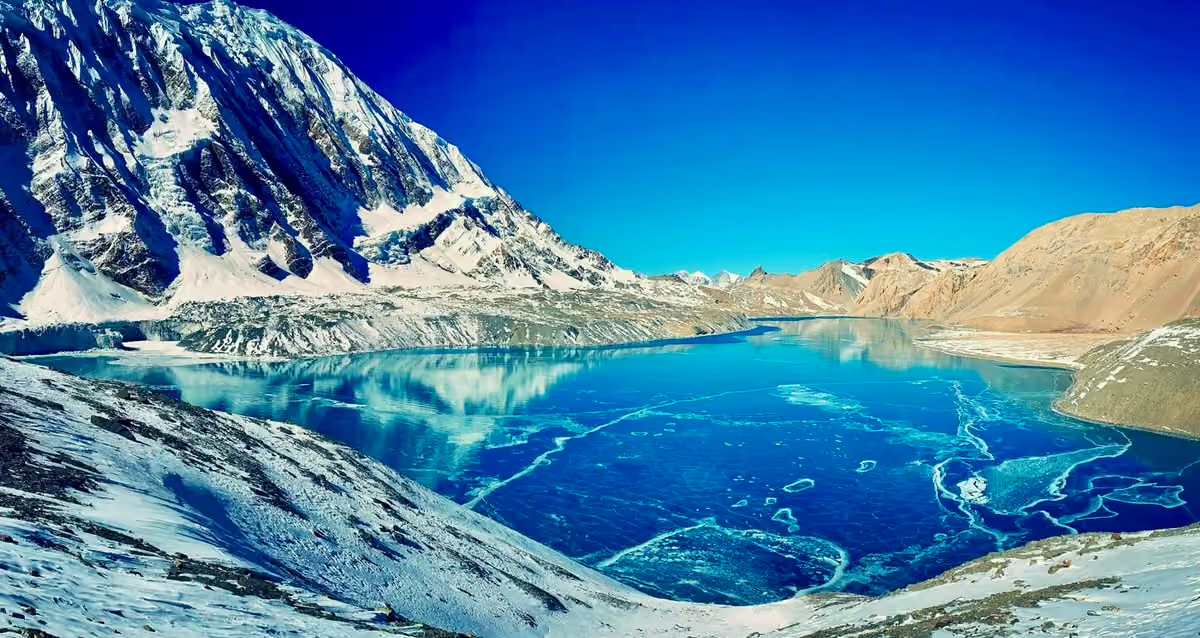
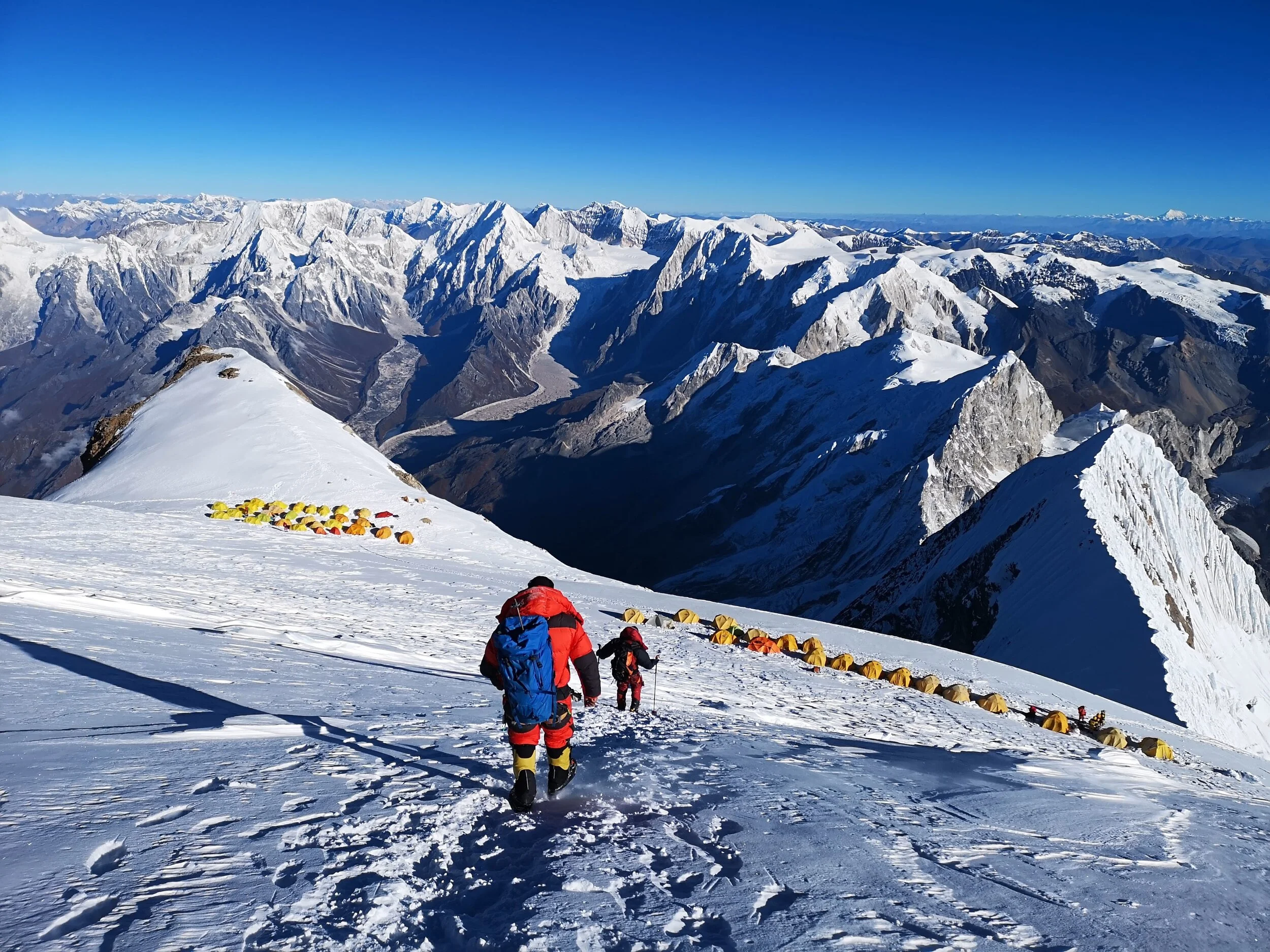
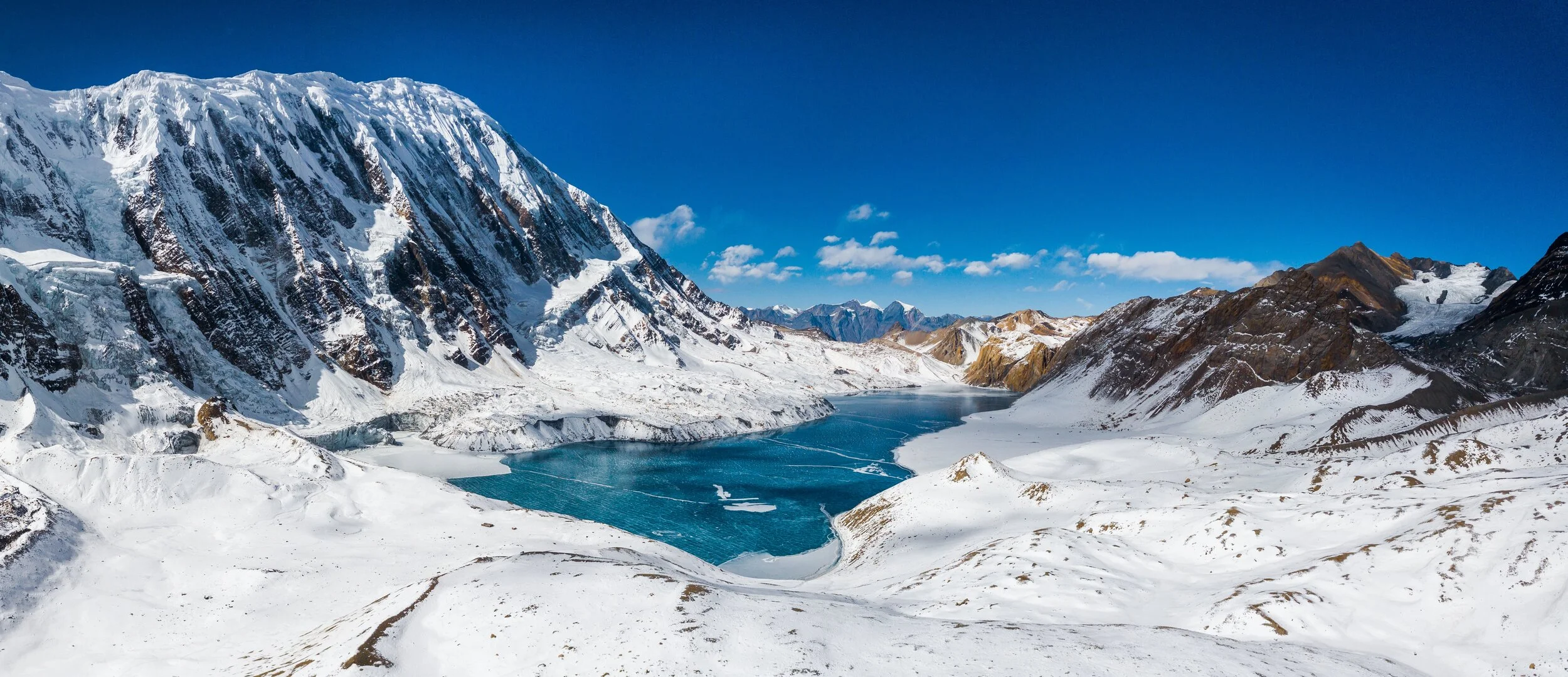
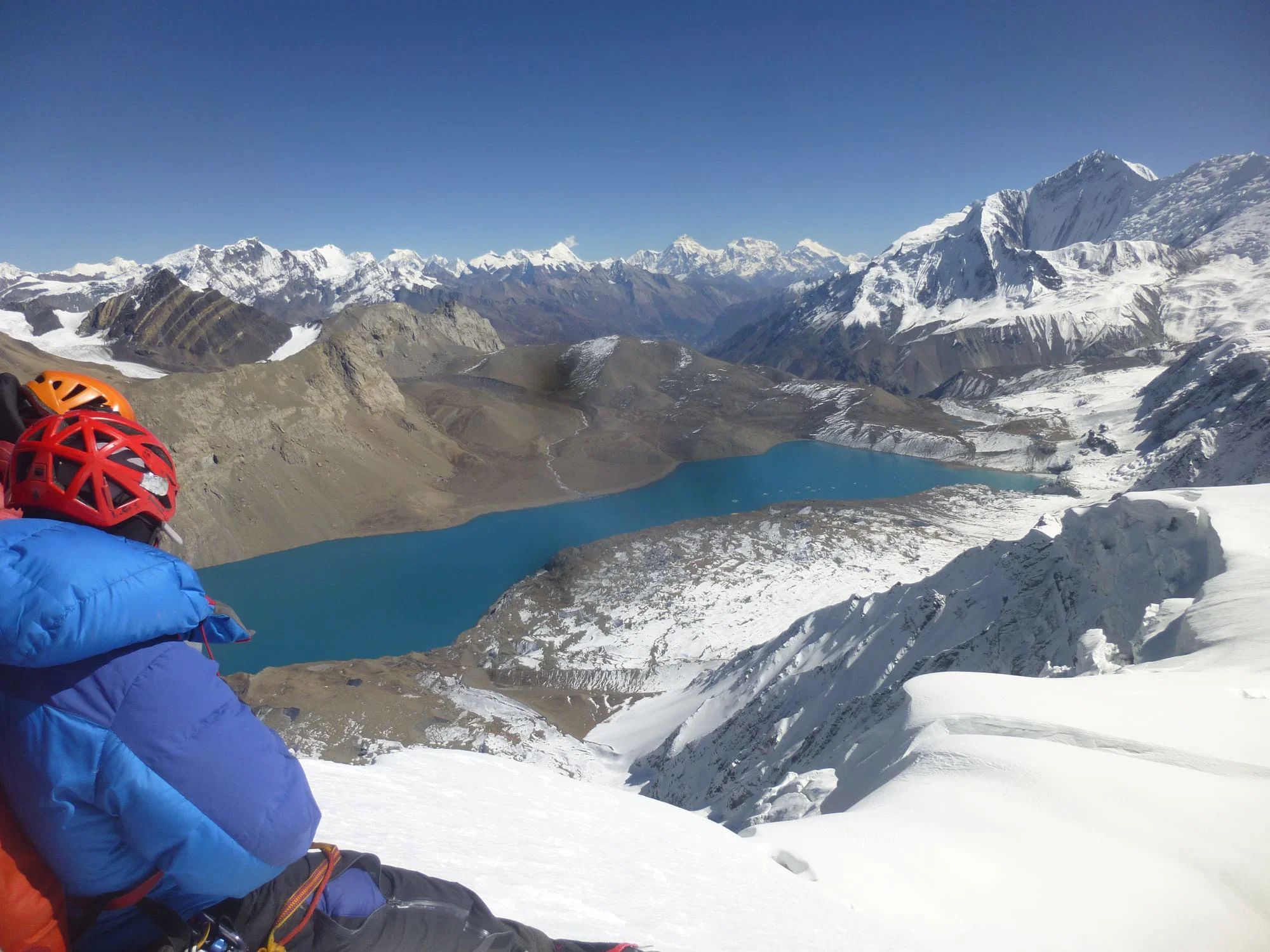
Rising to 7,134 meters in Nepal’s Annapurna region, Tilicho Peak is a demanding high-altitude mountain expedition above Tilicho Lake. The climb combines a remote Himalayan approach, days of acclimatization, glacier travel, fixed-rope sections, and a summit attempt at extreme altitude. It is suited to experienced mountaineers who want to progress beyond trekking peaks and take on a serious 7,000-meter objective.
The expedition begins in Kathmandu and follows the Marsyangdi Valley toward the mountain villages of the Annapurna region. After reaching Manang, the route continues through Khangsar and the rugged trail toward Tilicho Lake, which lies at approximately 4,919 meters. The surrounding landscape changes from forested valleys and traditional settlements to barren high-altitude terrain, glacial slopes, and snow-covered ridgelines. This gradual approach offers time to experience local Himalayan culture while preparing for the physical demands of the climb.
Beyond the trekking route, the journey becomes a fully supported mountaineering expedition. Climbers establish base camp near Tilicho Lake and prepare for the ascent through a sequence of higher camps. The climbing team works on acclimatization, rope techniques, glacier travel, and summit planning before attempting the upper mountain. Camp locations and the precise climbing route can change according to snow conditions, safety assessments, and the expedition leader’s decisions.
Tilicho Peak should not be treated as an ordinary trekking holiday or an introductory climbing trip. Its elevation, steep snow and ice, exposure to changing weather, and potential avalanche and crevasse hazards require previous high-altitude experience, strong physical conditioning, and confidence using mountaineering equipment. With a carefully planned approach, experienced climbing support, and sufficient time for acclimatization, the expedition offers a serious challenge in one of Nepal’s most dramatic mountain environments.
Overview
The 30-day Tilicho Peak Expedition takes experienced mountaineers to the 7,134-meter summit above Tilicho Lake in Nepal’s Annapurna region. The journey combines a scenic approach through Manang and Khangsar with high-altitude acclimatization, a supported base camp, technical climbing, and a summit attempt with spectacular Himalayan views.
Highlights
- Attempt the 7,134-meter summit of Tilicho Peak.
- Trek through the Marsyangdi Valley and traditional villages of the Annapurna region.
- Visit Tilicho Lake at approximately 4,919 meters.
- Experience a remote Himalayan expedition with a dedicated climbing team.
- Prepare for the summit through acclimatization and climbing rotations.
- Climb across glacial terrain, snow slopes, and fixed-rope sections as conditions require.
- Enjoy views of the Annapurna range, Nilgiri, Dhaulagiri, and surrounding Himalayan peaks.
- Experience a full high-altitude expedition with dedicated base camp support.
- Allow time for weather delays and summit attempts within the planned itinerary.
Tilicho Peak Expedition Overview
The Tilicho Peak Expedition is a 30-day high-altitude climbing journey to a summit of approximately 7,134 meters in Nepal’s Annapurna region. It combines the cultural and natural landscapes of the Marsyangdi Valley with the demanding environment of a remote Himalayan mountain. Unlike a standard trek, the expedition requires technical preparation, high-altitude acclimatization, expedition camps, and a planned climbing rotation before the summit attempt.
The journey begins with an overland approach through the Annapurna region, with time spent in settlements such as Chame, Pisang, and Manang. The route continues through Khangsar toward Tilicho Lake, where the landscape becomes increasingly rugged and exposed. After establishing base camp, climbers prepare for the ascent through equipment checks, skills practice, and planned trips to higher elevations.
The climbing phase focuses on acclimatization and safe progression toward the upper mountain. Depending on the route and conditions, the team may use fixed ropes, glacier-travel techniques, and a series of high camps. The summit attempt is planned around the best available weather window, with contingency days included to provide flexibility. The summit is not guaranteed, and the climbing leader may change or stop the ascent if conditions become unsafe.
Tilicho Peak is best suited to experienced mountaineers seeking a serious Himalayan challenge beyond trekking peaks. It demands stamina, technical competence, patience, and a willingness to follow conservative safety decisions. For climbers who meet these requirements, the expedition offers an opportunity to experience a remote 7,000-meter mountain and the remarkable scenery surrounding Tilicho Lake.
What Can You Expect from the Tilicho Peak Expedition Package?
- A gradual approach through the Annapurna region: Travel through the Marsyangdi Valley and traditional settlements before reaching the high-altitude environment around Tilicho Lake.
- Time for acclimatization: The itinerary includes time in Manang and at base camp, with planned trips to higher elevations to help prepare for the climbing phase.
- A visit to Tilicho Lake: Experience the striking high-altitude lake and the rugged mountain terrain surrounding it, subject to the final route and trail conditions.
- A supported expedition base camp: Spend the climbing phase in a designated base camp with organized meals, tents, and support services according to the confirmed package.
- Technical climbing preparation: Review mountaineering equipment, fixed-rope procedures, and other relevant skills before moving onto higher terrain.
- High-altitude climbing rotations: Build familiarity with the route and gain experience at higher elevations before the planned summit push.
- Dedicated climbing support: The level of climbing Sherpa support, route fixing, and high-camp assistance will be defined in the final expedition quotation.
- A flexible summit schedule: Reserve days allow the leader to respond to weather changes and mountain conditions rather than follow a rigid timetable.
- Exceptional Himalayan scenery: The journey offers views of the Annapurna region and surrounding peaks, with the summit providing a potential panorama across the wider Himalayas when visibility permits.
- A serious mountaineering challenge: Expect long days, cold conditions, physical exertion, and limited comforts at high camps. The experience requires preparation and a safety-first mindset.
Benefits of Booking the Tilicho Peak Expedition with TrekUp Nepal
- Organized expedition planning: Receive a structured itinerary covering the approach trek, acclimatization, climbing phase, and return journey.
- Pre-trip equipment guidance: Get information about the technical equipment and clothing required for a 7,000-meter expedition.
- Permit and logistics coordination: TrekUp Nepal can coordinate the applicable expedition documentation and ground arrangements included in your confirmed package.
- Experienced climbing support: The expedition plan should clearly identify the leader, climbing Sherpa support, and responsibilities of the mountain team.
- Planned acclimatization: The itinerary allows time for gradual altitude gain and recovery before the summit attempt.
- Clear package information: The quotation should specify included services, excluded costs, staff ratios, equipment, meals, and emergency arrangements.
- Customizable trip arrangements: Discuss suitable dates, additional acclimatization, transport preferences, and other practical options before booking.
- Weather-aware scheduling: Reserve days provide flexibility when conditions delay the climbing plan.
- Responsible expedition practices: Camp cleanup and waste management should be incorporated into the expedition’s operating plan.
- Pre-departure communication: Receive guidance on preparation, fitness, travel documents, insurance, and the next steps before arriving in Nepal.
Itinerary
The 30-day Tilicho Peak Expedition begins with the approach through the Marsyangdi Valley and gradual acclimatization in Manang before continuing to Tilicho Lake and base camp. The climbing phase includes skills preparation, acclimatization rotations, high camps, and a summit attempt on Tilicho Peak at 7,134 meters. Reserve days are included to accommodate changing mountain conditions before the team returns to Kathmandu.
Arrive in Kathmandu, where a TrekUp Nepal representative will welcome you at the airport and transfer you to your hotel. The remainder of the day is reserved for rest after your international journey. If time permits, you can explore the nearby streets or prepare any personal items needed for the expedition.
Altitude: Approximately 1,400 m
Duration: Airport transfer, approximately 30–60 minutes depending on traffic
Meals: Welcome dinner, if included in the final package
Accommodation: Hotel in Kathmandu
Activity: Arrival, transfer, and initial expedition arrangements
Meet your expedition leader and support team for a detailed briefing on the itinerary, climbing strategy, safety procedures, and expected conditions on Tilicho Peak. The team will check essential equipment such as mountaineering boots, crampons, harnesses, helmets, ice axes, and ascenders. The day also allows time to review permits, travel arrangements, and any remaining personal equipment requirements.
Altitude: Approximately 1,400 m
Duration: Approximately 3–5 hours of preparation
Meals: Breakfast; other meals according to the package
Accommodation: Hotel in Kathmandu
Activity: Briefing, equipment checks, and permit arrangements
Begin the overland journey toward the Annapurna region, travelling through river valleys, terraced hillsides, and rural settlements. Road conditions and traffic determine the exact driving time and overnight stop. Depending on the selected route and road access, the team may continue toward the lower Marsyangdi Valley or stay at a suitable village along the way.
Altitude: Approximately 1,300–1,900 m, depending on the overnight stop
Duration: Approximately 8–10 hours by road
Meals: Breakfast, lunch, and dinner
Accommodation: Lodge or teahouse
Activity: Overland travel toward the Annapurna region
Continue toward Dharapani, an important settlement on the Annapurna Circuit approach. Depending on road access and the final operating plan, part of this journey may be completed by vehicle or on foot. The route follows the Marsyangdi Valley through villages, waterfalls, and steep-sided hills. The team will use the day to settle into the mountain environment before gaining further altitude.
Altitude: Approximately 1,860 m
Duration: Approximately 5–7 hours, depending on transport and trail conditions
Meals: Breakfast, lunch, and dinner
Accommodation: Lodge or teahouse
Activity: Travel and approach to Dharapani
Travel or trek farther up the Marsyangdi Valley toward Chame, the administrative centre of Manang District. The landscape becomes more alpine as the route passes pine forests, mountain streams, and settlements beneath the Annapurna range. Chame provides a useful overnight stop before the approach climbs toward Pisang and Manang.
Altitude: Approximately 2,670 m
Duration: Approximately 5–6 hours, depending on the selected transport and walking route
Meals: Breakfast, lunch, and dinner
Accommodation: Lodge or teahouse
Activity: Journey toward Chame and preparation for higher elevations
Continue toward Pisang through forested sections, rocky slopes, and narrow sections of the valley. The route offers increasingly open views of the Annapurna range and surrounding peaks. If conditions and timing allow, the team can follow the higher trail toward Upper Pisang, which provides a useful opportunity to gain altitude gradually and experience the traditional architecture of the Manang region.
Altitude: Approximately 3,300 m
Duration: Approximately 5–6 hours
Meals: Breakfast, lunch, and dinner
Accommodation: Lodge or teahouse
Activity: Trekking or approach travel and gradual acclimatization
Continue toward Manang, taking a higher route through settlements such as Ghyaru and Ngawal when trail conditions and the itinerary permit. These villages offer broad views of the Annapurna range and a closer look at the region’s Tibetan-influenced culture. Arriving in Manang marks an important stage in the expedition because the team will begin prioritizing acclimatization before proceeding toward Tilicho Lake.
Altitude: Approximately 3,540 m
Duration: Approximately 5–7 hours
Meals: Breakfast, lunch, and dinner
Accommodation: Lodge or teahouse
Activity: Trekking and arrival in Manang
Spend an additional day in Manang to help the body adjust to the increasing altitude. Depending on the team’s condition, the guide may arrange a gradual acclimatization hike toward a nearby viewpoint or a higher trail before returning to the village. The day also allows time to review hydration, nutrition, symptoms of altitude illness, and the plan for the next stage. The exact hike will be chosen according to health, weather, and local conditions.
Altitude: Overnight at approximately 3,540 m; acclimatization hike may reach around 4,000–4,600 m
Duration: Approximately 3–5 hours for the optional acclimatization hike
Meals: Breakfast, lunch, and dinner
Accommodation: Lodge or teahouse
Activity: Acclimatization hike, rest, and health monitoring
Leave Manang and follow the route toward Khangsar, a traditional settlement on the approach to Tilicho Lake. The trail passes through open mountain terrain and offers views of the surrounding ridges and valleys. This comparatively shorter stage helps the team continue acclimatizing before reaching the exposed trail and higher overnight stops ahead.
Altitude: Approximately 3,750 m
Duration: Approximately 3–4 hours
Meals: Breakfast, lunch, and dinner
Accommodation: Lodge or teahouse
Activity: Trekking to Khangsar
Continue beyond Khangsar toward the Tilicho Lake trail. The route crosses rugged terrain and exposed slopes where loose rock, landslide debris, and changing trail conditions can require careful footing. The team should maintain a steady pace, follow the guide’s instructions, and avoid unnecessary stops in exposed sections. Overnight at a lodge near the lake approach before moving into the expedition camping area.
Altitude: Approximately 4,150 m
Duration: Approximately 4–6 hours
Meals: Breakfast, lunch, and dinner
Accommodation: Lodge or teahouse, subject to availability
Activity: Trekking along the rugged approach to Tilicho Lake
Proceed toward Tilicho Lake, at approximately 4,919 m, before continuing to the expedition base camp location selected by the climbing team. This is a significant transition from lodge trekking to expedition life. The crew will organize tents, food supplies, communication equipment, and the base camp area. Because the trail may be affected by snow, rockfall, or landslides, the route and timing will depend on current conditions.
Altitude: Approximately 4,900–4,950 m
Duration: Approximately 5–7 hours
Meals: Breakfast, lunch, and dinner
Accommodation: Tented expedition base camp
Activity: Visit Tilicho Lake, approach base camp, and camp setup
Spend the day at base camp preparing for the climbing phase. A traditional puja ceremony may be held to seek a safe journey, followed by a review of climbing equipment and mountain procedures. The team will practise or refresh essential techniques such as moving on fixed ropes, using an ascender, managing crampons, and performing controlled descents. The day also allows climbers to rest and review the planned rotation schedule.
Altitude: Approximately 4,900–4,950 m
Duration: Approximately 2–4 hours of preparation and skills practice
Meals: Breakfast, lunch, and dinner
Accommodation: Tented expedition base camp
Activity: Puja, equipment review, climbing practice, and rest
Begin the first climbing rotation by carrying a selected load toward the lower climbing camp. This helps the team assess the route, transport equipment, and allow climbers to experience higher elevations before committing to an overnight stay. The precise destination and duration depend on the location of Camp 1, snow conditions, and the expedition leader’s assessment. Return to base camp for the night.
Altitude: Climbing to approximately 5,400–5,600 m; overnight at base camp
Duration: Approximately 4–6 hours
Meals: Breakfast, lunch, and dinner
Accommodation: Tented expedition base camp
Activity: Load carry, route familiarization, and return to base camp
Take a recovery day after the first load carry. Use the time to eat well, hydrate, check personal equipment, and discuss any challenges encountered on the route. The climbing team may review weather information and make adjustments to the rotation plan. Rest is an important part of preparation for a 7,000-meter summit attempt.
Altitude: Approximately 4,900–4,950 m
Duration: Rest day; short movement around camp as appropriate
Meals: Breakfast, lunch, and dinner
Accommodation: Tented expedition base camp
Activity: Recovery, equipment checks, and expedition planning
Set out for Camp 1 with the climbing team, moving across the terrain identified during the earlier load carry. Depending on the route, the approach may involve glacier travel, snow slopes, and sections requiring fixed ropes or other protection. Climbers should move at a controlled pace, follow the team’s rope procedures, and conserve energy for the higher sections. Overnight at Camp 1 if conditions and the acclimatization plan allow.
Altitude: Camp 1 at approximately 5,600–5,800 m, subject to route conditions
Duration: Approximately 5–7 hours
Meals: Expedition meals and hot drinks
Accommodation: High-altitude tent at Camp 1
Activity: Climbing rotation and overnight at Camp 1
Continue higher with the climbing team to gain additional altitude and assess the route toward the next camp. This stage may involve steep snow and ice, fixed-rope sections, and careful movement across glaciated terrain. The objective is to improve acclimatization and familiarize climbers with the upper route, not to push beyond safe limits. Return to Camp 1 or descend according to the leader’s plan and current conditions.
Altitude: Approximately 6,100–6,200 m at the high point
Duration: Approximately 5–7 hours
Meals: Expedition meals and hot drinks
Accommodation: High-altitude tent at Camp 1 or the designated lower camp
Activity: Acclimatization climb, route assessment, and descent
Descend from the higher camp area to base camp, using established rope systems and the safest available line. Descending carefully is as important as climbing up, particularly on steep or icy ground. Once back at base camp, the team can recover, check for symptoms of altitude illness, and review what was learned during the rotation.
Altitude: Approximately 4,900–4,950 m
Duration: Approximately 4–6 hours
Meals: Breakfast, lunch, and dinner
Accommodation: Tented expedition base camp
Activity: Descent, recovery, and rotation review
Spend the day recovering after the first major rotation. The expedition crew will check equipment, organize loads for the summit phase, and review the route-fixing plan. Climbers should focus on nutrition, hydration, and sleep, while the leader monitors weather forecasts and the team’s health.
Altitude: Approximately 4,900–4,950 m
Duration: Rest day
Meals: Breakfast, lunch, and dinner
Accommodation: Tented expedition base camp
Activity: Recovery, equipment preparation, and weather review
Use this day to prepare for the summit push. The leader will review weather forecasts, snow conditions, team fitness, and the availability of fixed ropes and high-altitude camps. The precise summit schedule may change to take advantage of a suitable weather window. Climbers should prepare their summit clothing, technical equipment, headlamps, food, and essential personal items.
Altitude: Approximately 4,900–4,950 m
Duration: Rest and preparation day
Meals: Breakfast, lunch, and dinner
Accommodation: Tented expedition base camp
Activity: Weather assessment, route planning, and summit preparation
Begin the planned summit rotation by ascending from base camp to Camp 1. The team will follow the established route and fixed protection where required. The pace will be steady and controlled, with regular checks on climbers’ condition and equipment. Once at camp, prepare for the following day’s ascent and follow the leader’s instructions about hydration, food, and rest.
Altitude: Camp 1 at approximately 5,600–5,800 m
Duration: Approximately 5–7 hours
Meals: Expedition meals and hot drinks
Accommodation: High-altitude tent at Camp 1
Activity: Summit rotation and overnight at Camp 1
Climb toward Camp 2 through higher snow and ice terrain. Depending on the route and conditions, this stage can involve steep slopes and fixed-rope sections requiring confident use of crampons, harnesses, and ascenders. The team will travel under the supervision of the climbing leader and Sherpa support. Camp 2’s exact elevation and location depend on the season and the safest available site.
Altitude: Camp 2 at approximately 6,100–6,300 m
Duration: Approximately 5–7 hours
Meals: Expedition meals and hot drinks
Accommodation: High-altitude tent at Camp 2
Activity: High-altitude climbing and overnight at Camp 2
Continue toward the designated upper camp or summit staging point if the route, weather, and team condition allow. The terrain may include steep snow, ice, and exposed sections where movement requires careful rope management and good judgement. The climbing leader will decide whether to establish a higher camp or adjust the summit plan according to safety and current mountain conditions.
Altitude: Approximately 6,500–6,600 m if an upper camp is established
Duration: Approximately 5–7 hours
Meals: Expedition meals and hot drinks
Accommodation: High-altitude tent at the designated camp
Activity: Upper mountain approach and summit preparation
Begin the summit attempt at the time selected by the expedition leader, often during the night or early morning to make the best use of available conditions. The ascent may involve steep snow and ice, fixed ropes, and sustained effort in thin air. Reaching the summit depends on weather, route conditions, team health, and safe turnaround times. After the summit attempt, descend to the designated camp under the climbing team’s supervision. Safety takes priority over reaching the top.
Altitude: Maximum 7,134 m at the summit
Duration: Approximately 10–14 hours or longer, depending on conditions and route
Meals: High-altitude meals, snacks, and hot drinks as available
Accommodation: High-altitude tent at the designated camp
Activity: Summit attempt and descent to camp
Descend from the upper mountain to base camp, following the climbing leader’s instructions and using fixed protection where required. This can be a physically demanding day after the summit attempt, so the team will maintain a cautious pace and monitor everyone’s condition. Once back at base camp, rest, rehydrate, and allow the crew to organize equipment for the return journey.
Altitude: Approximately 4,900–4,950 m
Duration: Approximately 5–7 hours, depending on the starting camp and conditions
Meals: Breakfast, lunch, and dinner
Accommodation: Tented expedition base camp
Activity: Descent, recovery, and preparation for dismantling camp
This reserve day provides flexibility if the summit attempt has been delayed by weather or route conditions. If the summit has already been completed, the day can be used for rest and recovery. The expedition leader will decide whether another attempt is safe and realistic based on forecasts, the team’s condition, and remaining time.
Altitude: Approximately 4,900–4,950 m
Duration: Flexible, depending on weather and expedition progress
Meals: Breakfast, lunch, and dinner
Accommodation: Tented expedition base camp
Activity: Weather contingency, recovery, or revised summit planning
Keep this day available for further weather delays, recovery, or a second summit opportunity if conditions and the team’s health allow. The schedule should remain flexible because weather and snow stability on a 7,000-meter peak can change quickly. If the climbing phase is complete, the team can begin sorting equipment and preparing for the descent.
Altitude: Approximately 4,900–4,950 m
Duration: Flexible
Meals: Breakfast, lunch, and dinner
Accommodation: Tented expedition base camp
Activity: Weather reserve, recovery, and expedition logistics
Use the final reserve day for any remaining safe summit opportunity or for preparing to leave base camp. The crew will organize tents, food supplies, ropes, and waste for removal from the mountain. The expedition leader will confirm the descent plan and ensure that equipment and camp waste are managed responsibly.
Altitude: Approximately 4,900–4,950 m
Duration: Flexible
Meals: Breakfast, lunch, and dinner
Accommodation: Tented expedition base camp
Activity: Final contingency, camp organization, and descent planning
Leave the expedition base camp and descend toward the Tilicho Lake trail and Khangsar. The return route crosses rugged terrain and exposed slopes, so careful movement remains important even while heading downhill. Depending on the location of base camp and the trail conditions, this can be a long day. Arrive in Khangsar and enjoy the greater comfort of lodge accommodation after the high-altitude camping phase.
Altitude: Approximately 3,750 m
Duration: Approximately 7–9 hours
Meals: Breakfast, lunch, and dinner
Accommodation: Lodge or teahouse
Activity: Trekking out from the expedition base camp
Begin the return journey from the Manang region toward Kathmandu. Road conditions may require a combination of local transport and a longer drive through the Marsyangdi Valley and onward toward the capital. The actual travel time depends on road access, traffic, and the overnight arrangements confirmed by the expedition operator.
Altitude: Approximately 1,400 m on arrival in Kathmandu
Duration: Approximately 8–11 hours, depending on road conditions and the starting point
Meals: Breakfast, lunch, and dinner as specified in the package
Accommodation: Hotel in Kathmandu
Activity: Overland return journey
Transfer to Tribhuvan International Airport for your onward flight. If your flight is later in the day, you may have time for a final meal or a short walk around Kathmandu. Climbers should allow extra time in their travel plans in case weather, road conditions, or expedition delays affect the scheduled return.
Altitude: Approximately 1,400 m
Duration: Airport transfer, approximately 30–60 minutes depending on traffic
Meals: Breakfast, if included
Accommodation: Not included unless arranged as an extension
Activity: Airport transfer and departure
Itinerary note: This is a proposed 30-day itinerary based on published Tilicho Peak expedition structures. Actual travel stages, camp elevations, climbing rotations, and summit-day timing may change according to road access, snow conditions, route fixing, weather, and the expedition leader’s safety assessment.
Includes/Excludes
Cost Includes
- Airport pickup and drop-off in Kathmandu as specified in the confirmed package.
- Ground transportation between Kathmandu and the Annapurna region as listed in the final itinerary.
- Hotel accommodation in Kathmandu for the nights specified in the package.
- Lodge or teahouse accommodation during the trekking approach and return.
- Tented accommodation at expedition base camp and designated high camps.
- Meals during the trekking and expedition stages as stated in the itinerary.
- Expedition leader, climbing Sherpa support, and required support staff according to the agreed service level.
- Required Tilicho Peak expedition permit and applicable conservation-area permits.
- Government-appointed liaison officer and associated charges where required.
- Porters or other load-carrying arrangements as specified in the package.
- Base camp kitchen and dining arrangements, including cooking staff and expedition meals.
- Group climbing equipment and fixed-rope arrangements as specified in the final quotation.
- Communication and basic medical equipment provided by the expedition team.
- Emergency oxygen and other emergency resources if expressly included in the confirmed package.
- Government taxes and service charges applicable to the listed services.
Cost Excludes
- International flights to and from Nepal.
- Nepal visa fees.
- Travel insurance, including high-altitude mountaineering and helicopter evacuation coverage.
- Personal climbing equipment and technical clothing.
- Personal expenses such as laundry, souvenirs, snacks, and additional drinks.
- Meals in Kathmandu unless specifically listed as included.
- Additional hotel nights caused by early arrival, late departure, or delays outside the included itinerary.
- Personal climbing Sherpa support beyond the agreed ratio.
- Additional porter or load-carrying services beyond the included allowance.
- Emergency evacuation, medical treatment, and associated expenses not covered by the package or insurance.
- Tips for the expedition leader, climbing Sherpas, guides, and porters.
- Any customary summit bonus not specifically included in the quotation.
- Optional helicopter transfers, sightseeing tours, and other add-on services.
- Costs arising from personal itinerary changes or services not listed under “Cost Includes.”
Add-ons and Options
The following options can be discussed with TrekUp Nepal before booking. Prices depend on group size, season, availability, and the services required.
1. Private Jeep Transportation
Arrange private road transportation between Kathmandu and the Annapurna region instead of shared or standard transport, subject to road access and the confirmed itinerary.
Price: Quoted according to route and vehicle requirements.
2. Helicopter Transfers
Where operationally possible, helicopter transfers can be considered for selected approach or return sections. Availability depends on weather, landing conditions, permits, and flight approval. Helicopter evacuation is an emergency service and should not be treated as a guaranteed scheduled transfer.
Price: On request.
3. Additional Climbing Sherpa Support
Climbers who require a different level of personal climbing assistance can discuss additional Sherpa support. The appropriate ratio depends on experience, route conditions, and the expedition leader’s assessment.
Price: On request.
4. Additional Acclimatization Days
Add time in the Manang region or at a suitable stage of the approach if the climbing team recommends a slower schedule. Additional days may increase accommodation, meal, transport, and staff costs.
Price: On request.
5. Technical Climbing Preparation
Arrange additional practice or a suitable preparatory climbing objective before Tilicho Peak. This should be selected according to your existing experience and the skills needed for the expedition.
Price: On request.
6. Accommodation Upgrade in Kathmandu
Upgrade the included hotel accommodation to a higher category, subject to availability.
Price: Based on the selected hotel and number of nights.
7. Thorong La Return Extension
Subject to route conditions and the expedition leader’s advice, experienced trekkers may discuss an extended return through the Thorong La area and onward toward Muktinath. This option changes the itinerary and requires additional days, logistics, and a separate cost calculation.
Price: On request.
How to Personalize Your Expedition
- Choose your preferred departure date and number of climbers.
- Share your previous climbing experience and the highest elevation you have reached.
- Tell TrekUp Nepal if you need additional climbing support, acclimatization days, transport, or accommodation upgrades.
- Request a detailed quotation showing the inclusions, exclusions, staff ratios, and emergency arrangements.
- Review the itinerary and booking terms before confirming the expedition.
Best Time for the Tilicho Peak Expedition
Spring (April–May)
Spring is one of the main seasons for attempting Tilicho Peak. Temperatures generally become more manageable as the season progresses, and climbing teams plan their summit attempts around suitable weather windows. Snow accumulation and conditions on the upper mountain still vary, so the climbing leader must assess the route before each stage.
Autumn (September–October)
Autumn is another important climbing season, particularly after the main monsoon period. Clearer skies and improved visibility can provide excellent mountain views, although temperatures at high camps can be very cold. The team must monitor wind, snowfall, and changing conditions before committing to the summit push.
March and November
These months may be possible for some expeditions, but colder temperatures, snow conditions, and shorter weather windows can affect the approach and climb. They should only be selected after reviewing current conditions with an experienced expedition operator.
What Our Travelers Say
Read reviews from travelers who have joined our Himalayan trips. See what they enjoyed and what they thought about their experience.
Frequently Asked Questions
Faq's
Tilicho Peak reaches approximately 7,134 meters above sea level, making it a serious high-altitude mountaineering objective in Nepal’s Annapurna region.
A typical itinerary takes around 30 days, including the approach trek, acclimatization, climbing rotations, summit attempt, weather contingency days, and return journey.
It is a highly demanding expedition requiring excellent fitness, previous high-altitude experience, and competence with mountaineering equipment. Climbers may encounter steep snow and ice, glacier travel, fixed ropes, and unpredictable weather.
Yes. Previous high-altitude climbing experience is strongly recommended. Climbers should already be comfortable using crampons, an ice axe, a harness, and fixed-rope systems. The expedition operator should assess each climber’s experience before accepting a booking.
Spring, particularly April and May, and autumn, particularly September and October, are the main climbing windows. Conditions vary from year to year, so the expedition leader must assess the actual weather and snow conditions.
The approach generally follows the Marsyangdi Valley through Chame, Pisang, and Manang before continuing toward Khangsar and Tilicho Lake. The climbing route and high-camp locations depend on the selected route, conditions, and expedition plan.
The approach normally passes through the Tilicho Lake area, and many itineraries include a visit before establishing expedition base camp. The exact route and timing depend on trail conditions and the final itinerary.
Lodges or teahouses are generally used during the approach trek. Once the team moves into the climbing area, accommodation is in expedition tents at base camp and higher camps.
Meals during the trekking stage generally include familiar Nepali and lodge dishes such as dal bhat, noodles, rice, soups, potatoes, and other available options. The expedition crew provides suitable meals and hot drinks at base camp and high camps according to the confirmed package and operating conditions.
Yes. Tilicho Peak requires the relevant expedition permit, along with applicable conservation-area permits and other official arrangements. Permit requirements and fees should be verified for the intended climbing season.
Oxygen arrangements depend on the expedition plan and the climber’s needs. The operator must clearly state whether oxygen is provided for routine climbing, emergency use, or both. Climbers should not assume oxygen is included unless it is explicitly listed in the package.
Yes. Insurance should explicitly cover high-altitude mountaineering to at least the intended climbing elevation and emergency helicopter evacuation. Standard trekking insurance may not cover a 7,000-meter expedition.
The itinerary should include reserve days because strong winds, snowfall, poor visibility, and unsafe snow conditions can delay a summit attempt. The final decision to climb rests with the expedition leader based on safety and current conditions.
This expedition is not suitable for beginners without previous mountaineering experience. Climbers should build their technical skills, fitness, and high-altitude experience before attempting a 7,000-meter peak.
Yes. Subject to permits, staff availability, and safe operating conditions, the expedition may be customized for dates, transport, accommodation, additional acclimatization, climbing support, or a longer return route.