
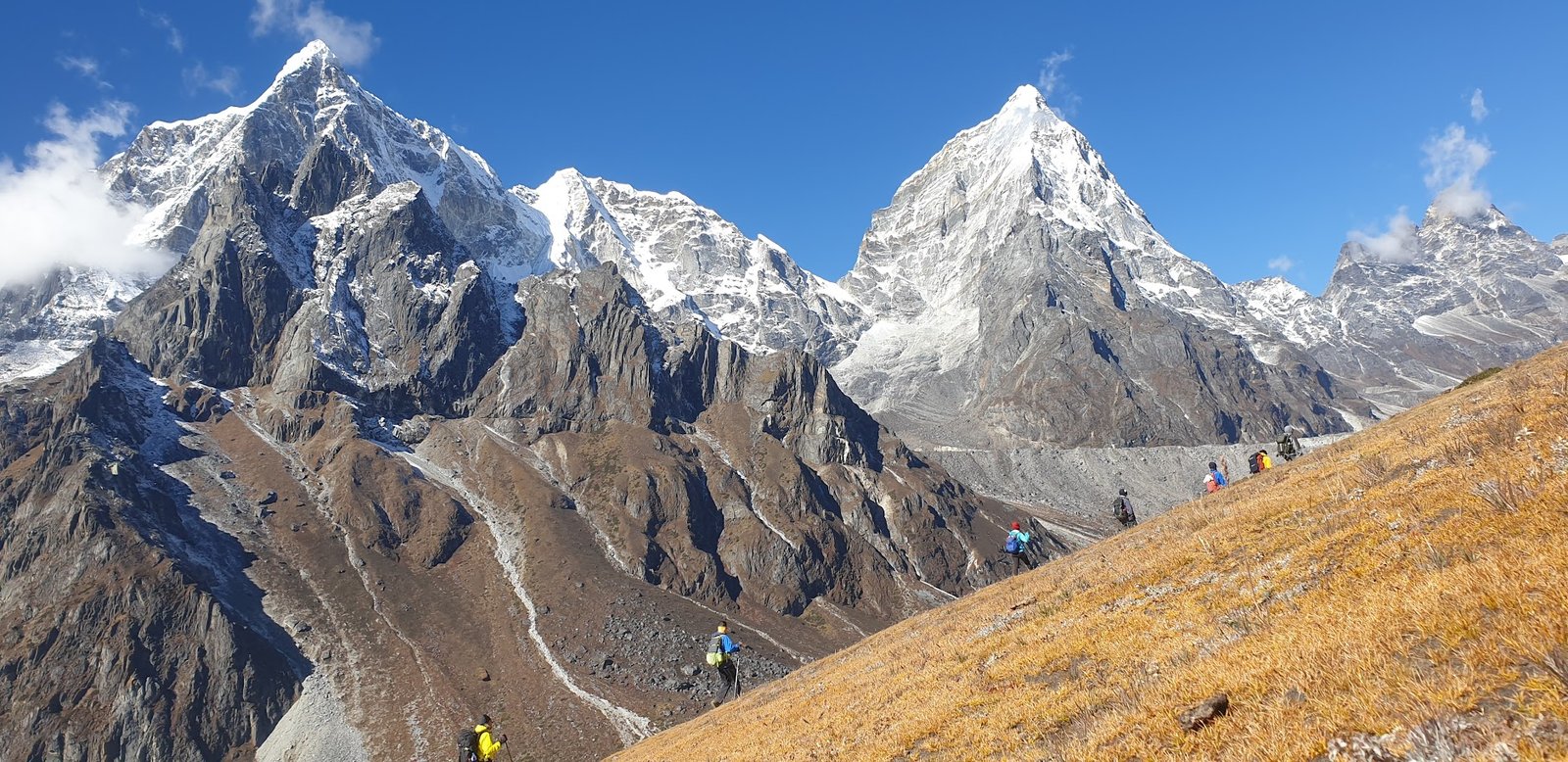
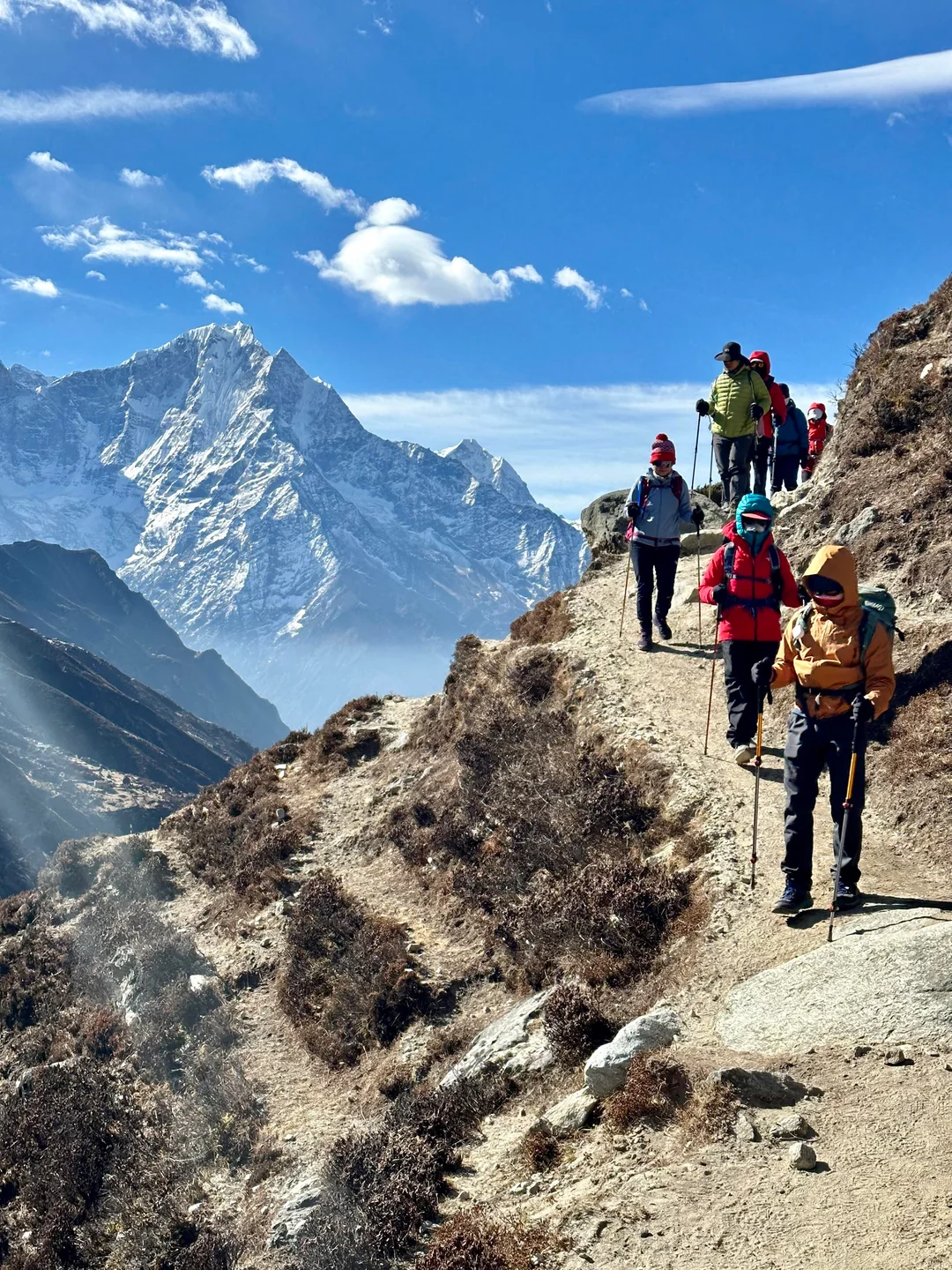
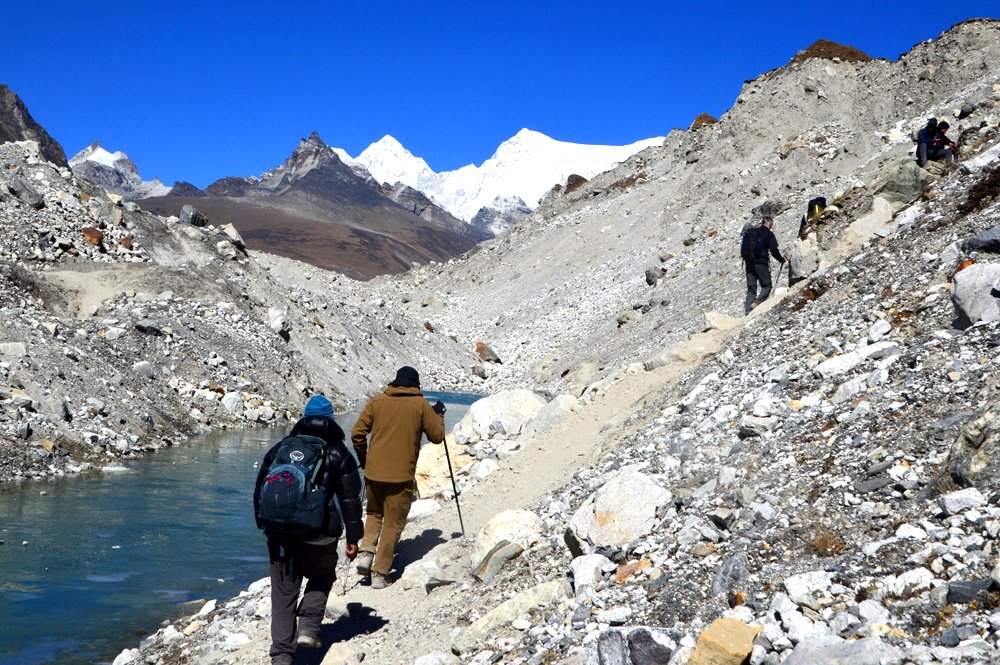
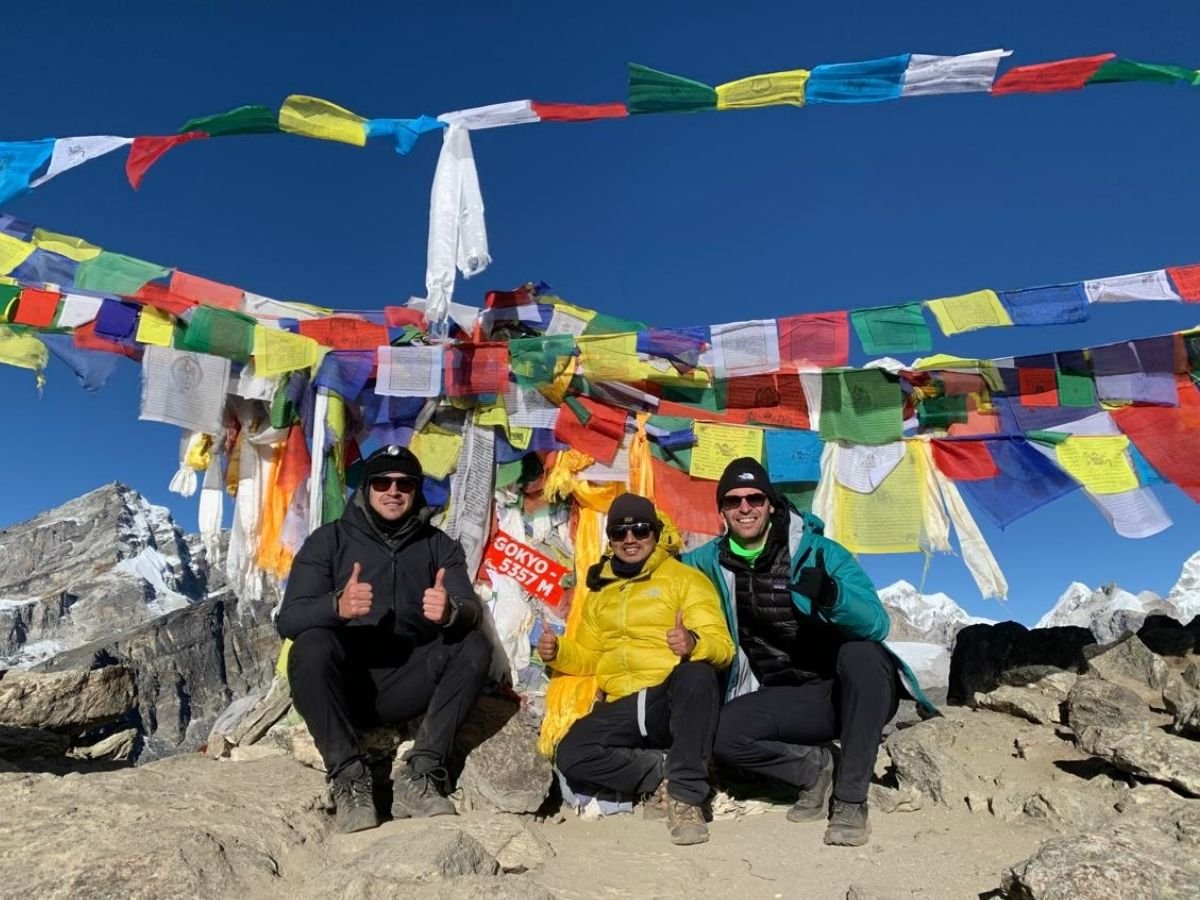
The Everest Base Camp Cho La Pass Trek is an extraordinary journey through the high Himalayas that combines the legendary Everest Base Camp with the beautiful Gokyo Valley and the challenging Cho La Pass. Rather than following the same trail back, this route creates a spectacular Himalayan circuit through remote valleys, glacial landscapes, Sherpa villages, and some of the most impressive viewpoints in the Everest region.
Your adventure follows the classic trail through Phakding, Namche Bazaar, Tengboche, Dingboche, Lobuche, and Gorak Shep before reaching Everest Base Camp at 5,364 meters. From there, the route continues toward Dzongla and crosses the demanding Cho La Pass at approximately 5,420 meters, connecting the Everest and Gokyo valleys.
After the pass, the landscape changes dramatically as you enter the peaceful Gokyo Valley, famous for its turquoise glacial lakes and spectacular mountain scenery. A climb to Gokyo Ri at around 5,357 meters provides a different perspective of Everest, Lhotse, Makalu, and Cho Oyu.
This trek is designed for adventurous trekkers who want more than the traditional Everest Base Camp route. It combines iconic Himalayan landmarks, high-altitude adventure, Sherpa culture, glaciers, lakes, and less-traveled sections of the Khumbu into one unforgettable experience.
Overview
The 18-Day Everest Base Camp, Cho La Pass & Gokyo Trek is an adventurous journey through the heart of Nepal’s Everest region, combining three iconic Himalayan experiences in one carefully planned route. Starting with a scenic flight to Lukla, the trek passes through Sherpa villages, Namche Bazaar, Tengboche, and the high valleys of Khumbu before reaching Everest Base Camp at 5,364 meters.
The adventure continues across the challenging Cho La Pass at 5,420 meters, connecting the Everest and Gokyo valleys. From there, trek through the beautiful Gokyo Valley, explore its turquoise lakes, and hike Gokyo Ri for spectacular Himalayan views. With acclimatization days, experienced trekking support, and a carefully paced itinerary, this trek offers a rewarding combination of high-altitude adventure, mountain scenery, Sherpa culture, and unforgettable Himalayan landscapes.
Highlighhts
- Reach Everest Base Camp at 5,364 m beneath the Khumbu Icefall.
- Experience the dramatic Cho La Pass at 5,420 m connecting the Everest and Gokyo valleys.
- Hike Kala Patthar at 5,545 m for close views of Everest, Lhotse, and Nuptse.
- Climb Gokyo Ri at 5,357 m for a panoramic Himalayan mountain view.
- Explore the stunning Gokyo Lakes surrounded by high Himalayan peaks.
- Cross the rugged Ngozumpa Glacier, one of the defining landscapes of the Gokyo Valley.
- Trek through the traditional Sherpa settlements of the Khumbu region.
- Visit Namche Bazaar, the main trading and cultural hub of the Everest region.
- Experience the peaceful mountain setting around Tengboche Monastery.
- Trek through Sagarmatha National Park, a UNESCO World Heritage Site.
- Enjoy views of iconic peaks including Everest, Lhotse, Nuptse, Makalu, Cho Oyu, and Ama Dablam.
- Complete a diverse Everest–Cho La–Gokyo circuit instead of following the standard EBC trail in and out.
- Experience a challenging high-altitude trek combining Everest Base Camp, Cho La Pass, Gokyo Lakes, Gokyo Ri, and Kala Patthar in one 18-day journey.
EBC ChoLa Pass Trek Overview
The Everest Base Camp Cho La Pass Trek takes you beyond the classic Everest trail into some of the most dramatic landscapes of the Khumbu. The journey combines the iconic trail to Everest Base Camp and Kala Patthar with the remote beauty of the Gokyo Valley, creating a varied route through high mountain valleys, Sherpa settlements, glaciers, and alpine terrain. A major highlight is the crossing of Cho La Pass at 5,420 meters, a high-altitude route linking the Everest and Gokyo valleys. Beyond the pass, the trail opens into the Gokyo Valley, where turquoise glacial lakes, the vast Ngozumpa Glacier, and the ascent of Gokyo Ri provide a completely different perspective of Everest and the surrounding Himalayan peaks.With its combination of renowned landmarks and less-traveled sections of the Khumbu, this trek offers a richer Himalayan experience for trekkers seeking more than the traditional Everest Base Camp route.
What can you expect from the EBC ChoLa Pass Trek Package?
- Two legendary destinations in one journey: Experience both Everest Base Camp and the remarkable Gokyo Valley instead of returning along the standard EBC trail.
- A challenging high-altitude crossing: The highlight of the route is Cho La Pass (5,420 m), where the trail climbs through rugged mountain terrain and a glaciated section before descending toward Gokyo.
- Spectacular Himalayan viewpoints: Enjoy changing perspectives of Everest and other major peaks from the main trail, Kala Patthar, Cho La, and Gokyo Ri.
- The turquoise Gokyo Lakes: Discover the series of glacial lakes surrounding Gokyo, set among some of the most dramatic scenery in the Khumbu.
- Everest Base Camp at 5,364 meters: Follow the Khumbu Glacier corridor to one of the world’s most famous trekking destinations.
- Sunrise from Kala Patthar: Take an early morning climb for expansive views toward Everest, Nuptse, Lhotse, and the surrounding peaks.
- Gokyo Ri adventure: Climb above Gokyo for a broad Himalayan panorama featuring some of the world’s highest mountains.
- Authentic Sherpa culture: Walk through traditional settlements, Buddhist monasteries, prayer-flag-lined trails, mani walls, and mountain communities throughout the Khumbu.
- Diverse Himalayan landscapes: The journey progresses from forested valleys and rivers to alpine meadows, rocky mountain passes, glaciers, and high-altitude wilderness.
Benefits of Booking EBC ChoLa Pass Trek with us
- Airport pickup and drop-off in Kathmandu for a convenient start and finish to your Nepal adventure.
- Trekking duffle bag provided as a practical souvenir of your Himalayan journey.
- Complimentary trekking map to help you understand the route and major landmarks.
- Oximeter support for monitoring blood oxygen levels during the high-altitude sections of the trek.
- Basic first-aid kit carried by the trekking team for common trekking-related needs.
- Free luggage storage in Kathmandu for belongings that are not required during the trek.
- Experienced trekking guide to assist with route navigation, local knowledge, high-altitude trekking, and daily logistics.
- Porter support available as an optional service for travelers who prefer to trek with a lighter backpack.
Itinerary
Follow an unforgettable 18-day journey through the Everest region, combining Everest Base Camp, Kala Patthar, Cho La Pass, and the spectacular Gokyo Valley.
From Lukla and Namche to high Himalayan passes and turquoise glacial lakes, the carefully paced route blends adventure, acclimatization, and extraordinary mountain scenery.
Welcome to Nepal! Upon your arrival at Tribhuvan International Airport, our representative will meet you and transfer you to your hotel in Kathmandu. After checking in, you can rest or explore the nearby streets of the city. In the evening, you will meet your trekking team for a briefing about the upcoming Everest Base Camp and Cho La Pass adventure. Your guide will discuss the route, altitude, accommodation, safety considerations, and preparations for the high-altitude sections.
Accommodation: Hotel in Kathmandu
Meals: Welcome Dinner
Maximum Elevation: 1,400 m
Today is reserved for final preparations before heading into the Everest region. You can check your trekking equipment, organize your bags, and purchase any last-minute essentials. Your guide will review the itinerary with you and explain what to expect from the higher sections, particularly the approach to Everest Base Camp and the crossing of Cho La Pass. You may also use your free time to explore Kathmandu's cultural attractions before beginning your trek.
Accommodation: Hotel in Kathmandu
Meals: Breakfast
Maximum Elevation: 1,400 m
Your Himalayan journey officially begins with an early flight toward Lukla, the main gateway to the Everest region. After landing, you will meet your trekking crew and begin walking along the Dudh Koshi Valley. The first section of the trail passes through small mountain settlements, suspension bridges, and green hills before reaching Phakding. This relatively short opening trek gives you time to settle into the rhythm of walking in the Khumbu.
Trekking Time: Approximately 3–4 hours
Accommodation: Teahouse in Phakding
Meals: Breakfast, Lunch & Dinner
Maximum Elevation: 2,610 m
After breakfast, you follow the Dudh Koshi River toward the entrance of Sagarmatha National Park. The route crosses several suspension bridges and winds through pine and rhododendron forests. As you approach Namche, the trail becomes steeper, providing your first real taste of the altitude gain. After the final climb, you arrive at Namche Bazaar, the lively Sherpa center of the Khumbu. Surrounded by mountains, Namche is an important stop for both trekkers and local communities.
Trekking Time: Approximately 5–7 hours
Accommodation: Teahouse in Namche Bazaar
Meals: Breakfast, Lunch & Dinner
Maximum Elevation: 3,440 m
Today is an important acclimatization day. Instead of gaining significant sleeping altitude, you will take a short hike above Namche and return to the village. Depending on conditions, the hike can include the Everest View Hotel area, from where you may see Everest, Ama Dablam, Thamserku, and other Himalayan peaks. The remainder of the day can be spent exploring Namche, visiting local shops and cafés, or simply resting.
Hiking Time: Approximately 3–4 hours
Accommodation: Teahouse in Namche Bazaar
Meals: Breakfast, Lunch & Dinner
Maximum Elevation: Approximately 3,880 m
The trail gradually leaves Namche and follows a scenic hillside overlooking the Khumbu valleys. You will walk through sections of pine and rhododendron forest before descending toward the Dudh Koshi and climbing again toward Tengboche. Tengboche is famous for its Buddhist monastery and its remarkable mountain setting. If the monastery is open, you can observe the area's distinctive Buddhist traditions while enjoying views toward Ama Dablam and the surrounding peaks.
Trekking Time: Approximately 5–6 hours
Accommodation: Teahouse in Tengboche
Meals: Breakfast, Lunch & Dinner
Maximum Elevation: 3,860 m
The trail continues toward the higher Imja Valley. After descending through the forest, the landscape gradually becomes more open and alpine. Along the way, you pass traditional villages, mani walls, and grazing areas before reaching Dingboche. At more than 4,400 meters, Dingboche is an important staging point before the trail moves toward the high Khumbu.
Trekking Time: Approximately 5–6 hours
Accommodation: Teahouse in Dingboche
Meals: Breakfast, Lunch & Dinner
Maximum Elevation: 4,410 m
Another acclimatization day is built into the itinerary before reaching the higher elevations. You will take a gradual hike into the hills surrounding Dingboche. Depending on weather and the group's condition, your guide may choose a suitable viewpoint around Nangkartshang. The hike gives you an opportunity to experience the altitude without moving your overnight accommodation higher. After returning to Dingboche, take time to rest, hydrate, and prepare for the demanding days ahead.
Hiking Time: Approximately 3–4 hours
Accommodation: Teahouse in Dingboche
Meals: Breakfast, Lunch & Dinner
Maximum Elevation: Approximately 5,000 m on the hike
Today the landscape becomes increasingly rugged as you move deeper into the high Himalayas. The trail climbs gradually toward Dukla before continuing alongside the moraine-covered terrain of the Khumbu Glacier. Along the way, you pass the memorial area honoring climbers and mountaineers who lost their lives in the Everest region. From here, the trail continues upward to Lobuche, where the surrounding peaks create an impressive high-altitude environment.
Trekking Time: Approximately 5–6 hours
Accommodation: Teahouse in Lobuche
Meals: Breakfast, Lunch & Dinner
Maximum Elevation: Approximately 4,910 m
Today you reach one of the major objectives of the trek: Everest Base Camp. You begin by walking toward Gorak Shep before continuing along the rocky moraine and glacier landscape toward Base Camp. At approximately 5,364 meters, you stand beneath the famous Khumbu Icefall area and experience the extraordinary environment surrounding Everest. After spending time at Base Camp, you return along the same trail to Gorak Shep, where you spend the night.
Trekking Time: Approximately 7–8 hours
Accommodation: Teahouse in Gorak Shep
Meals: Breakfast, Lunch & Dinner
Maximum Elevation: 5,364 m
An early morning start takes you toward Kala Patthar, the highest point of this trek at approximately 5,545 meters. The climb is challenging because of the altitude, but the viewpoint provides an impressive perspective toward Everest, Nuptse, Pumori, Lhotse, and the surrounding Himalayan peaks. After returning toward Gorak Shep, the route turns away from the main Everest trail and continues toward Dzongla. The environment becomes quieter as you approach the Cho La section of the trek.
Trekking Time: Approximately 6–7 hours
Accommodation: Teahouse in Dzongla
Meals: Breakfast, Lunch & Dinner
Maximum Elevation: Approximately 5,545 m
Today is the most demanding section of the journey. You leave Dzongla early and begin climbing toward Cho La Pass, which sits at approximately 5,420 meters. The trail becomes steep and rocky as you approach the pass, with snow and icy conditions possible depending on the season. vAfter reaching the top, you will have time to take in the surrounding mountain landscape before making the descent toward Thangnak (Dragnag). The crossing requires careful footing and a steady pace, particularly on the glaciated section. Your guide will assess conditions and assist the group throughout the crossing.
Trekking Time: Approximately 7–8 hours
Accommodation: Teahouse in Thangnak
Meals: Breakfast, Lunch & Dinner
Maximum Elevation: 5,420 m
Following the demanding Cho La crossing, today's journey is shorter and allows you to settle into the spectacular Gokyo Valley. The route crosses the rugged terrain of the Ngozumpa Glacier before gradually approaching the Gokyo settlement. As you arrive, the scenery changes dramatically. The famous turquoise waters of the Gokyo Lakes appear beneath the surrounding Himalayan peaks. You spend the night in Gokyo, beside the third lake, Dudh Pokhari.
Trekking Time: Approximately 3–4 hours
Accommodation: Teahouse in Gokyo
Meals: Breakfast, Lunch & Dinner
Maximum Elevation: 4,790 m
Today is dedicated to exploring one of the most beautiful areas of the Everest region. An early hike takes you toward Gokyo Ri at approximately 5,357 meters. From the summit, the landscape opens into a spectacular panorama of the Himalayan range, including Everest, Lhotse, Makalu, and Cho Oyu in favorable conditions. After returning to Gokyo, you can relax beside the lakes or explore the surrounding valley. This day also provides valuable recovery time after crossing Cho La Pass.
Hiking Time: Approximately 3–5 hours
Accommodation: Teahouse in Gokyo
Meals: Breakfast, Lunch & Dinner
Maximum Elevation: 5,357 m
The trail follows the Dudh Koshi system and passes through alpine terrain before vegetation begins to become thicker again. Along the way, you pass smaller Sherpa settlements and areas used for seasonal grazing. The lower elevation makes the walk more comfortable as you approach Dole.
Trekking Time: Approximately 5–6 hours
Accommodation: Teahouse in Dole
Meals: Breakfast, Lunch & Dinner
Maximum Elevation: 4,038 m
Today's trail continues downhill through forests and mountain settlements. You pass through the Dudh Koshi Valley and gradually reconnect with the familiar route toward Namche Bazaar. After reaching Namche, you have time to relax and enjoy the town. For many trekkers, returning to Namche feels like a transition from the remote high mountains toward the lower Khumbu.
Trekking Time: Approximately 5–6 hours
Accommodation: Teahouse in Namche Bazaar
Meals: Breakfast, Lunch & Dinner
Maximum Elevation: 3,440 m
Your final trekking day takes you back toward Lukla. The route descends through forests and mountain villages, crossing suspension bridges and following the Dudh Koshi Valley. After reaching Lukla, you can relax and celebrate the completion of your Everest Base Camp and Cho La Pass adventure with your trekking team.
Trekking Time: Approximately 6–7 hours
Accommodation: Teahouse in Lukla
Meals: Breakfast, Lunch & Dinner
Maximum Elevation: 2,860 m
After breakfast, you take your return flight from Lukla to Kathmandu, subject to weather and flight operations. Once you arrive in Kathmandu, your Everest Base Camp Cho La Pass Trek officially comes to an end. You can continue with your onward journey or extend your stay in Nepal for additional sightseeing and activities.
Flight Time: Approximately 30–40 minutes
Meals: Breakfast
Maximum Elevation: 1,400 m
Includes/Excludes
Cost Includes
- Airport pickup and drop-off in Kathmandu as per the itinerary
- Kathmandu hotel accommodation with breakfast
- Round-trip domestic flight between Kathmandu/Manthali and Lukla, including required ground transfers when applicable
- Comfortable teahouse accommodation throughout the trekking route on a twin-sharing basis
- Breakfast, lunch, and dinner during the trek
- Licensed, experienced English-speaking trekking guide
- Porter service with an appropriate porter-to-trekker ratio
- Guide and porter wages, meals, accommodation, transportation, and insurance
- Sagarmatha National Park entry permit
- Khumbu Pasang Lhamu Rural Municipality permit and other required local trekking permits
- Trekking duffle bag for carrying your main luggage
- Basic first-aid kit and altitude monitoring support
- Necessary trekking equipment support for the Cho La section, subject to current trail conditions
- Pre-trek briefing and route assistance
- Government taxes and applicable service charges
Cost Excludes
- International flights to and from Nepal
- Nepal entry visa and related immigration fees
- Travel insurance with high-altitude trekking and emergency evacuation coverage
- Personal trekking equipment such as boots, clothing, trekking poles, and other gear
- Meals and accommodation in Kathmandu beyond those specifically mentioned in the itinerary
- Bottled water, soft drinks, alcoholic beverages, snacks, and other personal refreshments
- Hot showers, Wi-Fi, internet, phone calls, and electronic-device charging during the trek
- Personal expenses such as laundry and additional services
- Emergency evacuation or medical expenses not covered by your insurance
- Additional accommodation or transportation caused by flight delays, weather conditions, illness, or changes to the itinerary
- Tips and gratuities for guides, porters, drivers, and other staff
- Any service or expense not specifically listed under the cost-includes section
Add-Ons and Options
Make your trek more comfortable by selecting optional services according to your travel style and group requirements.
- Porter Service: Let a porter carry your main luggage so you can concentrate on the trail, scenery, and high-altitude experience with a lighter daypack.
- Private Airport Transfers: Upgrade your Kathmandu arrival and departure experience with private transportation between the airport and your hotel.
- Private Kathmandu–Lukla Flight Arrangement: Travelers who prefer additional flexibility can request private flight arrangements subject to airline and operational availability.
- Extra Kathmandu Hotel Night: Add an additional night before or after the trek if you want more time to rest, explore Kathmandu, or accommodate your travel schedule.
- Helicopter Return from the Everest Region: Depending on weather and operational conditions, a helicopter return can be arranged for travelers who want an alternative to the regular return route.
How to Personalize Your Trek
- Step 1: Select your preferred departure date.
- Step 2: Enter the number of trekkers.
- Step 3: Select “Book Now” or “Add to Cart.”
- Step 4: Choose your preferred additional services.
- Step 5: Complete your booking and payment.
Best time to do EBC ChoLa Pass Trek:
The most suitable periods for the Everest Base Camp Cho La Pass Trek are spring and autumn, when the region generally experiences more favorable trekking conditions and better mountain visibility.
- Spring — March to May
Spring brings improving temperatures and generally good visibility across the Khumbu. The lower sections of the trek become especially attractive as rhododendrons and other vegetation begin to bloom. April and May are particularly popular months for high-altitude trekking.
- Autumn — September to November
After the monsoon, the mountain atmosphere generally becomes clearer and the trails become drier. October and November are particularly popular for trekking because of the combination of clear Himalayan views and generally stable conditions.
For the Cho La crossing itself, weather and trail conditions can change rapidly because of the altitude. The pass should always be crossed according to the judgment of the experienced trekking team.
What Our Travelers Say
Read reviews from travelers who have joined our Himalayan trips. See what they enjoyed and what they thought about their experience.
Frequently Asked Questions
Faq's
The trek is considered challenging because of high altitude, long walking days, steep sections, and the Cho La Pass crossing at 5,420 meters. Good physical preparation and proper acclimatization are important.
Previous high-altitude trekking experience is recommended, although experienced and well-prepared trekkers with good fitness can undertake the route with proper guidance.
The route reaches Kala Patthar at approximately 5,545 meters, while Cho La Pass stands at 5,420 meters and Gokyo Ri at around 5,357 meters.
No technical mountaineering skills are normally required, but the pass involves steep, rocky, snowy, and potentially icy sections. Conditions can vary considerably with the season.
The main trekking seasons are spring (March–May) and autumn (September–November), when weather and mountain visibility are generally more favorable.
Not necessarily. Heavy snowfall and icy conditions can make the pass difficult or temporarily impassable during winter and periods of severe weather. Pass conditions should be checked before and during the trek.
The equipment required depends on current trail conditions. Microspikes or crampons may be useful when snow or ice is present, so your trekking team should assess conditions before the crossing.
The route combines Everest Base Camp, Kala Patthar, Cho La Pass, Gokyo Lakes, Gokyo Ri, Ngozumpa Glacier, Sherpa villages, and Sagarmatha National Park in one continuous Himalayan journey.
Instead of returning along the same main trail after Everest Base Camp, this route crosses Cho La Pass into the Gokyo Valley, adding Gokyo Lakes, Gokyo Ri, and more varied high-altitude terrain.
Most trekking days involve several hours of walking, with longer and more demanding sections around Everest Base Camp, Kala Patthar, and Cho La Pass. Daily duration varies according to the route, weather, and individual pace.
The trek requires the relevant Sagarmatha National Park entry permit and Khumbu Pasang Lhamu Rural Municipality permit. Your trekking company normally arranges these as part of the trip preparations.
Yes. Because the route reaches elevations above 5,000 meters, altitude sickness is a serious consideration. The itinerary includes acclimatization, and trekkers should follow their guide's advice and report symptoms promptly.
Yes. A porter can carry your main luggage while you walk with a lighter daypack, making the long high-altitude sections more manageable.
Accommodation is generally provided in local teahouses and lodges along the trekking route. Facilities become simpler as you move into the higher and more remote sections.
Yes. Comprehensive travel insurance with high-altitude trekking coverage and emergency evacuation protection is strongly recommended for this route, particularly because of its remote terrain and elevation.