
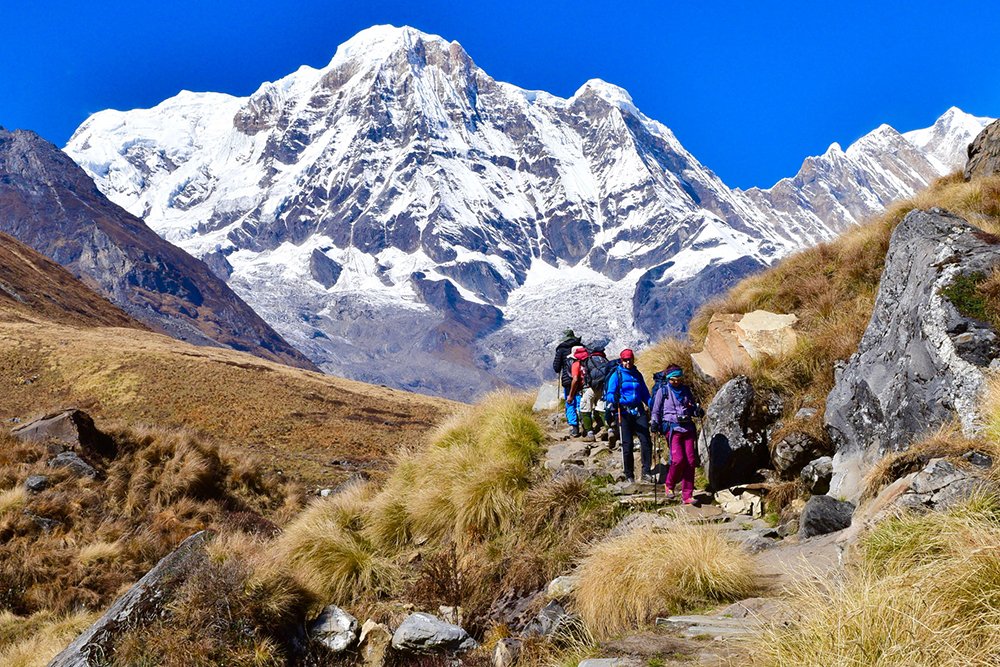
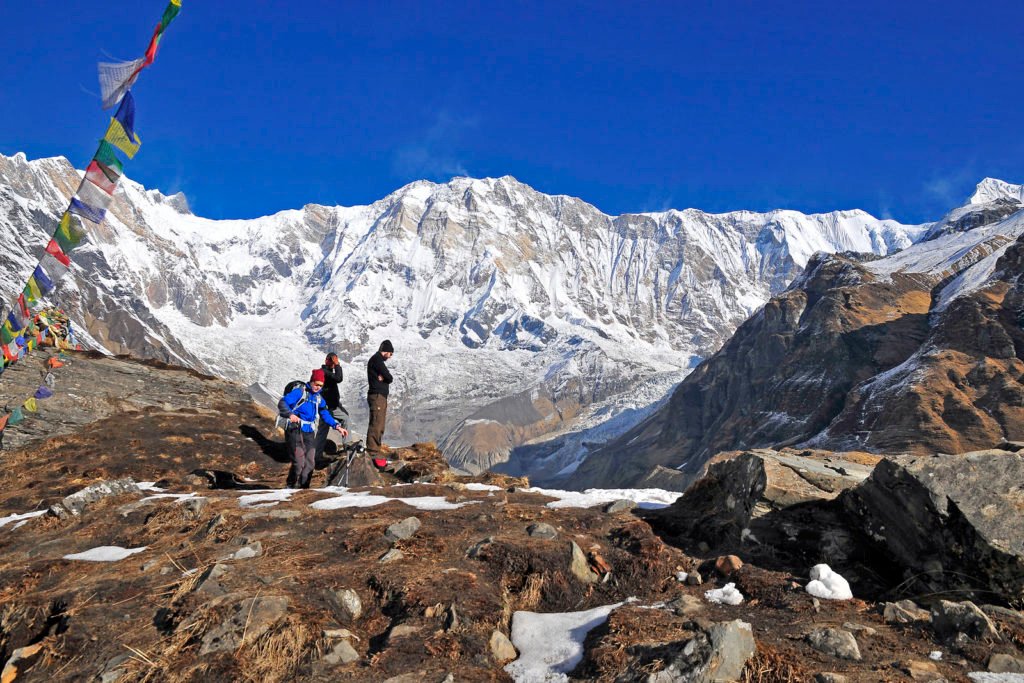
Rising to 7,219 meters above sea level, Annapurna South is a formidable Himalayan summit in Nepal’s Annapurna range. The mountain stands above the Annapurna Sanctuary, surrounded by immense rock walls, glaciers, steep snow slopes, and some of the most recognizable peaks in the central Himalayas. Its impressive elevation and demanding climbing terrain make it a serious mountaineering objective for climbers seeking an expedition beyond trekking peaks.
The Annapurna South Expedition combines a scenic approach through traditional mountain settlements with a technically demanding high-altitude climb. The journey begins in Kathmandu before continuing to Pokhara and the foothills of the Annapurna region. From there, the approach follows mountain trails through forested valleys, terraced hillsides, and villages before reaching Machhapuchhre Base Camp and the expedition’s base camp.
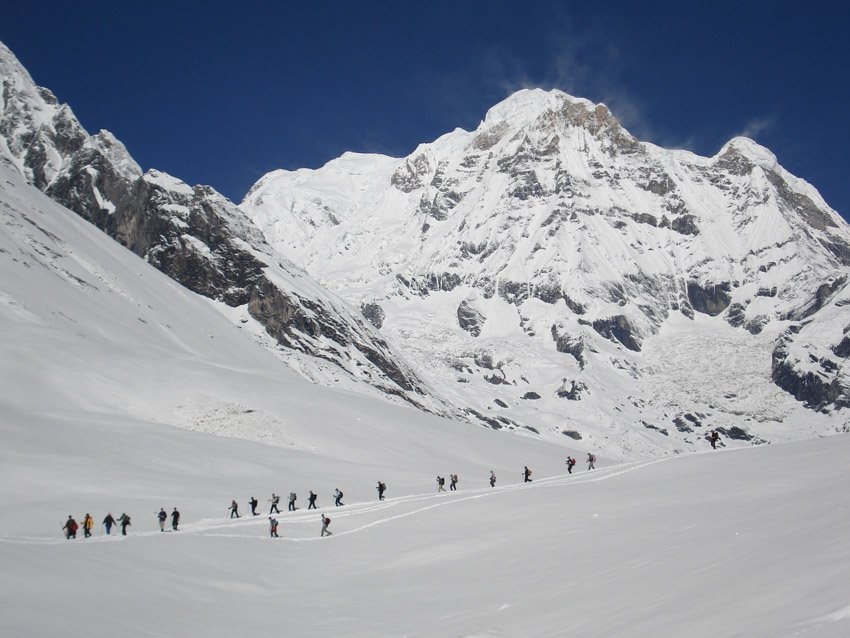
Unlike a conventional trek to Annapurna Base Camp, this expedition requires a substantial period dedicated to acclimatization, technical preparation, establishing higher camps, and selecting suitable weather conditions for the summit attempt. Climbers may need to travel across crevassed glacier terrain, ascend steep snow and ice, and use fixed ropes and specialized mountaineering equipment. The exact route, camp elevations, and climbing techniques depend on the chosen line and current mountain conditions.
Annapurna South was first climbed in 1964 by a Japanese expedition. Today, it remains a demanding objective requiring strong physical conditioning, previous high-altitude experience, sound technical skills, and a disciplined approach to safety. TrekUp Nepal organizes the expedition around a gradual approach, a structured climbing period, and contingency days to help accommodate the unpredictable conditions of the high Himalayas.
This expedition is intended for experienced mountaineers rather than beginners. A summit attempt is never guaranteed, and the expedition leader may adjust the schedule or turn the team around when weather, snow stability, health, or route conditions make climbing unsafe.
Overview
The 33-day Annapurna South Expedition takes experienced climbers to the 7,219-meter summit of one of Nepal’s demanding Himalayan peaks. Travel through the Annapurna region, establish high-altitude camps, and prepare for a challenging summit attempt with TrekUp Nepal’s expedition team.
Highlights
- Attempt the 7,219-meter summit of Annapurna South.
- Explore the dramatic Annapurna Sanctuary and surrounding Himalayan landscapes.
- Trek through traditional Gurung villages and forested mountain trails.
- Acclimatize progressively before beginning the technical climbing phase.
- Establish and use high-altitude camps according to route conditions.
- Gain experience on steep snow, ice, glacier terrain, and fixed-rope sections.
- Enjoy views of Annapurna I, Hiunchuli, Machhapuchhre, and neighboring Himalayan peaks.
- Allow a dedicated climbing period for acclimatization, rotations, and summit planning.
- Include contingency time for changing weather and mountain conditions.
- Complete the journey with support from an organized expedition team.
Annapurna South Expedition Overview
The Annapurna South Expedition offers experienced mountaineers the opportunity to attempt a 7,219-meter Himalayan summit in Nepal’s Annapurna range. The journey combines a trek through the Annapurna Sanctuary with a technical climbing phase involving acclimatization, high-camp rotations, and a summit attempt planned around suitable conditions.
TrekUp Nepal can coordinate the approach journey, expedition logistics, accommodation, meals, and climbing arrangements according to the final package. The schedule includes time for preparation, recovery, and potential delays, while the exact route and high-camp locations are confirmed with the expedition team before departure.
Annapurna South demands strong fitness, technical climbing ability, and sound decision-making at altitude. The priority is to approach the mountain responsibly, follow the expedition leader’s guidance, and make summit decisions based on safety rather than a fixed timetable.
What Can You Expect from the Annapurna South Expedition Package?
- A planned journey from Kathmandu through Pokhara and the Annapurna region.
- A gradual approach trek before reaching the expedition base camp.
- Dedicated time for acclimatization and technical preparation.
- A climbing period for high-camp rotations and a summit attempt.
- Exposure to glacier travel, snow and ice climbing, and fixed-rope systems.
- Expedition accommodation and meals according to the confirmed package.
- Logistics support for transportation, permits, equipment, and climbing staff as agreed.
- A demanding high-altitude experience requiring endurance, patience, and flexibility.
- Contingency planning for weather and route changes, where available.
- A chance to attempt one of Nepal’s serious 7,000-meter Himalayan summits.
Benefits of Booking Annapurna South Expedition with TrekUp Nepal
- Organized logistics: Coordinate transportation, accommodation, approach trekking, and expedition arrangements through one itinerary.
- Pre-departure guidance: Receive information about equipment, fitness requirements, documentation, and the planned schedule.
- Clear package details: Review inclusions, exclusions, staffing, and additional costs before confirming the booking.
- Expedition coordination: Plan the climbing schedule around the chosen route and seasonal conditions.
- Custom group arrangements: Request a private expedition or a tailored quotation according to your group size and experience.
- Practical communication: Discuss equipment requirements, logistics, and itinerary details before departure.
- Flexible planning: Request changes where route conditions, permits, and operational arrangements allow.
- Safety-conscious approach: Prioritize acclimatization, weather assessment, suitable equipment, and responsible summit decisions.
Arrive in Kathmandu, where a TrekUp Nepal representative will meet you at the airport and transfer you to your hotel. The rest of the day is reserved for rest after your journey. Your expedition coordinator can explain the upcoming schedule and help identify any essential equipment you still need.
Altitude: 1,400 m
Duration: Airport transfer and rest
Meals: Not included unless specified
Accommodation: Hotel in Kathmandu
Activity: Arrival and expedition orientation
Meet the expedition team to review the proposed route, climbing schedule, safety procedures, communications plan, and emergency arrangements. The team will check your personal climbing equipment and review the permits and documentation required for the expedition. Use the remaining time to purchase or rent any missing gear and organize your loads for the journey.
Altitude: 1,400 m
Duration: Full day
Meals: Breakfast
Accommodation: Hotel in Kathmandu
Activity: Expedition briefing, gear check, and preparation
Travel by road from Kathmandu to Pokhara, following river valleys, cultivated hillsides, and settlements along Nepal’s main highway. The drive provides a transition from the busy capital to the gateway of the Annapurna region. Depending on traffic and road conditions, the journey may take much of the day.
Altitude: Approximately 822 m
Duration: Approximately 6–9 hours by road
Meals: Breakfast
Accommodation: Hotel in Pokhara
Activity: Road journey and final approach preparations
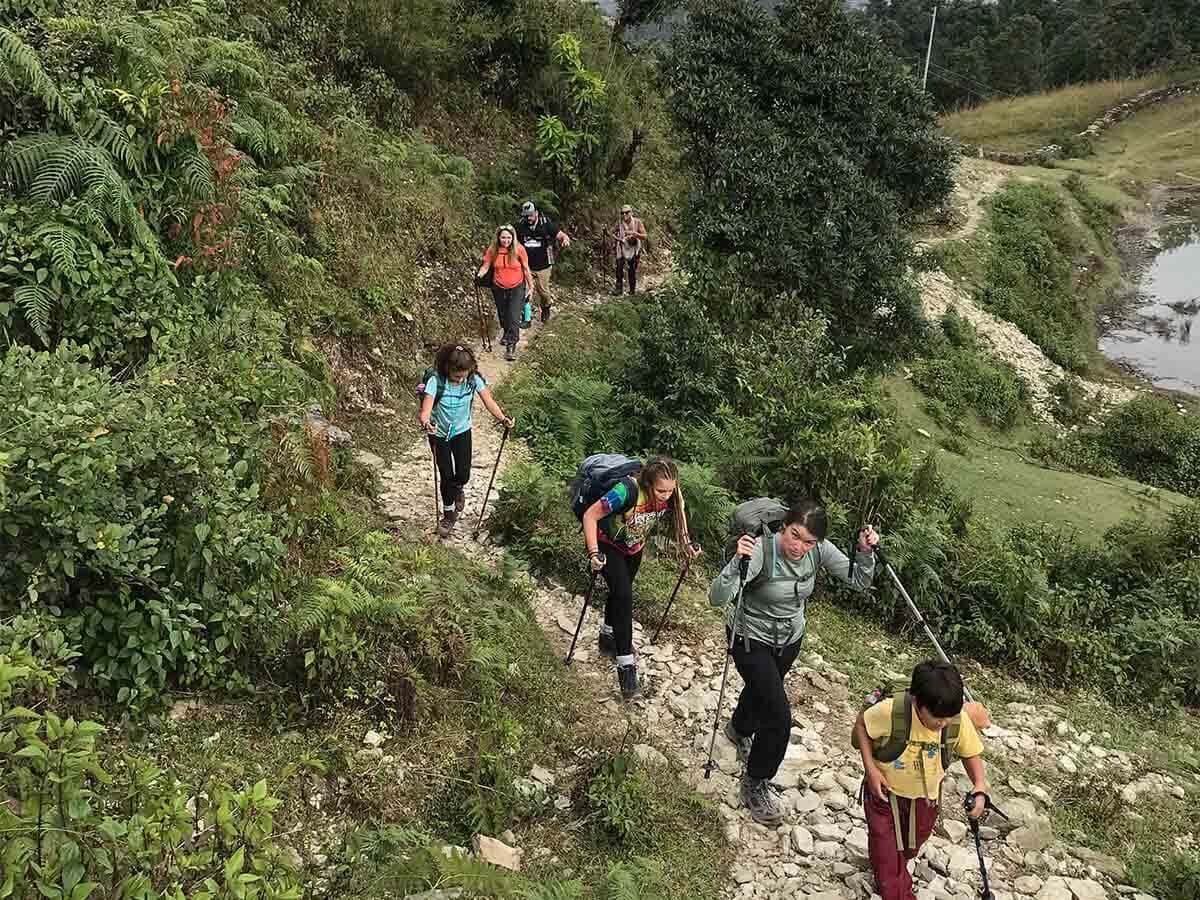
After breakfast, drive toward the selected trailhead in the Annapurna foothills. Begin trekking along village paths, stone steps, cultivated terraces, and wooded slopes. Continue toward Ghandruk, a traditional Gurung settlement known for its mountain scenery and cultural heritage. The route and exact walking duration depend on road access and the expedition’s final approach plan.
Altitude: Approximately 1,940 m
Duration: Approximately 4–6 hours of trekking, plus driving
Meals: Breakfast, lunch, and dinner
Accommodation: Teahouse or mountain lodge
Activity: Trekking and village exploration
Leave Ghandruk and continue along trails that climb and descend through terraced farmland and forest. The path crosses small settlements and viewpoints before reaching the Chhomrong area, a key gateway to the Annapurna Sanctuary. Take the day at a steady pace and drink water regularly as the approach begins gaining elevation.
Altitude: Approximately 2,170 m
Duration: Approximately 5–7 hours
Meals: Breakfast, lunch, and dinner
Accommodation: Teahouse or mountain lodge
Activity: Trekking and gradual altitude gain
Descend through stone stairways toward the Chhomrong Khola, cross the river, and climb through the forest on the opposite side. Continue through the Modi Khola valley, passing bamboo groves and shaded sections of trail before reaching the Dovan area. The route can be damp and slippery, so careful footing is important.
Altitude: Approximately 2,600 m
Duration: Approximately 5–7 hours
Meals: Breakfast, lunch, and dinner
Accommodation: Teahouse or mountain lodge
Activity: Forest trekking and approach toward the Sanctuary
Continue higher through the narrow valley, passing forested sections and rocky terrain as the landscape becomes increasingly alpine. The route progresses toward Deurali and then Machhapuchhre Base Camp, where the surrounding mountains become more prominent. Walk slowly and report symptoms such as persistent headache, dizziness, nausea, or unusual breathlessness to the guide.
Altitude: 3,700 m
Duration: Approximately 6–8 hours
Meals: Breakfast, lunch, and dinner
Accommodation: Teahouse or mountain lodge, subject to availability
Activity: High-altitude trekking and acclimatization
Spend the day allowing your body to adjust to the increasing altitude. Depending on the group’s condition and the guide’s assessment, undertake a short acclimatization walk without gaining excessive elevation, then return to camp. The expedition leader will review personal equipment, clothing systems, hydration, and the next day’s approach. Rest is important before leaving the regular trekking route for the expedition base camp.
Altitude: 3,700 m
Duration: Full day, including an optional short walk
Meals: Breakfast, lunch, and dinner
Accommodation: Teahouse or mountain lodge
Activity: Acclimatization, rest, and equipment preparation
Leave Machhapuchhre Base Camp and proceed toward the designated Annapurna South expedition base camp. The route leaves the more established trekking area and follows rougher ground, moraine, and glacial terrain as directed by the expedition leader. The crew establishes camp and organizes supplies, communications, and equipment for the climbing phase. The exact base-camp elevation depends on the chosen route and current conditions.
Altitude: Approximately 4,200–4,400 m, route-dependent
Duration: Approximately 3–6 hours, depending on route and load
Meals: Breakfast, lunch, and dinner
Accommodation: Expedition tented camp
Activity: Base-camp approach and camp establishment
Spend the day resting at base camp and allowing your body to adjust to the altitude. The expedition team checks equipment, organizes supplies, and provides a briefing on glacier travel, climbing techniques, and camp procedures. Depending on conditions, a short walk around camp may be arranged.
Altitude: Approximately 4,200–4,400 m
Duration: Full day
Meals: Breakfast, lunch, and dinner
Accommodation: Expedition tented camp
Activity: Acclimatization, equipment checks, and climbing preparation
Practice essential climbing techniques under the supervision of the expedition team. Training may include crampon use, ice-axe handling, harness checks, fixed-rope procedures, and movement on snow or glacier terrain. The team assesses conditions and identifies the next stage of the climbing route.
Altitude: Approximately 4,200–4,600 m, depending on the training location
Duration: Approximately 3–5 hours
Meals: Breakfast, lunch, and dinner
Accommodation: Expedition tented camp
Activity: Technical training and route familiarization
Begin the first climbing rotation when conditions permit. Follow the selected route across rocky moraine, snow, or glacier terrain, using appropriate safety systems where required. The climbing team establishes or reaches the first high camp and prepares equipment for the next stage.
Altitude: Base camp to approximately 5,200–5,600 m, route-dependent
Duration: Approximately 4–7 hours
Meals: Breakfast, lunch, and dinner, adjusted to the climbing schedule
Accommodation: Base camp or first high camp, according to the rotation plan
Activity: Climbing rotation and high-camp preparation
Continue above the first high camp if the route and weather allow. The team uses this climb to assess acclimatization, snow conditions, and the equipment required higher on the mountain. The precise elevation reached depends on the established camp positions and the expedition leader’s assessment.
Altitude: Approximately 5,400–6,000 m, route-dependent
Duration: Approximately 4–7 hours
Meals: Expedition meals and climbing provisions
Accommodation: High camp or lower camp, depending on the rotation
Activity: Acclimatization climb and route assessment
Descend carefully to base camp after the acclimatization rotation. The team checks the condition of climbers and equipment and reviews the progress of the first rotation. The remainder of the day is reserved for hydration, nutrition, rest, and preparation for the next stage.
Altitude: Approximately 4,200–4,400 m
Duration: Approximately 3–6 hours
Meals: Breakfast, lunch, and dinner
Accommodation: Expedition tented camp
Activity: Descent, recovery, and expedition review
Take a recovery day while the expedition leader reviews weather forecasts, route reports, and the team’s acclimatization. The climbing Sherpas and support staff prepare loads and equipment for the next rotation. The schedule may be adjusted if snowfall, wind, or route conditions require additional time.
Altitude: Approximately 4,200–4,400 m
Duration: Full day
Meals: Breakfast, lunch, and dinner
Accommodation: Expedition tented camp
Activity: Rest, weather assessment, and logistics
Return to the climbing route for another rotation, carrying the supplies needed for the next camp. Progress depends on the route’s condition and the team’s performance during the first rotation. The goal is to continue acclimatization and prepare for the higher sections of the mountain.
Altitude: Approximately 4,800–5,600 m, depending on route and camp location
Duration: Approximately 4–7 hours
Meals: Expedition meals and climbing provisions
Accommodation: Base camp or high camp, depending on the day’s progress
Activity: Climbing rotation and load movement
Continue toward the next planned camp if conditions are suitable. The route may involve steep snow, glacier travel, and fixed-rope sections. Climbers maintain a steady pace and follow the expedition team’s instructions for spacing, rope systems, and movement across exposed terrain.
Altitude: Approximately 5,600–6,200 m, route-dependent
Duration: Approximately 4–7 hours
Meals: Expedition meals, adjusted to the climbing schedule
Accommodation: High-altitude camp or lower camp, depending on the route
Activity: High-altitude climbing and acclimatization
Return to base camp after completing the planned rotation. The team evaluates how climbers have responded to the higher elevation and checks equipment for wear or damage. The next climbing phase is planned according to the weather outlook and the team’s physical condition.
Altitude: Approximately 4,200–4,400 m
Duration: Approximately 4–7 hours
Meals: Breakfast, lunch, and dinner
Accommodation: Expedition tented camp
Activity: Descent, recovery, and route review
Spend the day recovering at base camp. Review clothing layers, technical equipment, food, hydration, and communications arrangements for the summit attempt. The expedition leader discusses possible summit windows and confirms that the team understands turnaround times and emergency procedures.
Altitude: Approximately 4,200–4,400 m
Duration: Full day
Meals: Breakfast, lunch, and dinner
Accommodation: Expedition tented camp
Activity: Recovery, equipment preparation, and summit briefing
Depending on acclimatization and route conditions, undertake a final acclimatization rotation or remain at base camp for recovery. If another rotation is needed, the team may move toward a previously established camp to confirm the route and prepare equipment. The decision is based on the expedition leader’s assessment rather than a fixed summit schedule.
Altitude: Approximately 4,200–6,200 m, depending on the activity
Duration: Approximately 3–7 hours if climbing; otherwise a rest day
Meals: Expedition meals, adjusted to the schedule
Accommodation: Base camp or high camp, according to the plan
Activity: Final acclimatization, route assessment, or recovery
Remain at base camp while the expedition team evaluates forecasts, wind speeds, snowfall, and route conditions. Climbers check personal equipment and prepare summit supplies. If the mountain is not suitable for climbing, the team may delay the next phase.
Altitude: Approximately 4,200–4,400 m
Duration: Full day
Meals: Breakfast, lunch, and dinner
Accommodation: Expedition tented camp
Activity: Rest, weather monitoring, and summit planning
Begin the summit phase when the expedition leader considers conditions suitable. Carry the necessary equipment and supplies to the planned camp, following the established route and safety procedures. The pace is controlled to conserve energy for the higher elevations.
Altitude: Approximately 5,200–5,800 m, route-dependent
Duration: Approximately 4–7 hours
Meals: Expedition meals and climbing provisions
Accommodation: Designated high-altitude camp
Activity: Summit-phase ascent and camp establishment
Continue toward the upper camp according to the selected route and current conditions. The climb may involve steep snow or ice, fixed ropes, and exposed sections. The team prepares the equipment and provisions required for the summit push and reviews the planned departure time.
Altitude: Approximately 5,800–6,500 m, route-dependent
Duration: Approximately 4–7 hours
Meals: High-altitude expedition meals and climbing provisions
Accommodation: Upper high-altitude camp, if established on the selected route
Activity: High-altitude ascent and summit preparation
Depart according to the summit schedule set by the expedition leader. Ascend carefully through the route’s snow, ice, and exposed sections, using fixed ropes and other protection where established and required. Progress can be slow at high altitude, so the team monitors weather, oxygen levels where relevant, and each climber’s condition. If conditions remain safe and the team reaches the summit, allow time for photographs before beginning the controlled descent. The leader may turn the team around if the weather, timing, or safety margin deteriorates.
Altitude: Upper camp to 7,219 m, then descend toward the designated camp
Duration: Potentially 10–16 hours or longer, depending on route and conditions
Meals: High-altitude food and climbing provisions
Accommodation: High-altitude camp, subject to safe descent and route conditions
Activity: Summit attempt and descent
Descend from the high camps to base camp when the route and team condition permit. The expedition staff checks climbers for signs of altitude-related illness, cold injury, or exhaustion and organizes equipment for the return journey. If the summit attempt was delayed or conditions did not allow climbing, this day may instead be used as a weather reserve or for further descent, according to the expedition leader’s decision.
Altitude: Descending toward approximately 4,200–4,400 m
Duration: Approximately 4–8 hours, depending on camp location
Meals: Breakfast, lunch, and dinner, adjusted to the climbing schedule
Accommodation: Expedition tented camp
Activity: Descent, recovery, and expedition review
Dismantle the expedition camp, organize equipment, and pack out waste in accordance with responsible mountaineering practices. Once the team is ready and conditions are safe, begin descending toward the lower valley. The exact destination and walking duration depend on the location of base camp and the approach route used.
Altitude: Descending from approximately 4,200–4,400 m
Duration: Approximately 5–7 hours, depending on route and trail conditions
Meals: Breakfast, lunch, and dinner
Accommodation: Teahouse or mountain lodge, subject to the route
Activity: Camp cleanup and descent
Continue descending through the Annapurna Sanctuary approach, following established trails through forest, river crossings, and stone stairways. After several days at high altitude, take extra care on steep or uneven sections. Reach the Chhomrong area and rest at a mountain lodge.
Altitude: Approximately 2,170 m
Duration: Approximately 5–7 hours
Meals: Breakfast, lunch, and dinner
Accommodation: Teahouse or mountain lodge
Activity: Descent through the Annapurna foothills
Continue down through the foothills toward the selected roadhead. Meet the vehicle and drive to Pokhara, where you can rest after the expedition. Walking time and driving duration depend on the route, road access, and current conditions.
Altitude: Pokhara, approximately 822 m
Duration: Approximately 3–6 hours of trekking plus driving, depending on the route
Meals: Breakfast and lunch; dinner as specified in the package
Accommodation: Hotel in Pokhara
Activity: Trekking, road transfer, and recovery
Travel to Kathmandu by road or take an optional domestic flight if arranged in advance. On arrival, transfer to your hotel and spend the rest of the day resting. Any flight or road transfer remains subject to availability and operating conditions.
Altitude: Approximately 1,400 m
Duration: Approximately 6–9 hours by road, or a short flight plus transfers
Meals: Breakfast
Accommodation: Hotel in Kathmandu
Activity: Return transfer and rest
Keep the day available for rest, travel disruption, equipment matters, or other arrangements arising from the expedition. If the schedule has proceeded as planned, spend the day at leisure in Kathmandu. This day is for post-expedition flexibility and does not replace the need for sufficient weather reserves during the climb.
Altitude: Approximately 1,400 m
Duration: Flexible
Meals: Breakfast
Accommodation: Hotel in Kathmandu
Activity: Rest and contingency
Take time to recover, organize photographs, and review the expedition with the TrekUp Nepal team. If your schedule allows, visit local heritage sites or explore the city. Optional sightseeing should be arranged around your confirmed departure schedule.
Altitude: Approximately 1,400 m
Duration: Flexible
Meals: Breakfast
Accommodation: Hotel in Kathmandu
Activity: Leisure and expedition debriefing
Keep an additional day available for travel delays, recovery, or itinerary adjustments. If it is not required, use it to relax in Kathmandu or prepare for departure. The final schedule should be confirmed with the expedition coordinator.
Altitude: Approximately 1,400 m
Duration: Flexible
Meals: Breakfast
Accommodation: Hotel in Kathmandu
Activity: Contingency or leisure
Transfer to Tribhuvan International Airport according to your confirmed flight time. A TrekUp Nepal representative can coordinate the airport transfer as arranged. Allow sufficient time for check-in and international departure formalities.
Altitude: Approximately 1,400 m
Duration: Airport transfer
Meals: Breakfast, subject to departure time
Accommodation: Not included
Activity: Departure transfer
Includes/Excludes
Cost Includes
- Airport pickup and drop-off in Kathmandu, as specified in the confirmed package.
- Ground transportation between Kathmandu, Pokhara, and the trekking trailhead.
- Hotel accommodation in Kathmandu and Pokhara as listed in the itinerary.
- Teahouse or lodge accommodation during the approach and return trek.
- Expedition base-camp accommodation and meals during the included climbing period.
- Required climbing permits and conservation fees, where expressly included in the quotation.
- Expedition coordination and liaison services, as required.
- Climbing Sherpa or guide services according to the agreed staffing plan.
- Porters and support staff within the agreed load allowance.
- Base-camp tents and group facilities specified in the final package.
- Group climbing equipment and rope-fixing arrangements where stated.
- Scheduled meals during the trekking and expedition periods.
- Return transport from the trekking region according to the confirmed itinerary.
Cost Excludes
- International flights to and from Nepal.
- Nepal visa fees and personal expenses.
- Personal mountaineering equipment and technical clothing unless specified.
- Travel, medical, high-altitude mountaineering, and helicopter-evacuation insurance.
- Emergency rescue or medical expenses not covered by insurance.
- Meals not specified in the package, including personal meals in Kathmandu and Pokhara.
- Alcoholic drinks, soft drinks, snacks, laundry, internet, and charging.
- Tips for guides, climbing Sherpas, porters, and other staff.
- Personal climbing Sherpa services or summit bonuses unless expressly included.
- Optional domestic flights or private transport upgrades.
- Additional hotel nights and expenses caused by personal changes or delays.
- Additional days, staffing, meals, and logistics arising from extended weather delays unless covered by the agreed contingency allowance.
- Any service not specifically listed under “Cost Includes.”
Add-ons and Options
1. Private Kathmandu–Pokhara Transport
Arrange a private vehicle for the road journey between Kathmandu and Pokhara, with greater flexibility for departure times and stops.
Estimated cost: Available on request.
2. Domestic Flight between Kathmandu and Pokhara
Replace the road journey with a domestic flight, subject to availability and weather. Allow flexibility for potential flight delays.
Estimated cost: Check current airfare at booking.
3. Additional Hotel Nights
Add accommodation in Kathmandu or Pokhara before or after the expedition for extra rest or travel flexibility.
Estimated cost: Based on hotel category and season.
4. Personal Porter for the Approach Trek
Arrange a porter to carry an agreed portion of your trekking luggage. Porter services generally apply to the approach trek and do not automatically include technical climbing sections.
Estimated cost: Available on request.
5. Additional Acclimatization or Contingency Days
Request extra days for acclimatization or schedule flexibility, subject to the expedition leader’s recommendations and logistical feasibility.
Estimated cost: Quoted according to accommodation, meals, staffing, and expedition duration.
6. Personal High-Altitude Climbing Sherpa
Additional climbing support may be arranged depending on staff availability and the agreed support plan. Confirm the services, equipment, oxygen arrangements, insurance, and any summit bonus before booking.
Estimated cost: Available on request.
7. Supplemental Oxygen and Specialized Equipment
Oxygen systems and specialized high-altitude equipment may be arranged where appropriate for the expedition plan. Confirm what is supplied, who carries it, and whether it is included in the main package.
Estimated cost: Available on request.
8. Personal Mountaineering Equipment Rental
Selected climbing equipment may be rented in Kathmandu, subject to availability, suitability, and condition. Confirm the final equipment list with the expedition team well before departure.
Estimated cost: Depends on equipment and rental duration.
How to Personalize Your Annapurna South Expedition
- Choose your preferred departure season and travel dates.
- Confirm the number of climbers and share your previous mountaineering experience
- Request a detailed quotation showing the route, climbing staff, permits, equipment, meals, and reserve days
- Select any additional transport, accommodation, or climbing support.
- Review the final itinerary, inclusions, exclusions, insurance requirements, and payment terms before confirming your booking.
Best time to do Annapurna South Expedition Trek:
Spring: April–May
Spring is a commonly used season for Himalayan expeditions. April and May are popular months to consider, but snowfall, wind, snow stability, and the condition of the summit ridge determine whether a safe climbing window is available.
Autumn: October–early November
Autumn is another established expedition period after the monsoon. October is often preferred for its potential for clearer weather, although fresh snowfall, strong winds, and changing high-altitude conditions can still affect the climb.
Frequently Asked Questions
Faq's
Annapurna South stands at 7,219 meters (23,684 feet) above sea level.
Published itineraries vary from approximately 30 to 40 days. This proposed TrekUp Nepal itinerary is 33 days, including the approach trek, climbing period, return, and contingency time.
No. It is a serious mountaineering objective intended for experienced climbers with suitable technical skills and high-altitude experience.
The expedition is extremely demanding due to altitude, glacier travel, steep snow or ice, exposure, cold, and long summit-day hours. Difficulty depends on the route and current conditions.
Spring, especially April and May, and autumn, particularly October and early November, are commonly used expedition periods. Conditions must be assessed for the selected departure.
Yes. Climbers should be proficient with crampons, ice axes, harnesses, fixed ropes, glacier travel, and high-altitude expedition routines.
The journey begins in Kathmandu and continues through Pokhara into the Annapurna region before reaching the designated base camp.
The package generally uses hotels in Kathmandu and Pokhara, teahouses or lodges on the approach trek, and expedition tents at base camp and higher camps.
Meals are generally included during the trekking and expedition periods in a full-board package. Check the final quotation for city meals, drinks, and personal snacks.
Essential equipment includes mountaineering boots, crampons, ice axe, harness, helmet, insulated clothing, gloves, goggles, sleeping equipment, and other items specified by the expedition leader.
Yes. Obtain insurance that explicitly covers high-altitude mountaineering at the intended elevation and emergency helicopter evacuation.
Yes. The expedition reaches 7,219 meters, where altitude-related illness can be life-threatening. Acclimatization, symptom monitoring, and timely descent when required are essential.
No. Summit success depends on weather, route safety, acclimatization, and the health of the team. The leader may delay or cancel an attempt when conditions are unsafe.
Yes, subject to route feasibility, permits, staffing, and the time needed for safe acclimatization and climbing.
