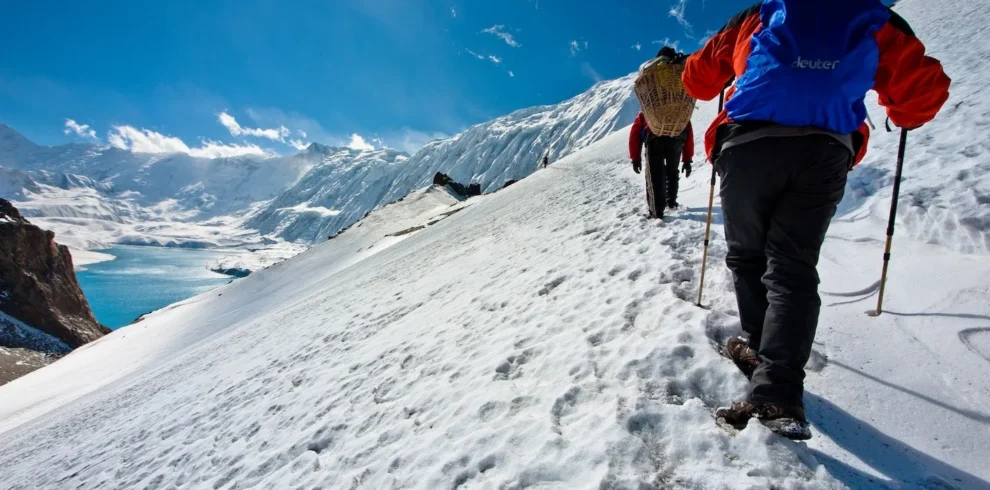
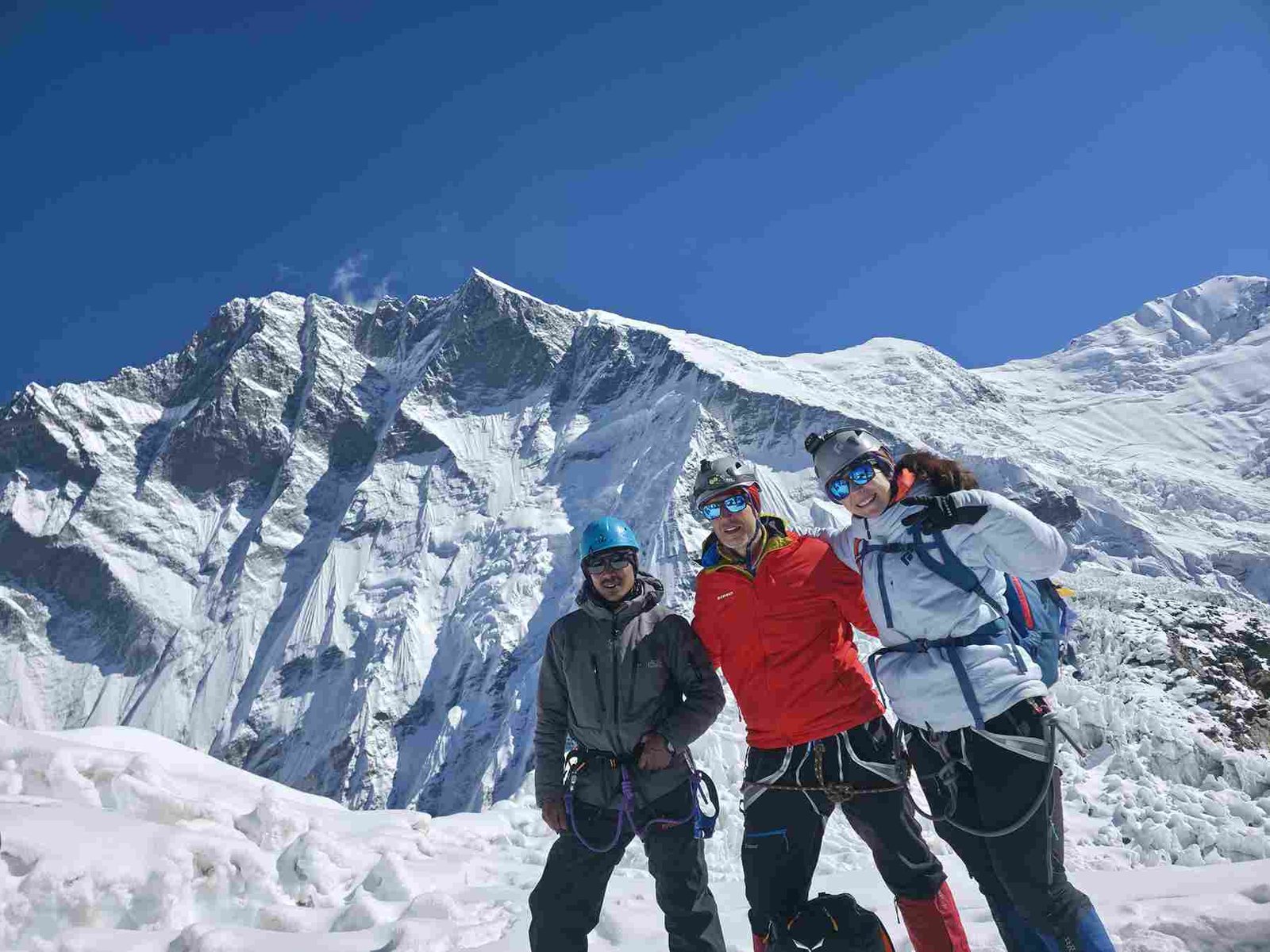
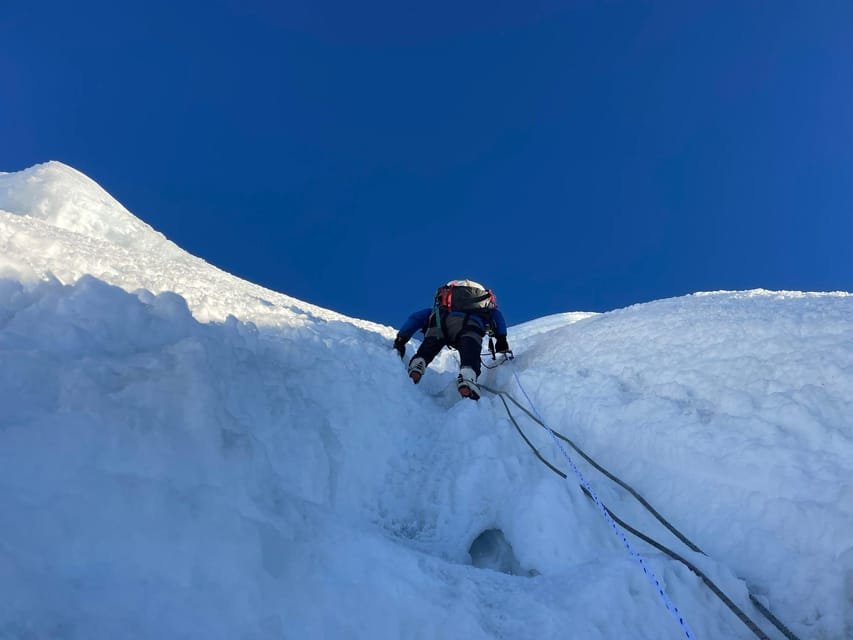
The Everest Base Camp with Island Peak Climbing is an exciting combination of high-altitude trekking and Himalayan mountaineering in Nepal’s Everest region. Rather than completing the classic Everest Base Camp trek and ending at Gorak Shep, this journey continues into the Imja Valley for the summit of Island Peak (6,189 m), also known as Imja Tse. The itinerary brings together the famous Everest trail, Sherpa culture, dramatic mountain scenery, and a genuine technical climbing experience in one extended adventure.
The journey begins with the mountain flight to Lukla before following the established Everest Base Camp route through Phakding, Namche Bazaar, Tengboche, Dingboche, Lobuche and Gorak Shep. Along the way, you experience the changing landscapes of the Khumbu, from forested valleys and suspension bridges to high alpine terrain surrounded by Everest, Lhotse, Nuptse, Ama Dablam and other Himalayan peaks. After reaching Everest Base Camp at 5,364 m and hiking to Kala Patthar, the route turns toward Chhukung and the Island Peak climbing section.
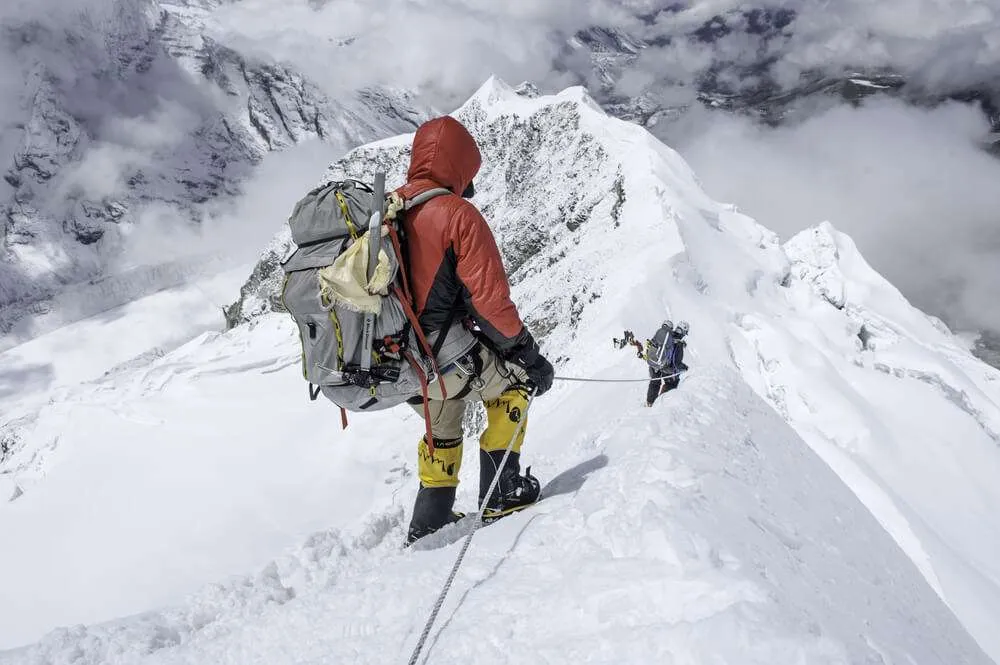
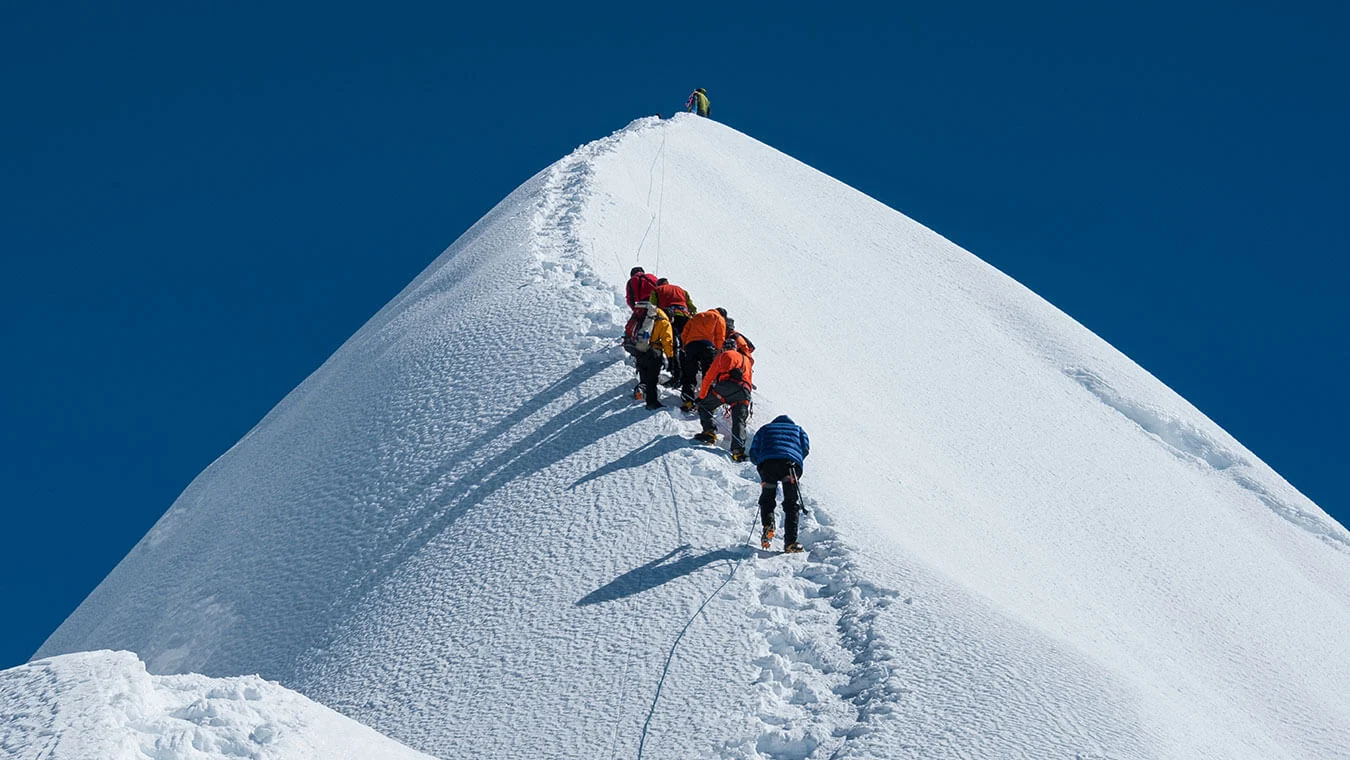
Island Peak adds a different dimension to the journey. At Island Peak Base Camp, climbers receive practical preparation for glacier travel and fixed-rope climbing, including the use of equipment such as crampons, an ice axe and climbing harnesses. The final ascent involves steep snow and ice terrain, glacier travel and a fixed-rope section before reaching the 6,189 m summit. Current operating itineraries commonly include a training period and a contingency day because summit conditions can change rapidly.
Combining EBC with Island Peak also gives the expedition a natural progression. The trek gradually exposes you to higher elevations before the climbing phase, allowing time for acclimatization before the summit attempt. It is therefore well suited to fit trekkers and aspiring mountaineers who want to experience Everest Base Camp while taking their first serious step into Himalayan peak climbing.
Overview
The Everest Base Camp with Island Peak Climbing combines the iconic EBC trek with the challenge of climbing Island Peak at 6,189 m. Trek through the Khumbu Valley, reach Everest Base Camp and Kala Patthar, then continue toward Island Peak for a rewarding Himalayan climbing experience.
Highlights
- Reach Everest Base Camp at 5,364 m.
- Summit Island Peak at 6,189 m.
- Hike to Kala Patthar for spectacular Everest views.
- Follow the classic Everest Base Camp trekking route.
- Experience technical glacier and fixed-rope climbing.
- Receive climbing training before the summit attempt.
- Explore Namche Bazaar and traditional Sherpa villages.
- Visit the famous Tengboche Monastery.
- Trek through the Imja Valley to Chhukung.
- Camp at Island Peak Base Camp.
- Enjoy views of Everest, Lhotse, Nuptse, Ama Dablam and Makalu.
- Experience both trekking and mountaineering in one journey.
EBC with Island Peak Climbing Overview
The Everest Base Camp with Island Peak Climbing is designed for adventurers who want to go beyond the classic Everest trek and experience the Khumbu from both a trekking and climbing perspective. The journey combines the legendary trail to Everest Base Camp at 5,364 m with an ascent of Island Peak (6,189 m), creating a natural progression from high-altitude trekking to Himalayan peak climbing.
The adventure follows the well-established Everest route through Namche Bazaar, Tengboche, Dingboche, Lobuche and Gorak Shep, with acclimatization built into the itinerary. After reaching Everest Base Camp and climbing Kala Patthar, the route turns toward the quieter Imja Valley and Chhukung, where the landscape changes from the busy EBC trail to a more focused mountaineering environment beneath Island Peak, Lhotse and Ama Dablam.
The Island Peak section introduces you to the practical side of Himalayan climbing. After reaching Base Camp, you prepare with your climbing team before tackling steep snow and ice, glacier terrain and fixed-rope sections on the way toward the summit. The final ascent is physically demanding and requires good endurance, proper acclimatization and the ability to move confidently with mountaineering equipment.
What makes this combination particularly rewarding is the contrast between the two experiences. You begin by following one of the world’s most famous trekking routes, encounter the culture and landscapes of the Khumbu, stand at the foot of Everest, and then shift your focus toward a genuine mountain summit. With TrekUp Nepal, the itinerary is structured to give you time to acclimatize, prepare for the technical section and make the Island Peak summit attempt according to weather and mountain conditions.
What can you expect from the EBC with Island Peak Climbing Package?
- Gradual acclimatization through the Everest region
- Scenic trekking through the Khumbu Valley
- Reach Everest Base Camp at 5,364 m
- Sunrise views from Kala Patthar
- Explore Namche Bazaar and traditional Sherpa villages
- Visit the historic Tengboche Monastery
- Trek through the Imja Valley to Chhukung
- Experience Island Peak Base Camp
- Receive practical mountaineering and climbing training
- Learn to use crampons, ice axe, harness and fixed ropes
- Climb glacier and snow-covered terrain
- Make a summit attempt on Island Peak at 6,189 m
- Enjoy panoramic views of Everest, Lhotse, Nuptse, Ama Dablam and Makalu
- Experience both classic Himalayan trekking and peak climbing
- Return through the Khumbu with an experienced TrekUp Nepal team
Benefits of Booking EBC with Island Peak Climbing with us
- Experienced local trekking and climbing guides
- Carefully planned acclimatization schedule
- Professional climbing support for Island Peak
- Complete trekking and climbing logistics
- Practical climbing training before the summit attempt
- Reliable permit and documentation support
- Local knowledge of the Everest region
- Flexible private and group arrangements
- Weather-conscious summit planning
- Support throughout the journey from Kathmandu to Kathmandu
- Customized itineraries for experienced travelers
- Dedicated assistance before and during the trip
Itinerary
This 20-day itinerary combines the classic Everest Base Camp trek with the thrilling ascent of Island Peak at 6,189 m. Trek through the Khumbu Valley, reach Everest Base Camp and Kala Patthar, then continue to Island Peak for technical climbing, summit preparation and a rewarding Himalayan ascent.
Arrive at Tribhuvan International Airport (TIA) in Kathmandu, Nepal, where a TrekUp Nepal representative will welcome you and arrange your airport transfer to your hotel. After check-in, rest and recover from your journey. In the evening, meet your trekking guide and climbing team for an introduction and a pre-trek briefing about your upcoming Everest Base Camp trek and Island Peak climbing adventure in the Himalayas.
Altitude: 1,400 m (4,593 ft)
Accommodation: Hotel in Kathmandu
Meals: Welcome Dinner
Today is dedicated to final trip preparation in Kathmandu, Nepal. Your trekking guide will review the itinerary, check your trekking gear and climbing equipment, and make sure you have everything required for the Island Peak (Imja Tse) summit. All necessary permits and final logistical arrangements are completed before you head toward the Everest region (Khumbu) in the Himalayas.
Altitude: 1,400 m (4,593 ft)
Accommodation: Hotel in Kathmandu
Meals: Breakfast
Take an early domestic flight from Kathmandu to Lukla (Tenzing-Hillary Airport), the gateway to the Everest region and Sagarmatha National Park. After landing, begin your first trek through the Dudh Koshi Valley. The relatively short walk to Phakding passes through small Sherpa villages, mani walls, prayer wheels and suspension bridges along the Dudh Koshi River. Spend the night in Phakding and prepare for the longer trek to Namche Bazaar.
Altitude: Lukla 2,840 m (9,318 ft) / Phakding 2,610 m (8,563 ft)
Walking: 3-4 hours
Accommodation: Tea House in Phakding
Meals: Breakfast, Lunch and Dinner
Continue north along the Dudh Koshi River and cross several suspension bridges, including the famous Hillary Suspension Bridge, before entering Sagarmatha National Park. The trail gradually climbs through pine and rhododendron forests before becoming steeper on the final approach to Namche. After the last uphill section, arrive at Namche Bazaar, the main trading hub and acclimatization centre of the Khumbu region in the Everest region.
Altitude: 3,440 m (11,286 ft)
Walking: 5-6 hours
Accommodation: Tea House in Namche Bazaar
Meals: Breakfast, Lunch and Dinner
Spend a full day on acclimatization in Namche Bazaar. Rather than remaining completely inactive, take a gradual acclimatization hike to a higher viewpoint, such as the Everest View Hotel area, before returning to Namche. This helps your body adjust to the increasing altitude and reduces the risk of altitude sickness, while giving you an opportunity to enjoy panoramic views of Mount Everest, Lhotse, Ama Dablam and other Himalayan peaks in the Khumbu region.
Altitude: 3,440 m (11,286 ft)
Accommodation: Tea House in Namche Bazaar
Meals: Breakfast, Lunch and Dinner
Leave Namche Bazaar and follow a scenic trekking trail overlooking the Dudh Koshi Valley. After descending toward the Dudh Koshi River, cross it and begin the climb through pine and rhododendron forests toward Tengboche. Tengboche is famous for its Tengboche Monastery and its impressive mountain setting, particularly the views of Ama Dablam, with Mount Everest and Lhotse also visible in the Khumbu region.
Altitude: 3,860 m (12,664 ft)
Walking: 5-6 hours
Accommodation: Tea House in Tengboche
Meals: Breakfast, Lunch and Dinner
Continue through the Khumbu Valley, passing through Pangboche and traditional Sherpa villages. The landscape gradually becomes drier and more alpine as the elevation increases. Follow the Imja Valley toward Dingboche, one of the most important acclimatization stops before the higher sections of the Everest Base Camp (EBC) trek and the Island Peak climbing route.
Altitude: 4,410 m (14,468 ft)
Walking: 5-6 hours
Accommodation: Tea House in Dingboche
Meals: Breakfast, Lunch and Dinner
Take another important acclimatization day in Dingboche. A gradual acclimatization hike toward a nearby ridge or higher viewpoint, such as Nagarjun Hill, allows you to gain additional altitude before returning to Dingboche to sleep, following the “climb high, sleep low” principle. This day is particularly valuable because the following stages of the Everest Base Camp trek take you above 4,500 m and eventually beyond 5,000 m, helping reduce the risk of altitude sickness.
Altitude: 4,410 m (14,468 ft)
Accommodation: Tea House in Dingboche
The trekking trail climbs gradually out of Dingboche toward the high alpine landscape of the Khumbu region. Continue through the Khumbu Valley and pass Thukla Pass (Dughla Pass), where memorials are dedicated to climbers who lost their lives on Himalayan expeditions. As the trail approaches the Khumbu Glacier, the surrounding terrain becomes increasingly rugged before reaching Lobuche, one of the last major stops on the Everest Base Camp trek.
Altitude: 4,910 m (16,109 ft)
Walking: 4-5 hours
Accommodation: Tea House in Lobuche
Meals: Breakfast, Lunch and Dinner
Start the trek to Gorak Shep, the last settlement on the classic Everest Base Camp trek route. After a short break, continue along the rocky trekking trail beside the Khumbu Glacier toward Everest Base Camp (EBC). Reach Everest Base Camp at 5,364 m, where you can take in the surrounding glacier and Himalayan mountain landscape, including views of Mount Everest, Nuptse and Pumori. After spending time at Base Camp, retrace the trail to Gorak Shep for the night.
Altitude: Gorak Shep 5,164 m (16,942 ft) / Everest Base Camp 5,364 m (17,598 ft)
Walking: 7-8 hours
Accommodation: Tea House in Gorak Shep
Meals: Breakfast, Lunch and Dinner
Start early for the Kala Patthar trek, one of the most famous viewpoints in the Everest region. From the summit, enjoy a spectacular panoramic view of Mount Everest, Nuptse, Lhotse and the surrounding Himalayan peaks, especially beautiful at sunrise. Descend to Gorak Shep for breakfast before continuing down through Lobuche and toward Dingboche. Returning to a lower sleeping altitude provides valuable recovery before the Island Peak climbing section.
Altitude: Kala Patthar 5,545 m (18,192 ft) / Dingboche 4,410 m (14,468 ft)
Walking: 7-8 hours
Accommodation: Tea House in Dingboche
Meals: Breakfast, Lunch and Dinner
Leave Dingboche and follow the trekking trail deeper into the Imja Valley toward Chhukung. The walk is relatively short, allowing you to conserve energy for the Island Peak climbing days ahead. Chhukung is the main settlement before Island Peak (Imja Tse) and offers panoramic views of Ama Dablam, Lhotse and the surrounding Himalayan peaks in the Khumbu region.
Altitude: 4,730 m (15,518 ft)
Walking: 2-3 hours
Accommodation: Tea House in Chhukung
Meals: Breakfast, Lunch and Dinner
Trek from Chhukung toward Island Peak Base Camp (Imja Tse Base Camp) through increasingly rugged alpine terrain. After reaching Base Camp, the climbing team prepares the camp and checks all technical equipment. Your climbing guide will conduct practical summit preparation, including the use of crampons, harnesses, ice axe, ascender and fixed ropes. This climbing training allows you to become familiar with the mountaineering equipment and techniques required for the Island Peak climb. Current operating itineraries commonly include a dedicated preparation and training period at Base Camp before the summit attempt.
Altitude: Approximately 5,100 m (16,732 ft)
Walking: 3-4 hours
Accommodation: Tented Camp at Island Peak Base Camp
Meals: Breakfast, Lunch and Dinner
Begin the Island Peak summit attempt in the early hours of the morning. The climb involves steep and challenging terrain, glacier travel and fixed-rope sections before reaching the summit ridge. With favorable weather and suitable route conditions, continue toward the 6,189 m summit of Island Peak (Imja Tse). From the summit, enjoy outstanding panoramic views of Lhotse, Nuptse, Ama Dablam, Baruntse and the surrounding Himalayan peaks. After spending a short time at the summit, begin the descent carefully and continue toward Chhukung. Summit-day duration varies according to conditions and team pace, but current operators commonly allow around 8-12 hours for the ascent and descent.
Altitude: Island Peak 6,189 m (20,305 ft) / Chhukung 4,730 m (15,518 ft)
Climbing: Approximately 10-12 hours
Accommodation: Tea House or Tented Camp
Meals: Breakfast, Lunch and Dinner
This reserve day provides flexibility if the scheduled Island Peak summit attempt on Day 14 is affected by unfavorable weather, route conditions or other mountain-related factors. If the summit has already been completed successfully, the day can be used for recovery or as an additional buffer before continuing the descent to Lukla. A contingency day is a valuable part of a peak climbing itinerary because the summit cannot be safely planned around a fixed calendar alone. Current Island Peak climbing programs commonly include a reserve day for this purpose.
Altitude: Variable
Accommodation: Tea House or Tented Camp
Meals: Breakfast, Lunch and Dinner
After completing the Island Peak climb, descend through the Imja Valley toward lower elevations. Pass back through Dingboche and continue toward Pangboche along the Khumbu Valley trail. The significant loss of altitude provides a welcome change after spending several days above 4,000 m, helping your body recover after the summit. Enjoy a more relaxed evening in the traditional Sherpa village of Pangboche, home to the historic Pangboche Monastery, in the Khumbu region.
Altitude: 3,985 m (13,074 ft)
Walking: 5-6 hours
Accommodation: Tea House in Pangboche
Meals: Breakfast, Lunch and Dinner
Continue down the Khumbu trail through Tengboche and the surrounding pine and rhododendron forests. After descending toward the Dudh Koshi River, follow the trekking trail back toward Namche Bazaar. With the major Everest Base Camp trek and Island Peak climbing objectives completed, enjoy a comfortable evening in Namche and celebrate the achievement with your team in the Khumbu region.
Altitude: 3,440 m (11,286 ft)
Walking: 5-6 hours
Accommodation: Tea House in Namche Bazaar
Meals: Breakfast, Lunch and Dinner
Complete the final trekking section toward Lukla (Tenzing-Hillary Airport). The trekking trail descends through the Dudh Koshi Valley, passing familiar Sherpa villages, Phakding and suspension bridges along the Dudh Koshi River. After reaching Lukla, enjoy your final evening in the Everest region with your guides and porters, with a flight back to Kathmandu awaiting the next day.
Altitude: 2,840 m (9,318 ft)
Walking: 6-7 hours
Accommodation: Tea House in Lukla
Meals: Breakfast, Lunch and Dinner
Take the morning domestic flight from Lukla (Tenzing-Hillary Airport) to Kathmandu, subject to weather and flight operating conditions. After arriving at Tribhuvan International Airport (TIA) in Kathmandu, Nepal, transfer to your hotel and enjoy the remainder of the day at leisure. Because Lukla flights are weather-dependent, maintaining flexibility around the return flight is important. Current 20-day programs commonly retain additional flexibility around the return journey.
Altitude: Kathmandu 1,400 m (4,593 ft)
Flight: Approximately 30-40 minutes
Accommodation: Hotel in Kathmandu
Meals: Breakfast
Your Everest Base Camp with Island Peak Climbing adventure in Nepal comes to an end today. Depending on your flight schedule, you can spend the remaining time shopping for souvenirs in Thamel or relaxing in Kathmandu before your airport transfer. TrekUp Nepal will arrange your transfer to Tribhuvan International Airport (TIA) for your onward journey.
Altitude: Kathmandu 1,400 m (4,593 ft)
Meals: Breakfast
Add-ons & Options
Customize your Everest Base Camp with Island Peak Climbing experience with additional services according to your preferences.
- Private airport transfers
- Additional nights in Kathmandu
- Hotel room upgrades
- Private trekking arrangements
- Additional acclimatization days
- Personal climbing Sherpa
- Additional porter support
- Climbing equipment rental
- Helicopter return from the Everest region
- Private Kathmandu sightseeing
- Pre- or post-trek hotel extension
- Customized departure dates
- Private group arrangements
How to Personalize Your Trip
- Select your preferred travel date.
- Choose the number of travelers.
- Select your preferred trekking and climbing package.
- Add any additional services you need.
- Confirm your booking with TrekUp Nepal.
- Prepare for your Everest Base Camp and Island Peak adventure.
Best time to do EBC with Island Peak Climbing Trek:
The best seasons for the Everest Base Camp with Island Peak Climbing are spring from March to May and autumn from September to November. These periods are favored because they generally offer better visibility, more stable weather and more suitable conditions for trekking and climbing.
Spring — March to May
Spring is one of the best periods for the Island Peak summit. April and May are particularly attractive for climbers because temperatures gradually become more manageable and climbing conditions can be favorable. The lower Khumbu also becomes lively with blooming rhododendrons.
Autumn — September to November
Autumn is another excellent climbing window, especially October and early November. After the monsoon, the skies are often clearer and mountain visibility is excellent. This is also one of the most popular periods for the Everest Base Camp trek and Island Peak climb.
What Our Travelers Say
Read reviews from travelers who have joined our Himalayan trips. See what they enjoyed and what they thought about their experience.
Frequently Asked Questions
Faq's
Island Peak is a challenging high-altitude climb that involves technical sections, glacier travel and fixed ropes. It is more demanding than a standard Everest Base Camp trek and requires good fitness and preparation.
Previous climbing experience is beneficial but not always mandatory. Basic mountaineering skills can be learned during the preparation and training period, but you should be comfortable with high-altitude trekking and physically prepared for a long summit day.
Island Peak, also known as Imja Tse, reaches 6,189 m (20,305 ft).
Everest Base Camp on the standard Nepal route is approximately 5,364 m (17,598 ft).
Yes. This itinerary reaches Everest Base Camp and Kala Patthar before continuing toward Chhukung and Island Peak. This provides valuable high-altitude trekking experience before the climbing phase.
Yes. A dedicated preparation and training session is included before the summit attempt. Training normally covers crampon use, ice axe techniques, harness use, fixed ropes and basic climbing safety.
Island Peak summit day can take approximately 10–12 hours, depending on weather, route conditions, team pace and individual fitness. Current operator itineraries commonly allow a full day for the summit attempt.
The summit attempt can be moved to the contingency day when conditions allow. Mountain safety and route conditions always take priority over a fixed summit schedule.
April, May, October and early November are generally among the most favorable periods. Spring and autumn are the primary climbing seasons.
Yes. TrekUp Nepal can arrange private departures, additional acclimatization days, extra Kathmandu nights, additional climbing support and other services according to your requirements.
Yes. You should have comprehensive travel insurance that specifically covers high-altitude trekking, Island Peak climbing and emergency helicopter evacuation.
Fit trekkers with limited mountaineering experience can consider Island Peak with proper preparation and professional guidance. However, it should not be treated like an ordinary trek because the summit involves technical climbing and high-altitude exposure.