
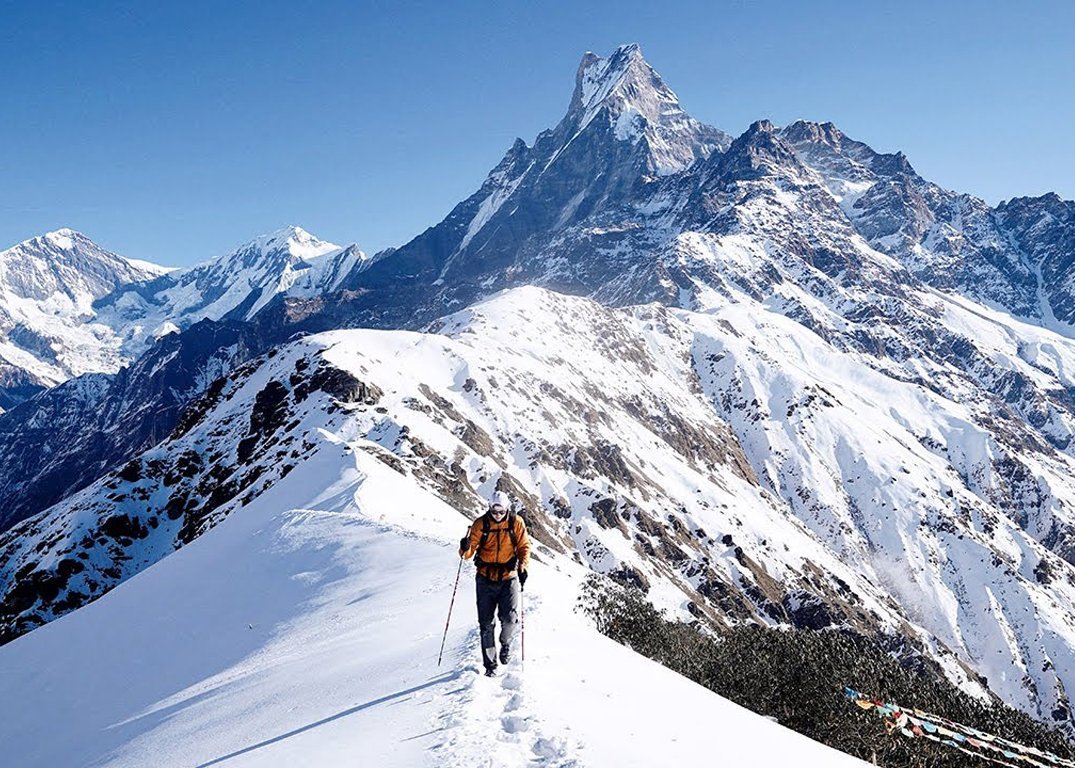
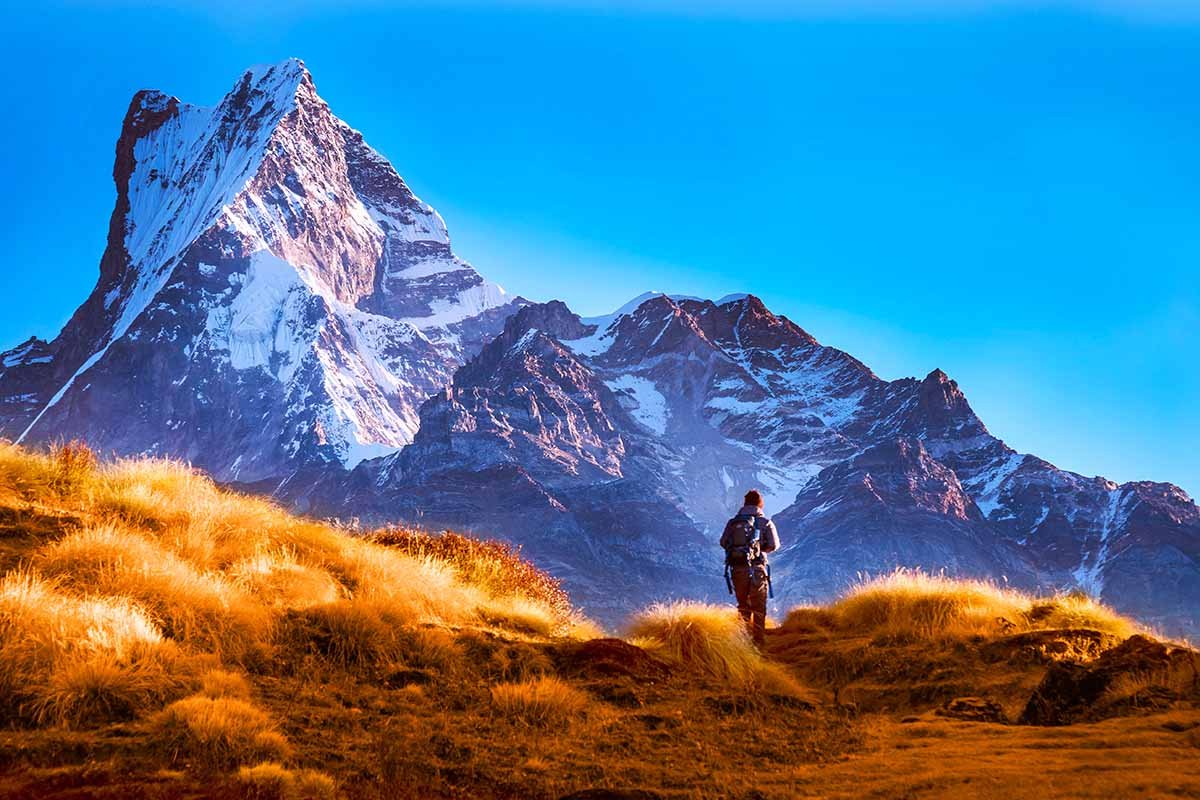
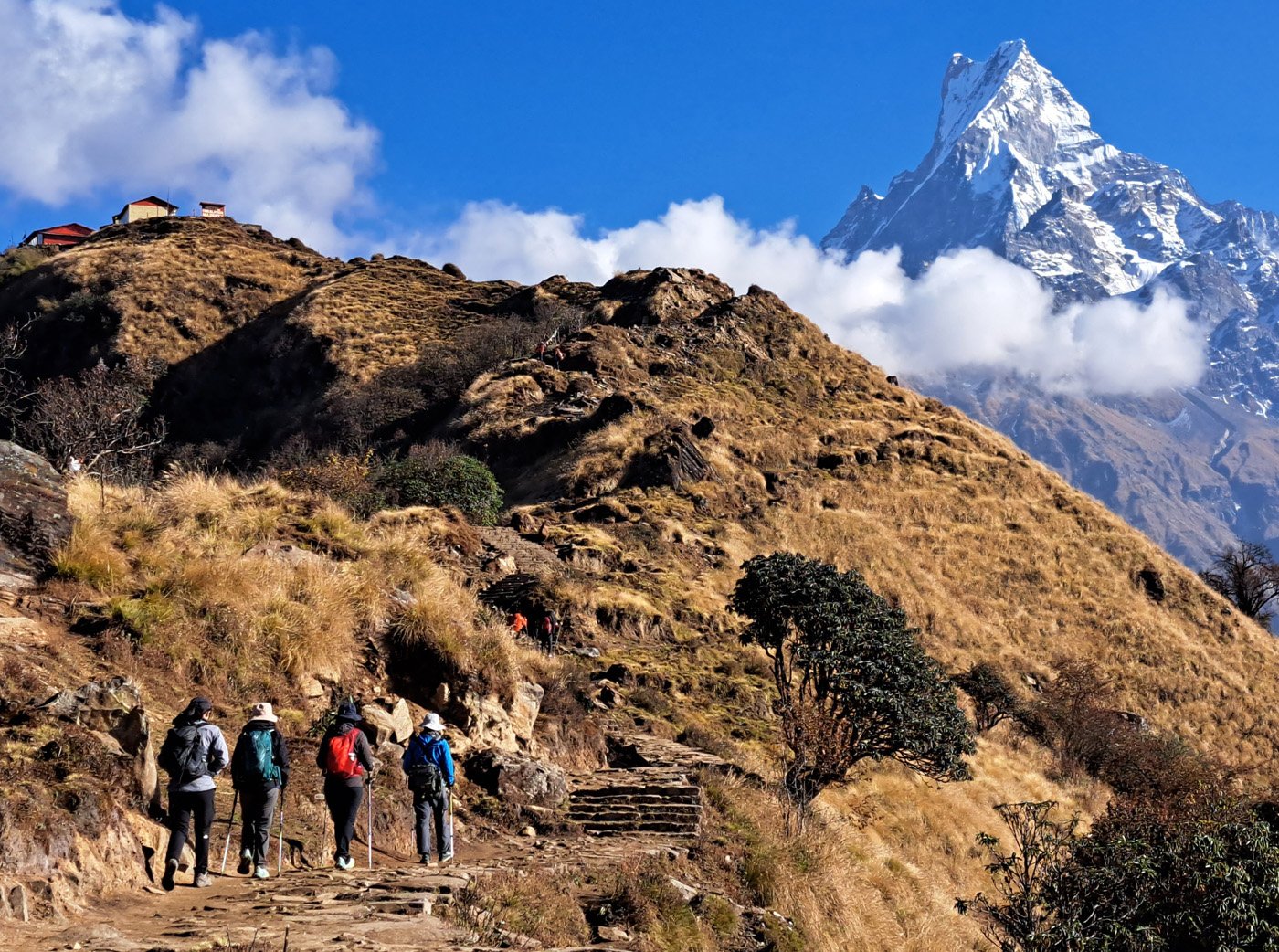
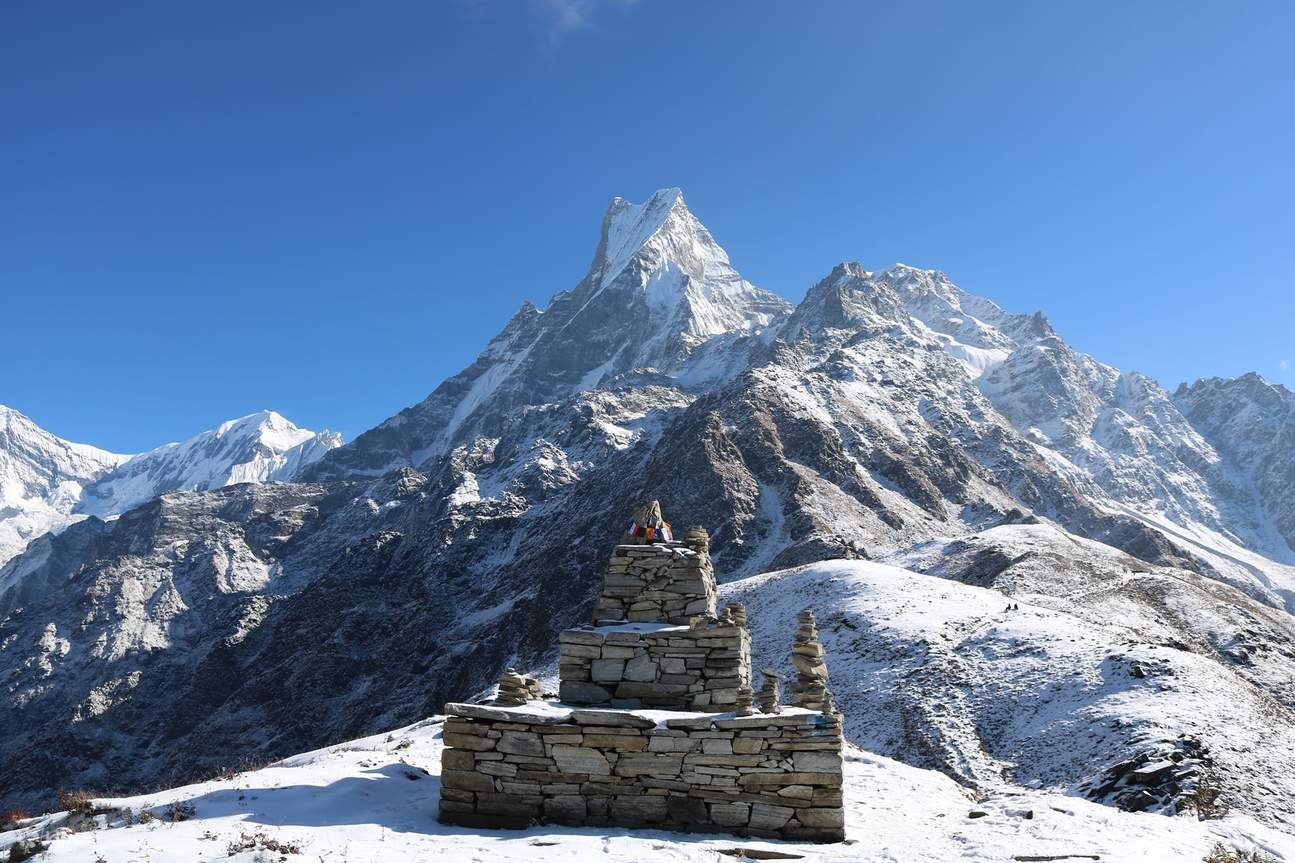
The Mardi Himal Trek is a scenic Himalayan journey in Nepal’s Annapurna region, following a forested mountain ridge toward the dramatic south face of Machhapuchhre, also known as Fishtail Mountain. It is a rewarding option for travelers who want close-up mountain views, traditional village trails and a high-altitude trekking experience without committing to a lengthy expedition.
Starting from Pokhara, the route climbs through hillside settlements and woodland before entering the quieter trail toward Forest Camp, Low Camp and High Camp. As the path gains elevation, dense oak and rhododendron forests gradually give way to open ridgelines, alpine vegetation and broad mountain views. The changing landscape makes the trek distinctive: one day you may be walking beneath a forest canopy, while the next brings you onto an exposed ridge with views of the surrounding Himalayan peaks.
The upper section leads toward Mardi Himal’s Upper Viewpoint, from where trekkers can enjoy impressive views of Machhapuchhre, Annapurna South, Hiunchuli and the surrounding Annapurna range when weather conditions are clear. Those who have enough time, suitable conditions and the energy to continue may make the longer hike toward Mardi Himal Base Camp, commonly reached at around 4,500 meters. The exact highest point depends on the route and conditions on the day.
The trek descends through the hillside settlement of Siding, offering a different perspective on rural life in the region before returning to Pokhara. Although the route is relatively short, the rapid rise in altitude and sustained uphill walking make it more demanding than its duration might suggest. TrekUp Nepal arranges the trek with local guide support, teahouse accommodation and transportation according to the selected package.
Overview
The 5-Day Mardi Himal Trek takes you from Pokhara through peaceful forests and mountain ridges to the spectacular viewpoints beneath Machhapuchhre. Trek via Forest Camp, Low Camp and High Camp, enjoy panoramic Annapurna views, and descend through Siding Village before returning to Pokhara.
Highlights
- Trek along a scenic ridge beneath the striking south face of Machhapuchhre.
- Reach Mardi Himal Upper Viewpoint at approximately 4,200 m, subject to weather and trail conditions.
- Optionally continue toward Mardi Himal Base Camp at around 4,500 m when conditions and fitness allow.
- Enjoy views of Annapurna South, Hiunchuli, Machhapuchhre and surrounding Himalayan peaks.
- Walk through oak and rhododendron forests in the lower and middle sections.
- Experience changing landscapes from woodland trails to exposed alpine ridges.
- Stay in local teahouses at Forest Camp, Low Camp and High Camp.
- Watch the changing mountain light around sunrise and sunset from higher viewpoints.
- Descend through Siding Village and experience the rural landscapes of the Annapurna region.
- Complete a rewarding Himalayan trek in five days from Pokhara with TrekUp Nepal.
Mardi Himal Trek Overview
The Mardi Himal Trek is a short but rewarding route in Nepal’s Annapurna region, known for its forested trails, quiet mountain ridge and close views of Machhapuchhre. Beginning near Pokhara, the trek moves through Forest Camp and Low Camp before reaching High Camp, where the surrounding landscape opens into high-altitude terrain.
As the trail climbs above the tree line, trekkers gain wider views of Annapurna South, Hiunchuli and Machhapuchhre. The hike toward Mardi Himal Upper Viewpoint is the defining experience of the route, offering a dramatic perspective of the mountain faces and ridgelines. With suitable conditions and enough time, trekkers may continue farther toward Mardi Himal Base Camp.
The route is compact compared with longer Himalayan treks, but its short duration should not be mistaken for an easy walk. The ascent is steep in places, and the high viewpoint requires careful pacing and awareness of altitude. Staying overnight at High Camp also places trekkers in a colder, more exposed environment than the lower forest camps.
TrekUp Nepal arranges the journey with a local guide, trekking accommodation and transport according to the confirmed package. Travelers can request a private departure, porter service or an extra day for a more relaxed schedule. The route and highest point reached should always be decided with current weather and trail conditions in mind.
What can you expect from the Mardi Himal Trek Package?
- A ridge-side trekking experience: Follow the trail through forest and open hillside terrain toward the mountain ridge beneath Machhapuchhre.
- Close Himalayan views: Enjoy views of Machhapuchhre, Annapurna South and Hiunchuli when the weather is clear.
- A high-altitude viewpoint: Hike toward the Upper Viewpoint at around 4,200 m, with a possible extension toward Base Camp when conditions allow.
- Changing natural landscapes: Walk through oak and rhododendron woodland before reaching alpine vegetation and exposed ridgelines.
- Simple mountain accommodation: Stay in local teahouses, with facilities becoming more basic at higher elevations.
- A challenging but compact itinerary: Complete the trek in five days while allowing time for the main viewpoint hike and descent.
- Local trekking support: Receive guidance on trail conditions, walking pace, weather and altitude awareness.
- A village descent: Return through Siding Village, where the surroundings shift back toward greener hills and settled farmland.
- Flexible arrangements: Request porter service, private transport or additional days through TrekUp Nepal.
Benefits of Booking Mardi Himal Trek with us
- Trek with a local team familiar with the Annapurna region, the trail network and changing mountain conditions.
- Receive a clearly arranged itinerary showing daily walking times, overnight stops, elevations and transport.
- Have applicable permits and required trekking arrangements coordinated according to your confirmed package.
- Get practical guidance on preparation, footwear, clothing and what to carry for changing temperatures.
- Receive advice on pacing and altitude awareness during the climb toward High Camp and the upper viewpoint.
- Have teahouse accommodation and included meals arranged in advance, subject to availability.
- Get assistance with transportation between Pokhara and the trekking trailheads.
- Request private departures for solo travelers, couples, families or larger groups.
- Receive clear information about package inclusions, exclusions and optional services before booking.
- Get help adjusting the itinerary if weather, trail conditions or a travel delay affects the plan.
Itinerary
Drive from Pokhara to Kande and trek through forested trails to Forest Camp, Low Camp and High Camp. Hike toward Mardi Himal Upper Viewpoint for close views of Machhapuchhre and the Annapurna range, then descend through Siding Village and return to Pokhara.
After breakfast, drive from Pokhara to Kande, the starting point for the trek. Begin walking uphill toward Australian Camp, where the trail opens onto views of the surrounding hills and Himalayan peaks when the weather is clear. Continue through forest paths and traditional settlements toward Deurali and Pitam Deurali, then follow the quieter Mardi Himal trail into the woodland. The route passes through oak and rhododendron forest, with occasional clearings along the way. Continue to Forest Camp, where you will settle into a local teahouse for the night. This is a substantial first day, so maintaining a steady pace and taking breaks is important.
Driving: Approximately 1–1.5 hours from Pokhara to Kande, depending on road conditions.
Walking: Approximately 5–7 hours, depending on pace, stops and the selected trail.
Altitude: Pokhara, approximately 820 m; Kande, approximately 1,770 m; Forest Camp, approximately 2,520 m.
Meals: Breakfast in Pokhara if included, followed by lunch and dinner during the trek, according to the package.
Accommodation: Teahouse or lodge at Forest Camp.
After breakfast, continue ascending through forested terrain toward Low Camp. The trail winds between trees and follows the mountain ridge, with occasional openings through the woodland that reveal the surrounding hills. As you gain elevation, the vegetation changes and the air become noticeably cooler. The climb can feel demanding in places, so walk at a comfortable pace and drink water regularly. Arrive at Low Camp in the afternoon and enjoy the views when visibility permits. Your guide will review the following day's ascent and help you prepare for the higher elevations.
Walking: Approximately 4–6 hours, depending on trail conditions and pace.
Altitude: Forest Camp, approximately 2,520 m; Low Camp, approximately 2,970 m.
Meals: Breakfast, lunch and dinner.
Accommodation: Teahouse or lodge at Low Camp.
Leave Low Camp and continue toward High Camp along the increasingly open ridge. The forest gradually thins, giving way to alpine shrubs, grass-covered slopes and more exposed sections of trail. As the route climbs, views of Machhapuchhre, Annapurna South and Hiunchuli become more prominent when the sky is clear. The final approach to High Camp is steep in places, and the thinner air may make walking more tiring than on lower sections. Arrive at High Camp, rest and prepare for an early start toward the upper viewpoint. Follow your guide’s advice about hydration, clothing and altitude symptoms.
Walking: Approximately 3–5 hours.
Altitude: Low Camp, approximately 2,970 m; High Camp, approximately 3,580 m.
Meals: Breakfast, lunch and dinner.
Accommodation: Teahouse or lodge at High Camp.
Start early for the hike toward Mardi Himal Upper Viewpoint. The trail follows the exposed ridge above High Camp, with increasingly expansive views of the Annapurna range and the steep face of Machhapuchhre. The route becomes more demanding as the altitude increases, and some sections may be rocky, narrow or affected by snow and ice depending on the season. The Upper Viewpoint is commonly reached at approximately 4,200 m. Trekkers with sufficient fitness, suitable weather and adequate time may continue toward Mardi Himal Base Camp, around 4,500 m, if the guide considers the route safe. After enjoying the mountain scenery, return along the same ridge to High Camp. Reaching Base Camp is not guaranteed and should never take priority over safety or a timely descent.
Walking: Approximately 5–7 hours for the Upper Viewpoint and return to High Camp. Continuing to Base Camp can extend the day considerably, often to 7–9 hours or more depending on conditions.
Altitude: High Camp, approximately 3,580 m; Upper Viewpoint, approximately 4,200 m; optional Mardi Himal Base Camp, around 4,500 m.
Meals: Breakfast before departure, with lunch and dinner arranged according to the day's route and teahouse facilities.
Accommodation: Teahouse or lodge at High Camp.
After breakfast, begin the descent from High Camp. Retrace the route toward the lower camps before following the descending trail toward Siding Village, where the surroundings become greener and more settled. The descent can be tiring on the knees, especially after the previous day's high-altitude hike, so use suitable footwear and take care on uneven ground. On reaching Siding, meet your vehicle for the drive back to Pokhara. The journey concludes in the lakeside city, where you can rest or continue with your onward travel arrangements.
Walking: Approximately 5–7 hours, depending on the chosen descent route and pace.
Driving: Approximately 2–3 hours from Siding to Pokhara, depending on road conditions and vehicle availability.
Altitude: High Camp, approximately 3,580 m; Siding Village, approximately 1,700–1,900 m; Pokhara, approximately 820 m.
Meals: Breakfast and lunch during the trek; dinner in Pokhara is not included unless specified.
Accommodation: Not included in Pokhara unless arranged as an add-on.
Itinerary note: Walking times and elevations are approximate. The exact overnight stops and descent route may vary with lodge availability, weather, trail conditions and the group's pace. The Upper Viewpoint and Mardi Himal Base Camp are different destinations; the Base Camp extension should be attempted only when conditions, time and fitness allow.
Includes/Exclude
Cost Includes
- Transportation from Pokhara to Kande and from Siding Village back to Pokhara, according to the confirmed package.
- Licensed trekking guide for the duration of the trek.
- Teahouse accommodation during the trekking days.
- Breakfast, lunch and dinner during the trek, if confirmed as included in the selected package.
- Applicable trekking permits and entry fees required for the route.
- Guide wages, meals, accommodation and relevant staff expenses.
- Basic first-aid supplies carried by the trekking team.
- Pre-trek briefing and itinerary coordination.
- Applicable company service charges and taxes as stated in the final quotation.
Cost Excludes
- International flights to and from Nepal.
- Nepal entry visa fees.
- Transportation between Kathmandu and Pokhara.
- Hotel accommodation in Pokhara before or after the trek.
- Meals in Pokhara and any meals not specified as included.
- Personal trekking clothing, boots, sleeping bags and other equipment.
- Drinks, bottled water, snacks and personal purchases.
- Hot showers, Wi-Fi, device charging and laundry fees at teahouses.
- Travel insurance and emergency medical treatment or evacuation.
- Porter service unless specifically included in the selected package.
- Tips for the guide, porter and driver.
- Private vehicle upgrades and optional activities.
- Additional costs caused by delays, weather, road closures or itinerary changes.
- Any service not explicitly listed under Cost Includes.
Add-ons & Options
Personalize your Mardi Himal Trek with the following options. Availability and prices should be confirmed before booking.
- Porter service: Add a porter to carry your main trekking bag, subject to the agreed weight limit and porter-sharing arrangements.
- Private jeep transfers: Arrange private transport between Pokhara, Kande and Siding instead of shared or local vehicles.
- Extra night in Pokhara: Extend your stay before or after the trek to explore the lakeside area.
- Additional trekking day: Spread the ascent over a longer itinerary for a more relaxed pace, particularly if you are new to high-altitude trekking.
- Kathmandu–Pokhara transport: Add a tourist bus, private vehicle or domestic flight, subject to availability.
- Hotel upgrade: Request a preferred accommodation category in Pokhara or Kathmandu.
- Customized private trek: Select your own departure date and request a private guide arrangement for your group.
- Trek combination: Ask TrekUp Nepal about extending your trip with another Annapurna-region trek, subject to the additional time required.
How to personalize your trek
- Select your preferred departure date and number of travelers.
- Contact TrekUp Nepal to confirm the itinerary, inclusions and availability.
- Choose any add-ons you need, such as a porter, private transport or extra nights.
- Review the revised quotation before confirming your booking and payment.
Best time to do Mardi Himal Trek:
Spring: March to May
Spring is one of the most popular seasons for Mardi Himal. Temperatures generally become more comfortable for walking, and rhododendrons may bloom along the forested sections. Clear periods can offer excellent mountain views, although clouds and changing weather are still possible. Snow may remain on the higher trail early in the season.
Autumn: September to November
Autumn is another preferred period, particularly after the monsoon has cleared the atmosphere. Mountain views are often excellent, and trail conditions are generally favorable. October and early November can be busy, so booking accommodation and guide services in advance is recommended.
What Our Travelers Say
Read reviews from travelers who have joined our Himalayan trips. See what they enjoyed and what they thought about their experience.
Frequently Asked Questions
Faq's
This package takes five days from Pokhara and back. Longer versions are available for travelers who prefer shorter daily walks or an additional night for a more gradual ascent.
The commonly visited Upper Viewpoint is around 4,200 m. Mardi Himal Base Camp is higher, at approximately 4,500 m, and may be included if weather, time, fitness and trail conditions allow.
The trek is generally considered moderate to challenging. It involves sustained uphill walking, steep sections and a rapid gain in elevation over a short period. The hike above High Camp is more demanding because of the altitude and exposed ridge terrain.
Previous experience is helpful but not essential for reasonably fit travelers. You should be comfortable walking uphill for several hours on uneven trails. If you are new to high-altitude trekking, consider adding an extra day to the itinerary.
The itinerary includes a hike toward the Upper Viewpoint at approximately 4,200 m. Continuing to Base Camp at around 4,500 m depends on weather, trail conditions, fitness and available daylight. Confirm with TrekUp Nepal whether the Base Camp extension is included in your specific package.
Spring, from March to May, and autumn, from September to November, are generally preferred. These seasons often provide favorable trekking conditions, although mountain weather can change quickly.
Accommodation is generally in local teahouses or lodges. Facilities are simple, and room availability can be limited at higher stops, especially during busy seasons.
Teahouses commonly serve dal bhat, rice, noodles, soups, potatoes, eggs and other basic meals. Food choices may be more limited at higher elevations. Inform TrekUp Nepal in advance about dietary requirements.
The route passes through the Annapurna Conservation Area, so the applicable conservation-area permit is required. TrekUp Nepal can confirm current permit and documentation requirements before departure.
Yes. The route climbs to elevations above 4,000 m, and altitude-related illness is possible. Ascend at a controlled pace, stay hydrated and tell your guide immediately if you develop symptoms such as headache, nausea, dizziness or unusual fatigue. Severe or worsening symptoms require prompt descent and medical assessment.
The proposed package includes a licensed trekking guide. Confirm the guide service, permits and other inclusions in your final TrekUp Nepal quotation.
Beginners with good fitness may be able to complete the trek, but the steep trail and relatively quick ascent require preparation. A six-day itinerary may be more suitable for travelers who want a slower pace.
It may be possible, but winter can bring snow, ice and very cold temperatures at higher elevations. The monsoon brings rain, slippery trails and cloud cover. The guide should assess current conditions before the group proceeds to the upper ridge.
Yes. Porter service can be arranged as an add-on, subject to availability and the operator's weight limits and porter-sharing arrangements.
The standard five-day itinerary starts and ends in Pokhara. Transportation between Kathmandu and Pokhara is not included unless specifically added to your booking.
Yes. Choose insurance that explicitly covers trekking at your planned altitude and emergency evacuation, including helicopter evacuation where applicable. Check the policy limits and exclusions before departure.