
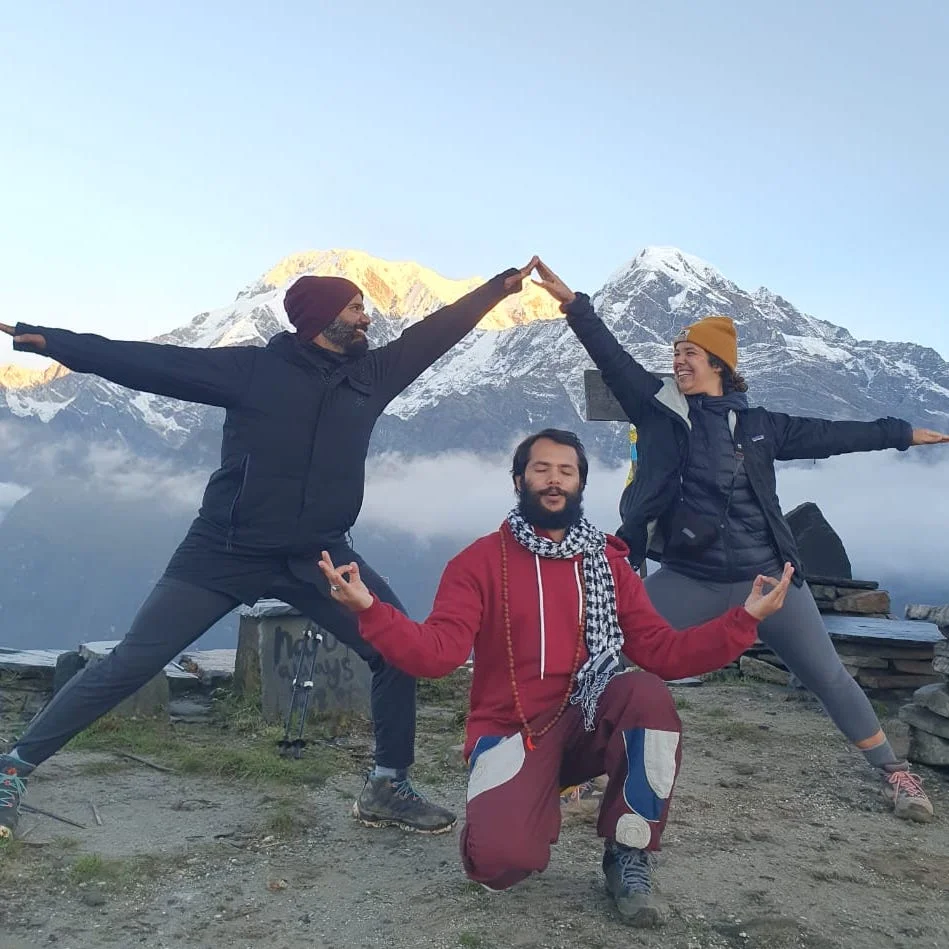


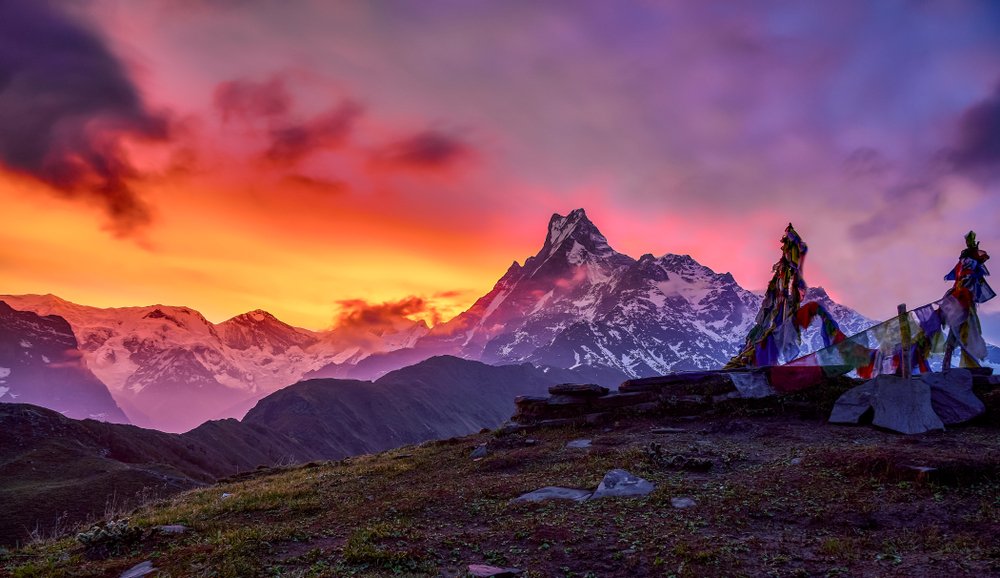
The Mardi Himal Yoga Trek combines the peaceful practice of yoga and meditation with a Himalayan journey through Nepal’s Annapurna region. The trail passes through quiet forests, traditional mountain settlements, and open ridgelines, gradually revealing views of Machhapuchhre (Fishtail), Annapurna South, and the surrounding Himalayan peaks. It offers a different way to experience the mountains by balancing outdoor adventure with time for mindfulness, breathing exercises, and relaxation.
Beginning in Kathmandu, the journey continues to Pokhara before reaching the trailhead at Kande. From there, the route climbs through rhododendron and oak forests toward Forest Camp and Low Camp. As the trail rises above the forest, the landscape opens into alpine meadows and mountain viewpoints. High Camp provides a starting point for an early-morning hike toward the upper Mardi Himal viewpoint, where the surrounding peaks appear especially striking in the morning light.
Yoga and meditation sessions are incorporated into the trekking experience, with practice adapted to the available space, weather, altitude, and energy levels of the group. Gentle stretching can help prepare the body for walking, while breathing exercises and meditation provide opportunities to slow down and appreciate the natural surroundings. The programme is suitable for people with different levels of yoga experience, provided they are comfortable with the physical demands of trekking.
The Mardi Himal Yoga Trek is not a stationary yoga retreat. It is an active mountain journey involving several hours of walking on uneven trails and a considerable increase in elevation over a few days. Participants should be prepared for changing temperatures, simple teahouse accommodation, and an early start for the upper viewpoint. With a balanced itinerary, guided trekking, and time for mindful practice, the journey offers an opportunity to explore Nepal’s mountain scenery while creating space for personal reflection and relaxation.
Overview
The 9-day Mardi Himal Yoga Trek combines Himalayan trekking with daily yoga and meditation in Nepal’s Annapurna region. Walk through peaceful forests, stay in mountain teahouses, and enjoy views of Machhapuchhre and the Annapurna range while making time for mindfulness and relaxation.
Highlights
- Combine Himalayan trekking with yoga and meditation.
- Explore the scenic Mardi Himal trail in the Annapurna region.
- Walk through rhododendron forests and peaceful mountain landscapes.
- Enjoy panoramic views of Machhapuchhre and the Annapurna range.
- Experience sunrise views from the upper Mardi Himal viewpoint.
- Practise yoga, breathing exercises, and meditation in natural surroundings.
- Visit Forest Camp, Low Camp, Badal Danda, and High Camp.
- Experience traditional mountain hospitality in local teahouses.
- Enjoy time in Pokhara before and after the trek.
- Balance outdoor activity with relaxation and mindful practice.
Mardi Himal Yoga Trek Overview
The Mardi Himal Yoga Trek is a 9-day Himalayan experience designed to combine mountain walking with yoga and meditation. Located in the Annapurna region of Nepal, the route follows forested trails and a high mountain ridge toward the upper Mardi Himal viewpoint. It is suitable for travellers who want to experience the natural beauty of the Himalayas while including mindful movement and relaxation in their journey.
The trip begins in Kathmandu and continues to Pokhara, where the mountain adventure starts. From Kande, the trail climbs through rural landscapes and dense forests toward Forest Camp and Low Camp. Higher along the ridge, the forest gradually opens to reveal views of Machhapuchhre and the Annapurna range. The route then continues to High Camp, providing a base for an early-morning walk toward the upper viewpoint.
Yoga and meditation are integrated into the journey rather than treated as separate activities. Depending on the daily schedule, participants can take part in gentle stretching, breathing exercises, and mindfulness sessions before or after trekking. These sessions are adapted to the mountain environment and are intended to complement the physical journey rather than replace rest, hydration, or proper acclimatization.
The experience includes local teahouse stays, mountain meals, and time to enjoy the peaceful surroundings away from busy urban life. Although the yoga component provides opportunities for relaxation, the trek still requires a reasonable level of fitness and the ability to walk uphill for several hours. The high viewpoint is optional if a participant feels unwell or is uncomfortable with the altitude.
For travellers seeking a balance of outdoor adventure and wellness, the Mardi Himal Yoga Trek offers a meaningful way to experience the Annapurna region. It combines Himalayan scenery, cultural encounters, guided trekking, and mindful practice in one journey.
What Can You Expect from the Mardi Himal Yoga Trek Package?
- Guided Himalayan trekking: Follow the Mardi Himal trail with a trekking guide who helps manage the route, pace, and daily logistics.
- Yoga and meditation opportunities: Participate in sessions that may include gentle stretching, breathing exercises, and meditation, depending on conditions and the confirmed programme.
- Forest and mountain scenery: Walk through rhododendron woodland, open ridges, and alpine landscapes with views of Machhapuchhre and the Annapurna range.
- A sunrise viewpoint experience: Begin early for the upper Mardi Himal viewpoint, where clear weather can reveal impressive views of the surrounding peaks.
- Local teahouse stays: Experience mountain hospitality and simple accommodation along the route.
- A balanced activity schedule: Combine trekking with suitable opportunities for rest, reflection, and gentle movement.
- Organized transport and permits: Receive assistance with the transportation and documentation included in your confirmed package.
- A small-group or private experience: Depending on the booking, travel with your own group or arrange a private departure.
- A practical introduction to mindful trekking: Learn to slow your pace, pay attention to breathing, and appreciate the surrounding landscape while walking.
- Time to unwind in Pokhara: Relax by Phewa Lake before or after the trek, depending on the final itinerary.
Benefits of Booking the Mardi Himal Yoga Trek with TrekUp Nepal
- Organized trip planning: Receive a coordinated itinerary covering transport, trekking, accommodation, and yoga sessions.
- Local trekking support: Travel with a guide familiar with the route, local conditions, and daily trail logistics.
- Yoga programme coordination: Arrange sessions that complement the walking schedule and the group’s needs.
- Permit assistance: Get help arranging the required trekking documentation for the confirmed route.
- Clear package details: Review what is included and excluded before booking, helping you plan your budget accurately.
- Flexible arrangements: Discuss private departures, group travel, extra rest days, and suitable accommodation options.
- Pre-trip preparation guidance: Receive advice on fitness, clothing, footwear, personal equipment, and the demands of trekking at altitude.
- Safety-conscious planning: The itinerary can be adjusted to account for weather, trail conditions, and participants’ health.
- A balanced travel experience: Combine mountain exploration with opportunities for relaxation, reflection, and yoga practice.
- Support before departure: Get assistance with trip preparation, arrival arrangements, and practical questions before travelling to Nepal.
Itinerary
The 9-day Mardi Himal Yoga Trek begins in Kathmandu and Pokhara before following the forested trail toward Low Camp and High Camp. Enjoy daily opportunities for yoga, breathing exercises, and meditation before an early-morning hike to the upper Mardi Himal viewpoint. The journey returns to Pokhara and Kathmandu after combining mountain scenery, active trekking, and mindful relaxation.
Arrive in Kathmandu, where a TrekUp Nepal representative will welcome you and transfer you to your hotel. After settling in, meet your trip coordinator to discuss the journey, trekking preparations, yoga sessions, and equipment requirements. Depending on your arrival time, you may explore the nearby streets or rest before the trip begins. An introductory meditation or gentle stretching session can be arranged if timing and facilities allow.
Altitude: Approximately 1,400 m
Duration: Airport transfer of approximately 30–60 minutes, depending on traffic
Meals: Welcome dinner, if included in the confirmed package
Accommodation: Hotel in Kathmandu
Activity: Arrival, trip briefing, and preparation
Travel from Kathmandu to Pokhara by tourist bus or private vehicle. The journey follows Nepal’s river valleys and hillside roads, passing rural settlements, terraced fields, and green landscapes. On arrival in Pokhara, check into your hotel and enjoy time to relax beside Phewa Lake. A gentle evening yoga or breathing session can help you unwind after the drive and prepare for the trek.
Altitude: Approximately 822 m
Duration: Approximately 6–9 hours by road, depending on traffic and road conditions
Meals: Breakfast, lunch, and dinner, according to the package
Accommodation: Hotel in Pokhara
Activity: Road journey, rest, and optional gentle yoga
After breakfast, drive from Pokhara to Kande, the starting point of the trek. Begin walking uphill through village paths, terraced farmland, and forested sections toward Pitam Deurali. The route provides a gradual introduction to the trekking terrain, with opportunities to pause, stretch, and practise mindful walking. After reaching the overnight stop, enjoy a gentle yoga session adapted to the day’s effort and the available space.
Altitude: Pitam Deurali, approximately 2,100 m
Duration: Approximately 3–4 hours of trekking, plus the drive
Meals: Breakfast, lunch, and dinner
Accommodation: Mountain teahouse or lodge
Activity: Trekking, mindful walking, and gentle yoga
Continue along the forest trail through oak, maple, and rhododendron woodland. The route climbs steadily, and the shade of the trees provides a peaceful setting for mindful walking and observing the surrounding nature. Forest Camp is a convenient rest stop along the route before continuing toward Low Camp, where the forest begins to thin and mountain views become more prominent. After arrival, take time to rest and join a gentle stretching or meditation session if conditions permit.
Altitude: Low Camp, approximately 2,985 m
Duration: Approximately 5–7 hours, depending on the pace and trail conditions
Meals: Breakfast, lunch, and dinner
Accommodation: Mountain teahouse or lodge
Activity: Forest trekking, mindful walking, stretching, and meditation
Leave the forest behind as the trail follows the Mardi ridge toward Badal Danda and High Camp. The changing landscape reveals broader views of Machhapuchhre, Annapurna South, and neighbouring peaks when the weather is clear. As the altitude increases, walk at a comfortable pace and take regular breaks. After reaching High Camp, rest, hydrate, and prepare for the early-morning hike to the upper viewpoint. A short relaxation or breathing session may be arranged, depending on the weather and the group’s condition.
Altitude: High Camp, approximately 3,580 m
Duration: Approximately 4–5 hours
Meals: Breakfast, lunch, and dinner
Accommodation: Mountain teahouse or lodge
Activity: Ridge trekking, mountain viewing, and relaxation practice
Start early for the hike toward the upper Mardi Himal viewpoint. The trail climbs above High Camp and offers increasingly expansive views of the surrounding Himalayan peaks. The upper viewpoint is commonly reached at approximately 4,200 m, although the exact high point depends on trail and weather conditions. Spend time enjoying the mountain scenery and, if conditions are suitable, practise a brief breathing or mindfulness exercise in a safe sheltered location. Yoga at this altitude should remain gentle, without strenuous poses or breath-holding. Return to High Camp for breakfast, then descend toward Badal Danda or another suitable overnight stop according to the final itinerary.
Altitude: Upper viewpoint, approximately 4,200 m; overnight around 3,210–3,580 m, depending on the selected stop
Duration: Approximately 5–8 hours in total, depending on the viewpoint reached and descent
Meals: Breakfast, lunch, and dinner
Accommodation: Mountain teahouse or lodge
Activity: Sunrise hike, mountain viewing, meditation, and descent
Continue downhill through forested paths and traditional settlements toward Sidhing. The trail gradually returns to lower elevations, passing farmland and villages along the way. After reaching Sidhing, travel by local jeep or arranged vehicle to Pokhara. Once back in the city, enjoy a hot shower, a comfortable hotel room, and time to relax beside Phewa Lake. This is an opportunity to reflect on the journey and enjoy a final yoga or relaxation session if included in the programme.
Altitude: Sidhing, approximately 1,860 m; Pokhara, approximately 822 m
Duration: Approximately 4–6 hours of trekking, followed by a vehicle transfer
Meals: Breakfast, lunch, and dinner, according to the package
Accommodation: Hotel in Pokhara
Activity: Descending trek, road transfer, and relaxation
Travel from Pokhara to Kathmandu by tourist bus or private vehicle. The drive follows river valleys and hillside roads, with travel time affected by traffic and road conditions. After arriving in Kathmandu, transfer to your hotel. The remaining time can be used for rest, shopping, or a final meditation session if arranged.
Altitude: Approximately 1,400 m
Duration: Approximately 6–9 hours by road
Meals: Breakfast, lunch, and dinner, according to the package
Accommodation: Hotel in Kathmandu
Activity: Return journey and leisure time
Your Mardi Himal Yoga Trek concludes with a transfer to Tribhuvan International Airport for your onward flight. If your departure is later in the day, you may have time for breakfast or a short walk before leaving. Allow sufficient time between your scheduled return and international flight in case road conditions cause delays.
Altitude: Approximately 1,400 m
Duration: Airport transfer of approximately 30–60 minutes, depending on traffic
Meals: Breakfast, if included in the package
Accommodation: Not included unless an additional night is arranged
Activity: Airport transfer and departure
Itinerary note: Yoga sessions are adjusted to the weather, available space, walking schedule, and participants’ physical condition. The trekking guide may modify the route or overnight stops because of trail conditions, altitude, or safety considerations.
Includes/Excludes
Cost Includes
- Airport pickup and drop-off in Kathmandu, as specified in the package.
- Tourist bus or private ground transportation between Kathmandu and Pokhara.
- Transportation between Pokhara and the trekking trailhead.
- Return transportation from the trekking endpoint to Pokhara.
- Hotel accommodation in Kathmandu and Pokhara for the nights included in the itinerary.
- Teahouse or lodge accommodation during the trek.
- Breakfast, lunch, and dinner during the trekking days, according to the confirmed package.
- Licensed trekking guide.
- Qualified yoga instructor or guide with yoga-teaching qualifications, as specified in the package.
- Planned yoga, breathing, and meditation sessions during the trek.
- Required trekking permits and applicable conservation-area entry fees.
- Staff wages, meals, accommodation, and insurance as specified in the package.
- First-aid kit carried by the trekking team.
- Government taxes and service charges applicable to the included services.
Cost Excludes
- International flights to and from Nepal.
- Nepal visa fees.
- Travel insurance and emergency evacuation expenses.
- Personal trekking equipment, clothing, and footwear.
- Porter services unless specifically included.
- Meals in Kathmandu and Pokhara unless listed as included.
- Extra hotel nights caused by early arrival, late departure, or travel delays.
- Personal expenses such as snacks, bottled drinks, laundry, hot showers, Wi-Fi, and charging fees.
- Tips for the trekking guide, yoga instructor, and porters.
- Optional sightseeing tours and activities in Kathmandu or Pokhara.
- Additional private yoga sessions or specialist wellness services not listed in the package.
- Any service not explicitly listed under “Cost Includes.”
Add-ons and Options
The following options can be requested when booking. Prices depend on availability, travel dates, group size, and the services selected.
Private Jeep Transportation
Arrange private transportation between Kathmandu and Pokhara or between Pokhara and the trekking trailhead instead of using shared or standard transport. This option provides greater flexibility with departure times and luggage arrangements.
Price: Quoted according to route and vehicle requirements.
Domestic Flights between Kathmandu and Pokhara
Replace the road journey between Kathmandu and Pokhara with domestic flights to reduce travel time. Flights are subject to availability and weather conditions.
Price: Quoted according to travel dates and airline fares.
Porter Service
Hire a porter to carry your main luggage during the trek, allowing you to walk with a lighter daypack. The weight allowance and porter-to-trekker arrangement should be confirmed before departure.
Price: On request.
Additional Yoga and Meditation Sessions
Arrange additional guided sessions or a more personalized programme, depending on the instructor’s availability and the conditions at each overnight stop.
Price: On request.
Accommodation Upgrade in Kathmandu and Pokhara
Upgrade the city hotels to a higher category or request a single room, subject to availability.
Price: Based on the selected hotel and number of nights.
Extra Night in Pokhara
Extend your stay to enjoy Phewa Lake, visit local attractions, or simply rest after the trek.
Price: Based on the hotel and meal arrangements.
Private Trek Departure
Arrange a private itinerary for couples, families, friends, or a group with specific travel dates and preferred walking pace.
Price: Based on group size and selected services.
How to Personalize Your Trek
- Choose your preferred departure date and number of travellers.
- Share your trekking experience, fitness level, and yoga experience.
- Select any additional services, such as porter support, private transport, or extra yoga sessions.
- Request a detailed quotation showing the included services and additional costs.
- Review the itinerary and booking terms before confirming your trip.
Best Time for the Mardi Himal Yoga Trek
Spring (March–May)
Spring is one of the best seasons for the Mardi Himal Yoga Trek. Temperatures generally become more comfortable, rhododendrons bloom in the forest, and the mountain landscape is often especially attractive. Clear mornings can provide excellent views of Machhapuchhre and the Annapurna range, although clouds and occasional rain are still possible.
Autumn (September–November)
Autumn is another excellent period, particularly after the main monsoon rains have passed. The air is often clearer, and mountain visibility can be very good. October and early November are popular months, so teahouse accommodation may need to be arranged in advance.
Winter (December–February)
Winter can offer quiet trails and clear days, but temperatures drop considerably at higher elevations. Snow, ice, and cold conditions may affect the route toward High Camp and the upper viewpoint. This season is best considered by travellers who are properly equipped and comfortable with cold-weather trekking.
What Our Travelers Say
Read reviews from travelers who have joined our Himalayan trips. See what they enjoyed and what they thought about their experience.
Frequently Asked Questions
Faq's
The Mardi Himal Yoga Trek combines guided trekking in Nepal’s Annapurna region with yoga, breathing exercises, and meditation. It offers an opportunity to explore Himalayan landscapes while making time for relaxation and mindful practice.
This itinerary takes 9 days, including travel between Kathmandu and Pokhara, the trekking route, and the return journey. Shorter or longer versions can be arranged depending on your schedule.
No. Beginners can participate in gentle sessions, while experienced practitioners can adapt their practice to the mountain environment. The instructor should adjust poses and breathing exercises according to altitude, weather, and individual ability.
The trek is generally considered moderate, but the steep climbs, uneven trails, and altitude make it physically demanding in places. The early-morning hike toward the upper viewpoint is particularly challenging and requires suitable fitness.
The upper Mardi Himal viewpoint is commonly reached at approximately 4,200 meters. The exact high point depends on the trail conditions and the group’s fitness and safety assessment.
Spring, from March to May, and autumn, from September to November, are generally the most popular seasons. These months often offer favourable trekking conditions and clear mountain views, although the weather can change at any time.
The programme can include daily yoga, meditation, or breathing sessions, depending on the confirmed package and conditions. Sessions may be shortened, modified, or skipped when weather, altitude, or the trekking schedule makes practice unsuitable.
Sessions may take place near the lodge, in a suitable outdoor area, or in an indoor communal space where available. Locations depend on weather, safety, privacy, and the facilities at each overnight stop.
Accommodation is generally in hotels in Kathmandu and Pokhara and local teahouses or lodges during the trek. Rooms and facilities become simpler at higher elevations, and private bathrooms are not available at every stop.
Teahouses generally serve local and familiar meals such as dal bhat, rice, noodles, soups, potatoes, and other available dishes. Vegetarian options are usually available, but specific dietary needs should be shared before departure.
Yes. The applicable Annapurna Conservation Area entry permit and any other required documentation must be arranged before or during the trip as required by current regulations. Your trekking operator should confirm the permits applicable to your nationality and itinerary.
People new to trekking may be able to complete the route if they have reasonable fitness and prepare properly. However, it involves consecutive walking days and a significant rise in altitude, so it is important to choose a suitable pace and follow the guide’s advice.
Yes. The route reaches elevations above 4,000 meters, where altitude-related illness can occur. Walk gradually, stay hydrated, communicate symptoms promptly, and follow your guide’s instructions. Do not continue ascending if symptoms suggest altitude sickness.
Yes. Subject to availability, the itinerary can be adjusted for travel dates, extra rest days, private yoga sessions, accommodation preferences, and transportation options.